图片准备中
入门
French
Classic French Omelette
来源: 主厨
10 分钟1300 大卡
素食无麸质低碳水+1
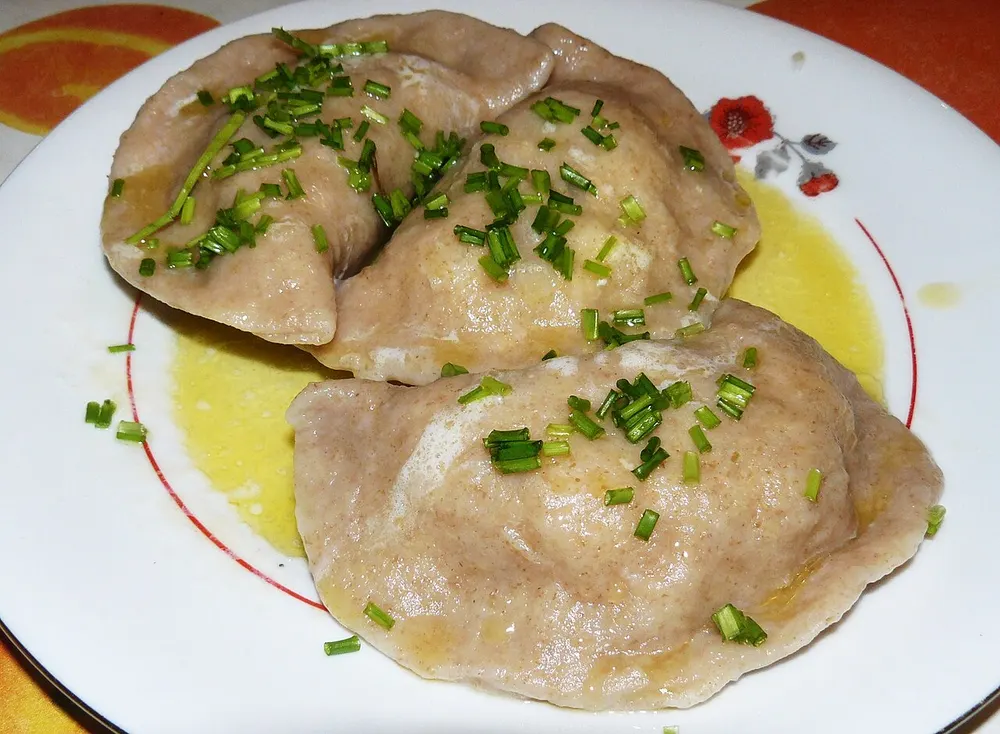
The dumpling Poland is famous for, in its most-loved filling: soft potato mashed with tangy twaróg curd cheese and sweet fried onion, folded into a tender hand-rolled dough. 'Ruskie' means Ruthenian, not Russian — the recipe comes from the old borderlands, not Moscow.
来源
食谱提供 Polish home kitchens · 🏺 传统 · Everyday home cooking of Poland — the milk-bar (bar mleczny) and Sunday-table dishes most Poles grow up on
Polish · traditional dish — An ownerless traditional dish, so no cook is credited. The cited article confirms that pierogi ruskie are filled with 'fresh quark, boiled and mashed potatoes, and fried onions', that the name means 'Ruthenian pierogi' and is 'often mistakenly called Russian by foreigners', and that pierogi are 'simmered until they float, drained, and then sometimes fried'. It dates the Polish recipe to at least the 1682 cookbook. Quantities and method here are this book's own.
Watch it being made · 3 videos
Peel the potatoes, cut them into even chunks and boil in salted water until a knife slides in with no resistance, about 18 minutes. Drain well and steam-dry in the hot pan for a minute, then mash smooth and leave to cool a little.
💡 Wet potato makes a wet filling that tears the dough. The drier the mash, the easier everything after this is.
Chop the onion small and fry it gently in half the butter until soft and golden, 8–10 minutes. Stir most of it (keep a little back for serving) into the warm mashed potato with the twaróg, a good pinch of salt and plenty of black pepper. Taste it — the filling should be punchy, because the plain dough will mute it.
Make the dough: put the flour and 1/2 tsp salt in a bowl, pour in the just-boiled water and the oil, and stir with a fork until it clumps. Tip onto the counter and knead 5 minutes into a smooth, soft, non-sticky ball. Cover and rest 20 minutes.
💡 Resting is not optional — it lets the gluten relax so the dough rolls thin without springing back.
Roll the dough thin, about 2 mm, on a floured surface and cut out rounds with a glass, roughly 8 cm across. Put a heaped teaspoon of filling on each, fold into a half-moon, and pinch the edge firmly shut — no filling must touch the seam or it will burst open.
💡 Keep the unused dough under a cloth. It dries out fast, and dry edges refuse to seal.
Bring a wide pot of salted water to a gentle boil and drop the pierogi in a batch at a time. They sink, then rise — once they float, give them 2 minutes more, then lift out with a slotted spoon.
💡 A rolling boil throws them against each other and splits the seams. Keep it at a lazy simmer.
Toss the drained pierogi in the remaining butter so they glisten and stay separate. Serve topped with the reserved fried onion, with soured cream on the side. Any left over are wonderful the next day, pan-fried in butter until crisp and golden.
做过这道菜吗?在秀场分享一张照片吧。
晒出我的作品 →