Mittel
Moroccan
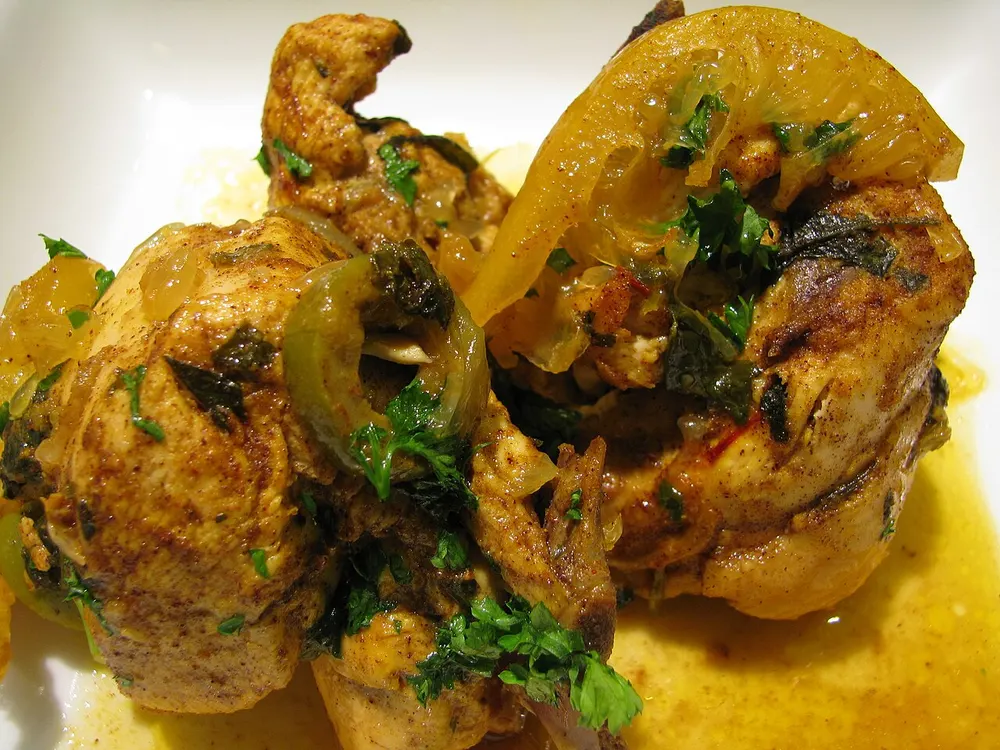
Chicken Tagine with Olives and Lemon
Quelle: Traditionell
90 Min.4420 kcal
HalalGlutenfreiLaktosefrei
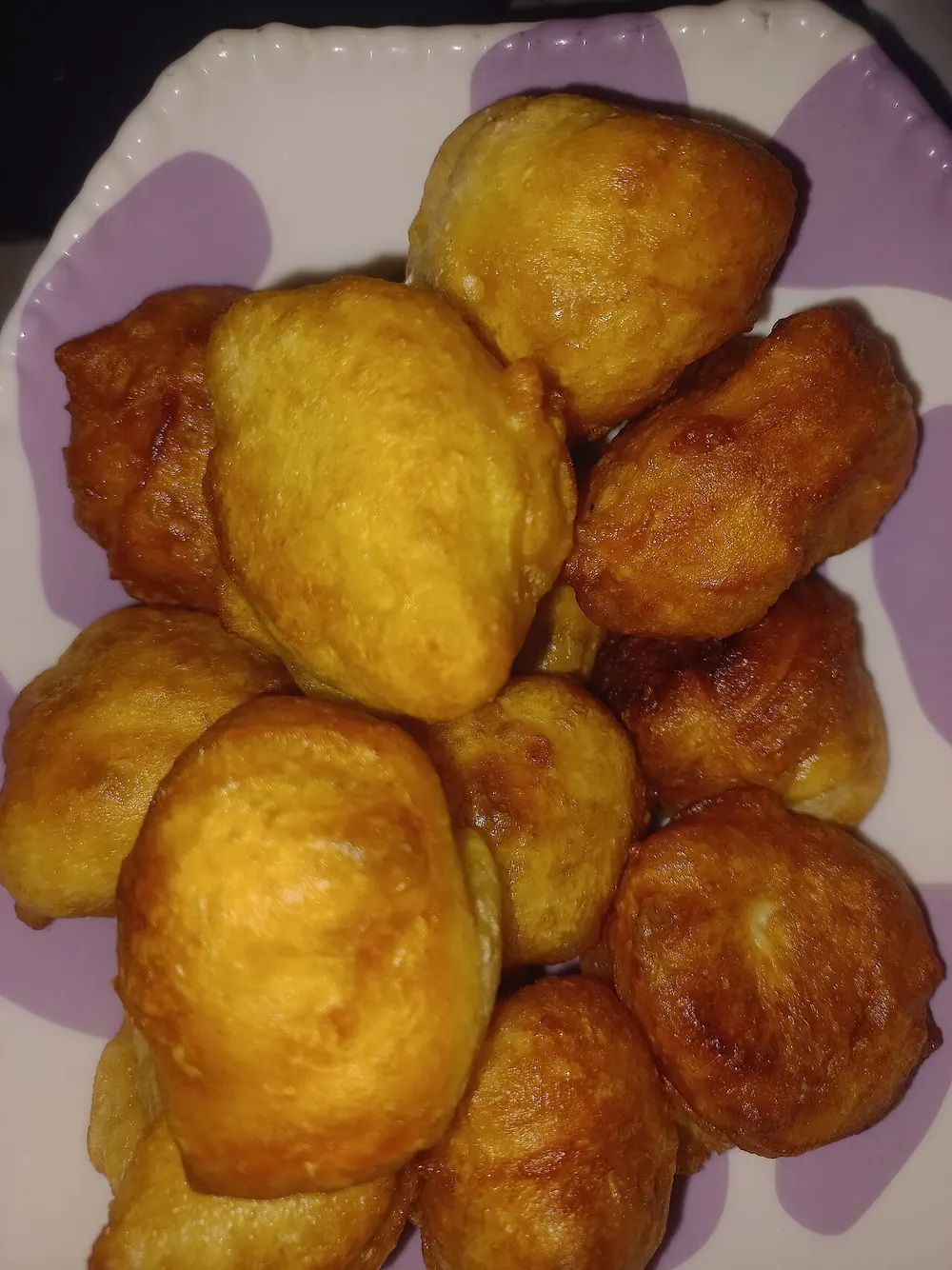
West Africa's street doughnut: a loose, nutmeg-scented yeast batter — too wet to roll, scooped straight into hot oil, where it puffs into a hollow, chewy ball.
Quelle
Rezept von Lola Osinkolu · 📱 Influencer · Lola Osinkolu — Nigerian food writer behind Chef Lola's Kitchen
Namen von Köchinnen, Köchen und Creators erscheinen ausschließlich als Quellenangabe. More Recipes Please ist unabhängig und wird von ihnen weder unterstützt noch gesponsert.
Chef Lola's Kitchen (Lola Osinkolu) — Published by Lola Osinkolu on Chef Lola's Kitchen as 'African Puff puff Recipe'. The flour, water, yeast, sugar and nutmeg amounts, the 10-serving yield, the 1-hour rise and the 360°F frying temperature are from her recipe card. Her useful tell is that the risen batter announces itself by smell, and her fix for a ball that will not turn is to press it down with the spoon first.
Koch: Lola Osinkolu
Zubereitung im Video · 3 Videos
In a bowl, stir the yeast and 1 tsp sugar into 120 ml (1/2 cup) warm water. Cover and leave 3–5 minutes, until the surface is foamy and smells of bread.
💡 Warm means body temperature — comfortable on your wrist. Hot water kills yeast outright and cold water leaves it asleep. If nothing foams in 5 minutes, your yeast is dead; start over rather than continue.
In a second, larger bowl, combine the flour, the 50 g of sugar, the salt and the nutmeg. Whisk them together so the nutmeg is evenly distributed.
Pour in the proofed yeast mixture and the remaining 180 ml (3/4 cup) water. Mix until the batter is smooth and completely lump-free.
💡 It should be a thick, sticky batter — closer to muffin mix than bread dough. If it holds a shape, add a splash more water. Puff-puff is not kneaded and never rolled out.
Cover the bowl and leave it somewhere warm to rise about 1 hour, until doubled in size.
💡 She describes the tell precisely: the risen batter gives off a distinct sweet smell, and that smell — not the clock — is how you know it is ready to fry.
Pour oil into a deep, wide pan — enough for the balls to float without touching the bottom — and heat it to 180°C (360°F).
Check the temperature: a drop of batter should sink briefly, then rise and sizzle steadily within a couple of seconds.
💡 Too cool and the balls drink oil and turn greasy and heavy; too hot and they brown before the inside cooks, leaving raw batter in the middle. 180°C is the window.
Scoop small portions of batter and drop them carefully into the oil, working in batches so the pan never crowds.
Wet your scooping hand or spoon in water between scoops so the sticky batter releases cleanly.
💡 The traditional way is to squeeze the batter up between thumb and forefinger and flick the ball off with your thumb. A wet ice-cream scoop gets you round puff-puff on the first try.
Fry until deep golden brown on both sides, turning as needed. If a ball will not roll over, press it down gently with the frying spoon and then turn it.
💡 That press-then-turn trick is hers, and it works: pushing the ball under the surface breaks the buoyancy that keeps it stubbornly facing one way.
Lift them out and drain on a paper towel or a sieve.
Eat while still hot or warm — plain, or rolled in sugar.
Moroccan
Quelle: Traditionell
Egyptian
Quelle: Hausmannskost
West African / Nigerian
Quelle: Traditionell
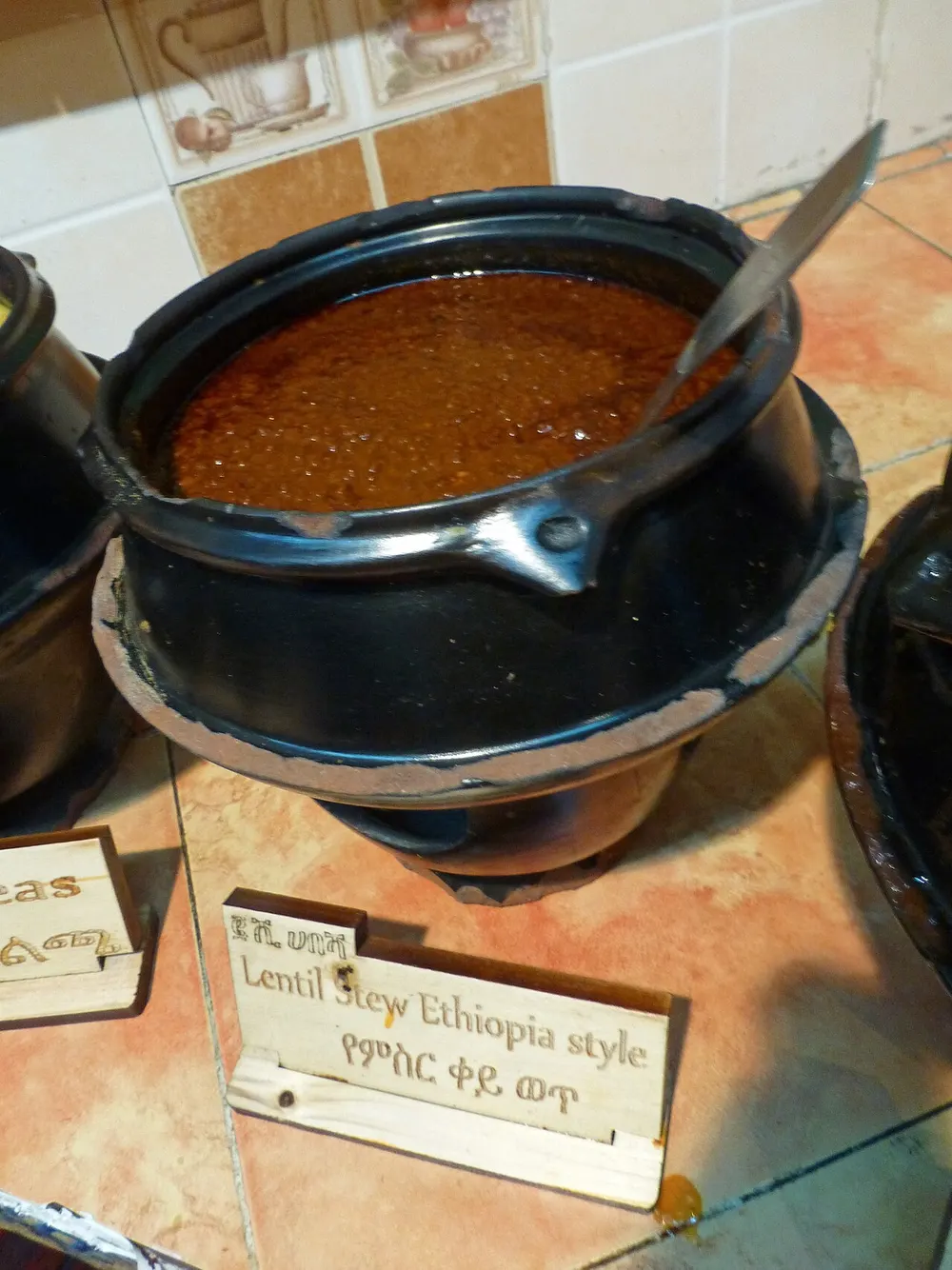
Ethiopian
Quelle: Hausmannskost
Nachgekocht? Teile ein Foto in der Galerie.
Zeig dein Werk →