مبتدئ
Korean
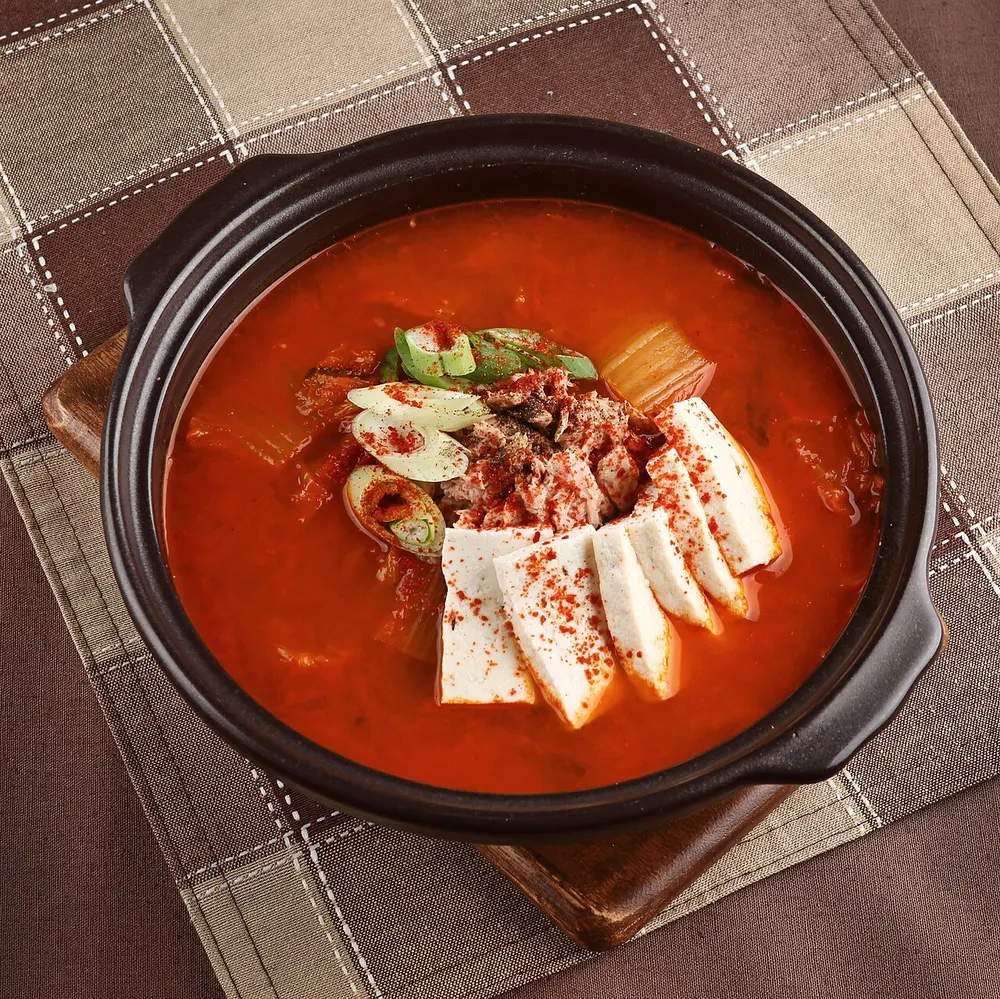
Kimchi Jjigae (Kimchi Stew)
المصدر: تقليدي
30 دقيقة3420 سعرة
خالٍ من الألبان🌶️🌶️
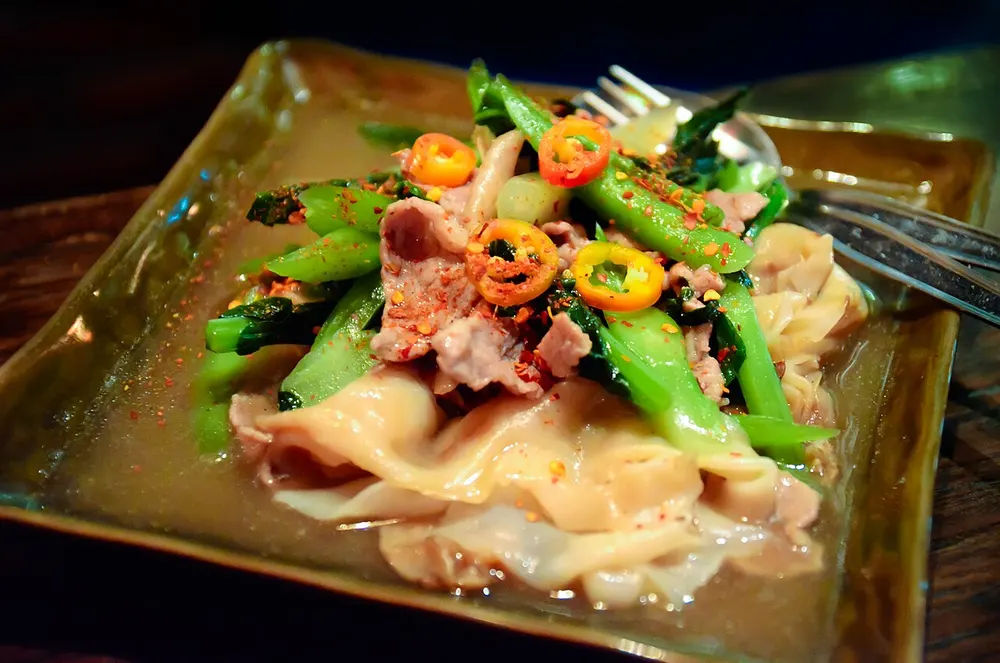
Wide rice noodles charred dry in a wok, then buried under a thick gravy of pork, gai lan and fermented soybean — the noodles and the sauce are cooked in separate pans, and that is the whole trick.
المصدر
الوصفة من Bangkok street stalls · 🏺 تقليدي · Street and shophouse cooking of Bangkok, much of it shaped by Chinese-Thai families
Thailand · wide noodles under gravy — An ownerless traditional dish, so no cook is credited. The cited article confirms rat na, also written rad na or lad na, as a Thai-Chinese noodle dish. The two-pan method, the do-not-stir stage, the tapioca-over-cornflour rule and the quantities are this book's own.
شاهد طريقة التحضير · 3 فيديو
Separate the noodle sheets and toss them with the dark soy sauce and 1 tbsp oil until every strand is coated.
Fry them in a very hot dry wok, spread flat, for 2 minutes without stirring, then turn once and give them another minute.
💡 Do not stir. The point of this stage is a few blistered, smoky patches — a Thai cook calls it wok hei and it is the only thing separating rat na from noodles in gravy.
Slide the noodles onto two plates and wipe the wok out.
Fry the garlic in 3 tbsp oil, add the pork and cook 90 seconds, then the gai lan stems for 1 minute.
Stir in the tao jiao, oyster sauce, light soy and sugar, then pour in the stock and bring to a boil.
Whisk the tapioca starch with 5 tbsp cold water, pour it in slowly and stir until the gravy turns glossy and coats a spoon.
💡 Tapioca, not cornflour. Cornflour goes cloudy and sets stiff as it cools; tapioca stays clear and slack, which is what a rat na gravy is supposed to do.
Drop in the gai lan leaves, season with white pepper, and pour the gravy straight over the noodles.
Korean
المصدر: تقليدي
Korean
المصدر: طبخ منزلي
Korean
المصدر: طبخ منزلي
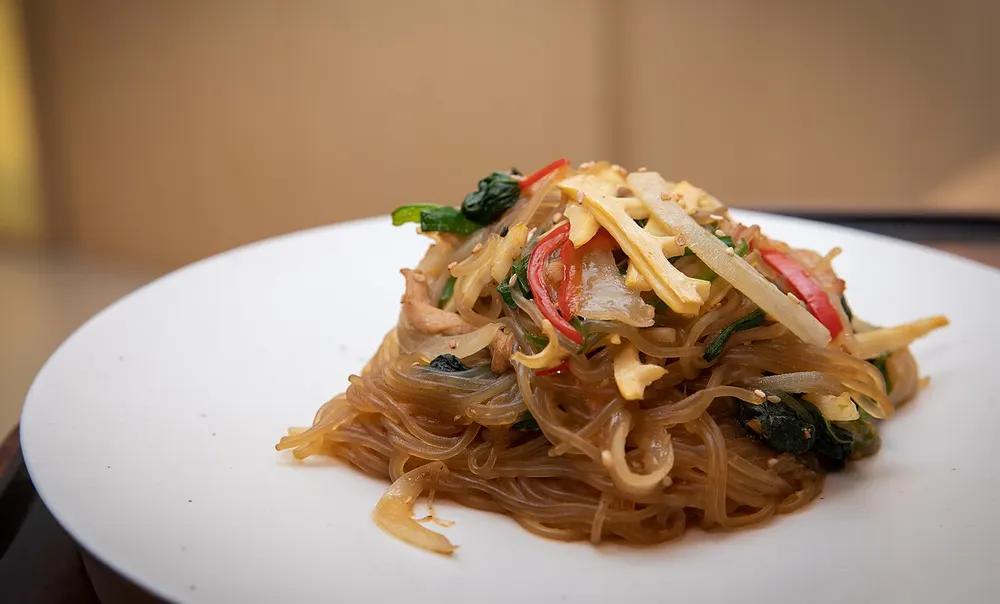
Korean
المصدر: تقليدي
طبخته؟ شارك صورة في المعرض.
شارك طبقك →