مبتدئ
Korean
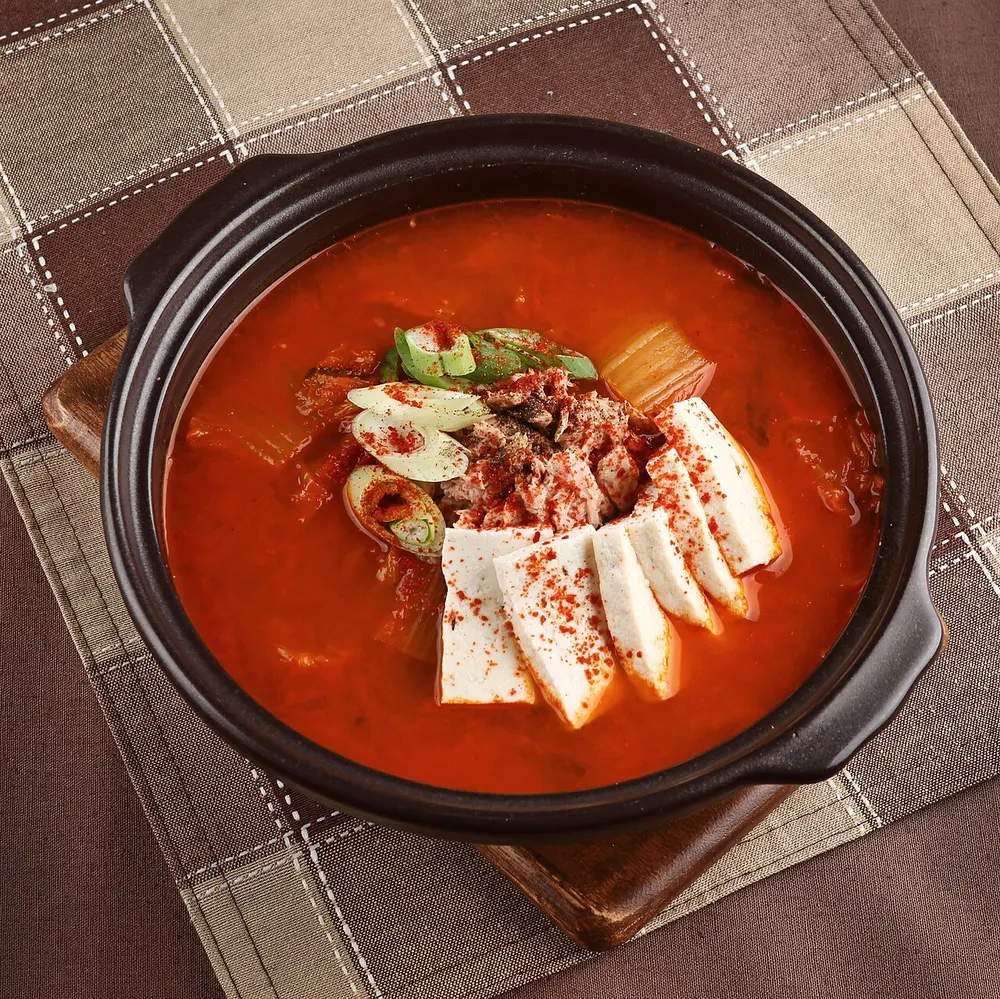
Kimchi Jjigae (Kimchi Stew)
المصدر: تقليدي
30 دقيقة3420 سعرة
خالٍ من الألبان🌶️🌶️
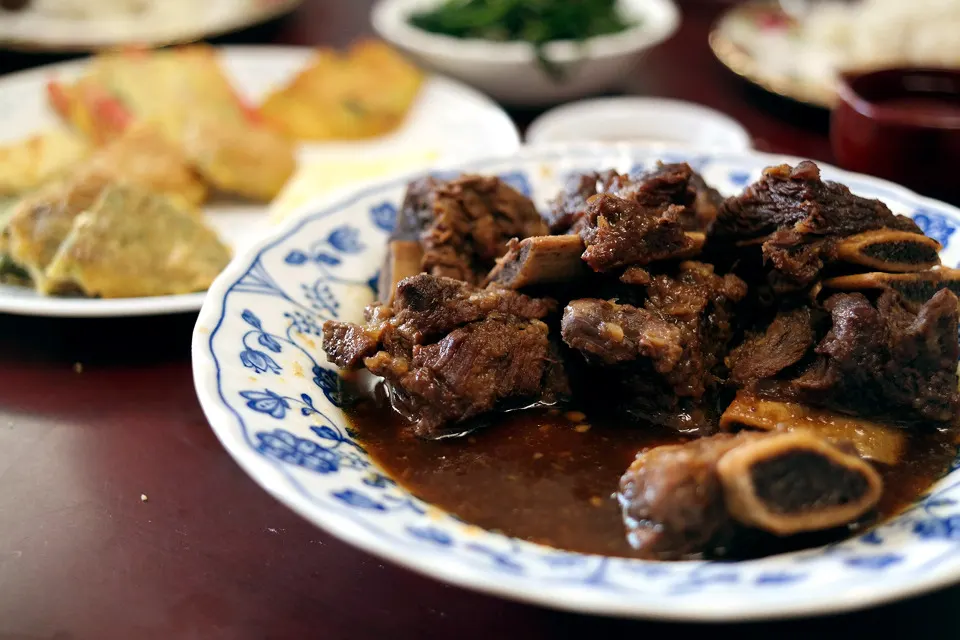
The holiday braise he insists is easier than it looks: no parboiling and no marinating — the ribs go into the sauce raw and simmer an hour, then the vegetables are added in strict order of how long each one needs.
المصدر
الوصفة من 백종원 · 👨🍳 شيف · Paik Jong-won — chef & restaurateur, 백종원의 요리비책
تظهر أسماء الطهاة وصانعي المحتوى للإشارة إلى المصدر فقط. More Recipes Please مستقلة وليست تابعة لهم ولا معتمدة أو ممولة منهم.
Paik Jong-won (요리비책) — Published by Paik Jong-won on his own YouTube channel as ''갈비찜' 의외로 무지하게 쉽습니다', pitched as a Chuseok dish, with the full gram/ml table, his 13-step method and an official English translation in the description. His version cuts the two steps most galbijjim recipes treat as mandatory — there is no parboiling and no marinating — and instead leans on a half-day cold-water soak for the blood, then braises the raw ribs directly in the sauce and stages the vegetables in by density. Note that his Korean list and his own English translation disagree on the shiitake (2개 vs '1/2'); the Korean is followed here.
الطاهي: 백종원
Submerge the ribs in cold water and leave them for about half a day to draw out the blood, changing the water when it turns red.
💡 'Half a day' is his own wording. This is entirely passive but you cannot skip it: blood left in the bone is what makes braised beef smell gamey, and no amount of ginger or wine later will cover it. Start it in the morning to cook at night.
Halve a green onion lengthways and slice it thin to get the 50 g for the sauce.
Mix the jin-ganjang, brown sugar, matsul, 240 g water, minced garlic, minced ginger, sliced green onion, sesame oil and pepper together into the rib sauce.
💡 Note what does NOT happen: nothing is fried, and the ribs are never marinated in this. Unusually for him the sesame oil is stirred in raw, and the sauce goes into the pot as a braising liquid rather than a marinade.
Trim the base of the king oyster mushrooms and cut them about 1 cm thick. Score the shiitake decoratively or cut them into quarters.
Remove the onion roots and quarter the onions. Cut the radish into 1/8-size chunks and round off the sharp edges.
💡 Trimming the radish corners is not decoration. Sharp edges knock off during an hour of bubbling and cloud the sauce with mush — rounded chunks come out whole and glossy.
Wash the carrot and cut it about 1 cm thick. Cut the whole green onions into 2–3 cm lengths. Cut the Cheongyang chilies, shishito peppers and red chilies into halves or thirds depending on size.
Rinse the soaked ribs thoroughly under clean water and drain them.
Put the ribs, the sauce and the 1 L of water into a large pot and bring it to a boil over high heat.
💡 Raw ribs straight into the liquid — he does not parboil them first, which is the step most galbijjim recipes insist on. Skim off the grey foam that rises in the first few minutes and you get the same clean result without the extra pot.
Once it boils, drop to medium heat and simmer about 1 hour, until the meat is tender and starting to pull back from the bone.
💡 Test with a chopstick before you add anything else: it should slide into the meat with almost no push. If the ribs are still firm now, they will still be firm at the end — the vegetables cannot take another hour of boiling.
When the ribs are tender, add the radish and keep simmering.
💡 From here the whole method is one idea: hardest vegetable first, softest last. Radish is the densest thing in the pot, so it gets the longest head start — about 10–15 minutes on its own.
When the radish is about halfway cooked — a chopstick meets some resistance at the centre — add the carrot, the shiitake and the king oyster mushrooms.
Once all of those are cooked through, about 10 minutes later, add the onion.
Finally add the Cheongyang chilies, shishito peppers, red chilies and the whole-cut green onion, stir once, and take the pot off the heat within a minute or two.
💡 The chilies go in last and barely cook. They are there for a fresh, sharp lift against an hour of sweet soy — boil them soft and they turn khaki and taste of nothing.
Serve straight from the pot with rice, spooning the sauce over the meat.
Korean
المصدر: تقليدي
Korean
المصدر: طبخ منزلي
Korean
المصدر: طبخ منزلي
Korean
المصدر: تقليدي
طبخته؟ شارك صورة في المعرض.
شارك طبقك →