مبتدئ
Korean
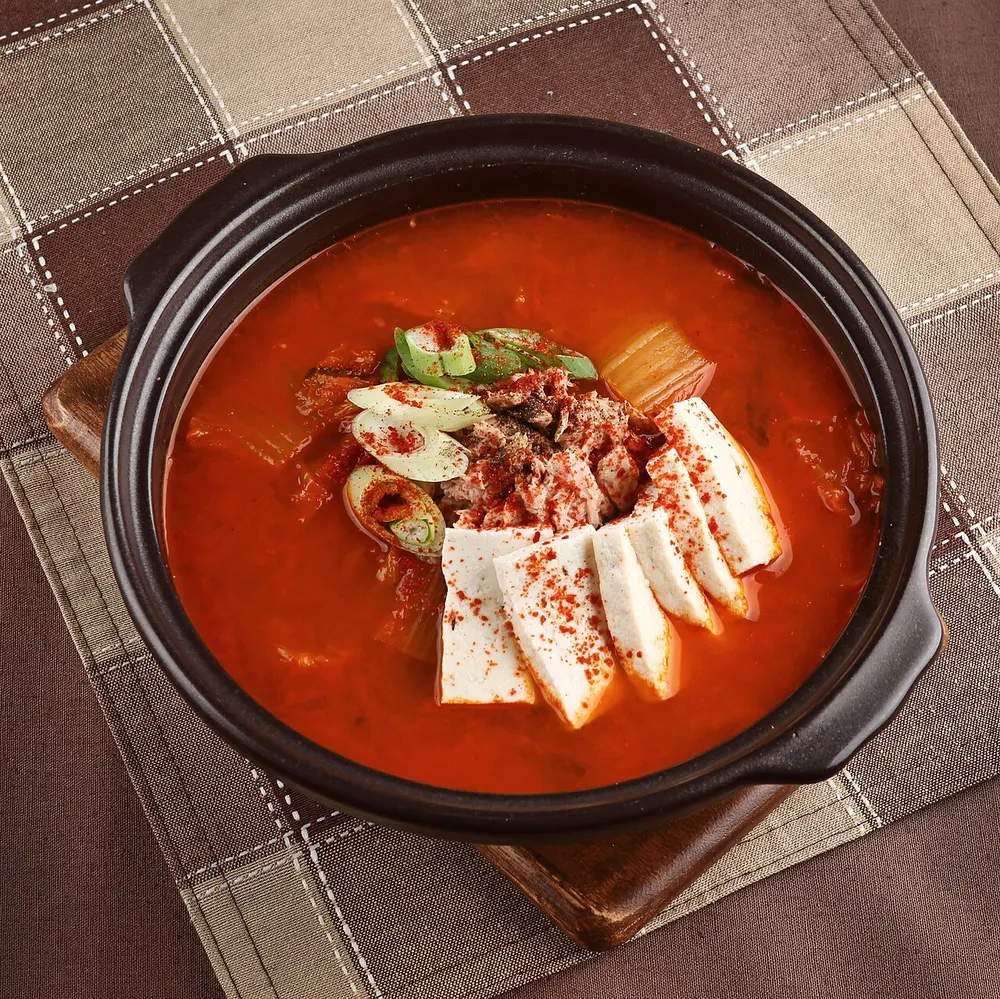
Kimchi Jjigae (Kimchi Stew)
المصدر: تقليدي
30 دقيقة3420 سعرة
خالٍ من الألبان🌶️🌶️
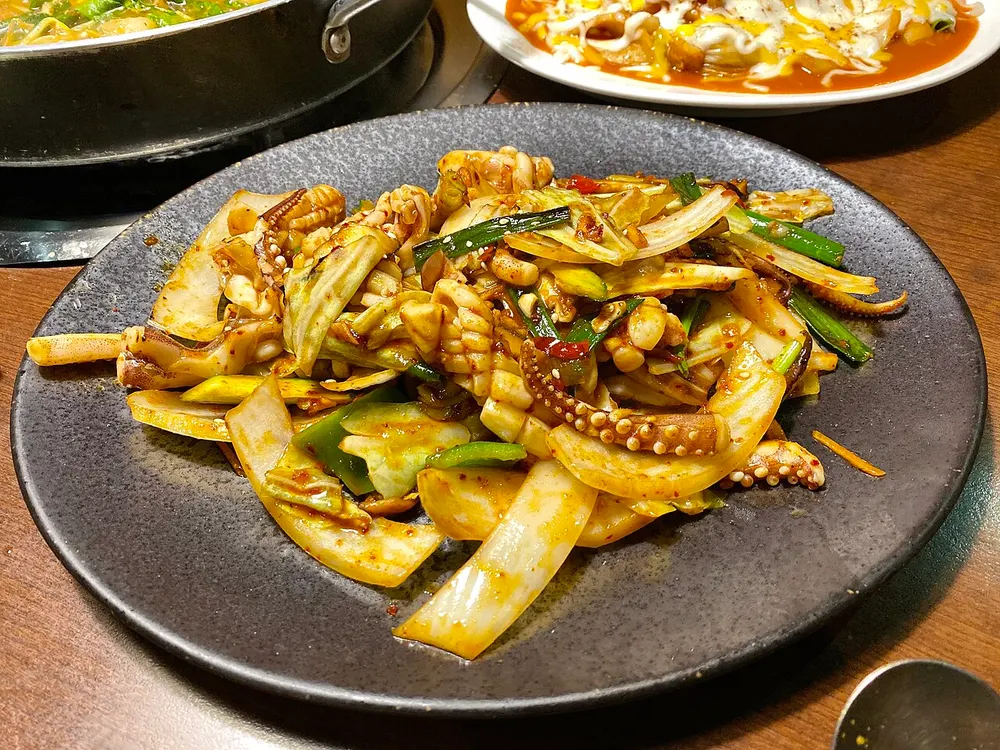
Squid stir-fried on scallion oil with the skin left on. Sugar goes in the moment the squid weeps, the seasonings follow one by one straight into the pan — and the leftovers become a rice bowl with a fried egg.
المصدر
الوصفة من 백종원 · 👨🍳 شيف · Paik Jong-won — chef & restaurateur, 백종원의 요리비책
تظهر أسماء الطهاة وصانعي المحتوى للإشارة إلى المصدر فقط. More Recipes Please مستقلة وليست تابعة لهم ولا معتمدة أو ممولة منهم.
Paik Jong-won (요리비책) — Published by Paik Jong-won on his own YouTube channel as '밥을 훔친 오징어볶음&덮밥', which covers both the stir-fry and the rice bowl he makes from it with a fried egg. Three things mark his version: the squid is deliberately left unskinned for colour and bite, the whole dish is built on 파기름 (scallion oil) made by frying finely sliced green onion first, and although his ingredient list groups the seasonings as a 'sauce', they are never pre-mixed — the sugar goes in alone the moment the squid releases its water, and the soy, garlic, chili powder and gochujang follow one by one into the pan.
الطاهي: 백종원
شاهد طريقة التحضير · 3 فيديو
Clean the squid: slide your fingers inside the body, pull the entrails out, remove the quill, and rinse it under running water.
💡 Pull slowly and steadily. The ink sac sits with the entrails and tearing it turns the sink — and your squid — black.
Cut between the tentacles to open them out, cut away the beak, remove the teeth and eyes, then run the tentacles through your fingers to strip off the suckers.
Do NOT skin the squid. Cut the body into rings about 1.5 cm thick, or split it open and cut it into 1.5 cm strips. Cut the top off the tentacles to separate them and halve the long ones.
💡 He calls this out: leaving the skin on gives colour and a firmer bite, but it makes the surface slippery — mind your knife hand. This is the step that makes the dish intermediate rather than beginner.
Cut the green onion into three parts: slice one-third into thin 0.3 cm rounds for the oil, and cut the other two-thirds into 1 cm diagonal pieces for the finish.
💡 Same onion, two jobs. The fine rounds dissolve into the oil and give up their aroma; the big diagonal pieces go in at the end and stay sweet and crunchy.
Cut the onion into thick 1 cm strips and slice the carrot thin — about 0.4 cm thick and 5 cm long. Keep every vegetable roughly the same size as the squid pieces.
Separate the inner and outer cabbage leaves and cut them diagonally into 2–3 pieces. Cut the red and Cheongyang chilies 0.5 cm thick and 3 cm long on the diagonal.
Set the widest pan you own over the heat, add the cooking oil and the finely sliced green onion, and fry until the scallion turns golden and the oil smells strongly of it.
💡 This is 파기름 — scallion oil — and it is the flavour foundation, the same one Korean-Chinese kitchens build on. Stop the moment the scallion is golden; take it to brown and the oil turns bitter and you have to start again.
Add the squid to the scallion oil and stir-fry over high heat.
The squid will cook and start weeping water into the pan. The moment it does, add the brown sugar on its own and stir-fry it in.
💡 Sugar first and alone, exactly as in his pork stir-fry — it caramelises against the hot pan and into the squid liquid, building depth before any of the salty seasonings show up. Timing it to the moment the water appears is the whole knack.
Add the jin-ganjang, minced garlic, coarse gochugaru and gochujang and stir-fry until everything is evenly coated.
💡 Note these go in one after another straight into the pan — his ingredient list groups them as a 'sauce', but his method never has you mix them in a bowl first.
When the seasoning starts to clump together, turn the heat to high and add the carrot, cabbage, onion and the water all at once, tossing constantly.
💡 That clumping is your cue, and the water is the answer to it — a dry pan of gochujang and chili powder is seconds away from catching and turning bitter. The water loosens it back into a sauce that coats.
Stir-fry until the seasoning and vegetables are evenly combined — the cabbage should be just wilting at the edges but still have snap in the ribs.
Add the diagonal green onion, the red chili, the Cheongyang chili and the sesame oil, and toss once to combine.
💡 Once — literally one turn of the pan, then out. Squid is the reason: it goes from tender to rubber with about a minute's overcooking, and everything past this point is just heat it does not need.
Turn it out onto a plate, scatter with whole sesame seeds and serve with rice.
FOR THE DEOPBAP — put rice in a bowl, fry an egg in plenty of oil until the edges are lacy, snip a portion of the squid into bite-size pieces over the rice with scissors, then top with the egg, a dab of gochujang and a drizzle of sesame oil.
💡 His own second serving suggestion, in the same video — and the reason the recipe is titled for both. Cutting the squid smaller with scissors is what makes it a spoonable rice bowl rather than a plate of stir-fry sitting on rice.
Korean
المصدر: تقليدي
Korean
المصدر: طبخ منزلي
Korean
المصدر: طبخ منزلي
Korean
المصدر: تقليدي
طبخته؟ شارك صورة في المعرض.
شارك طبقك →