مبتدئ
Korean
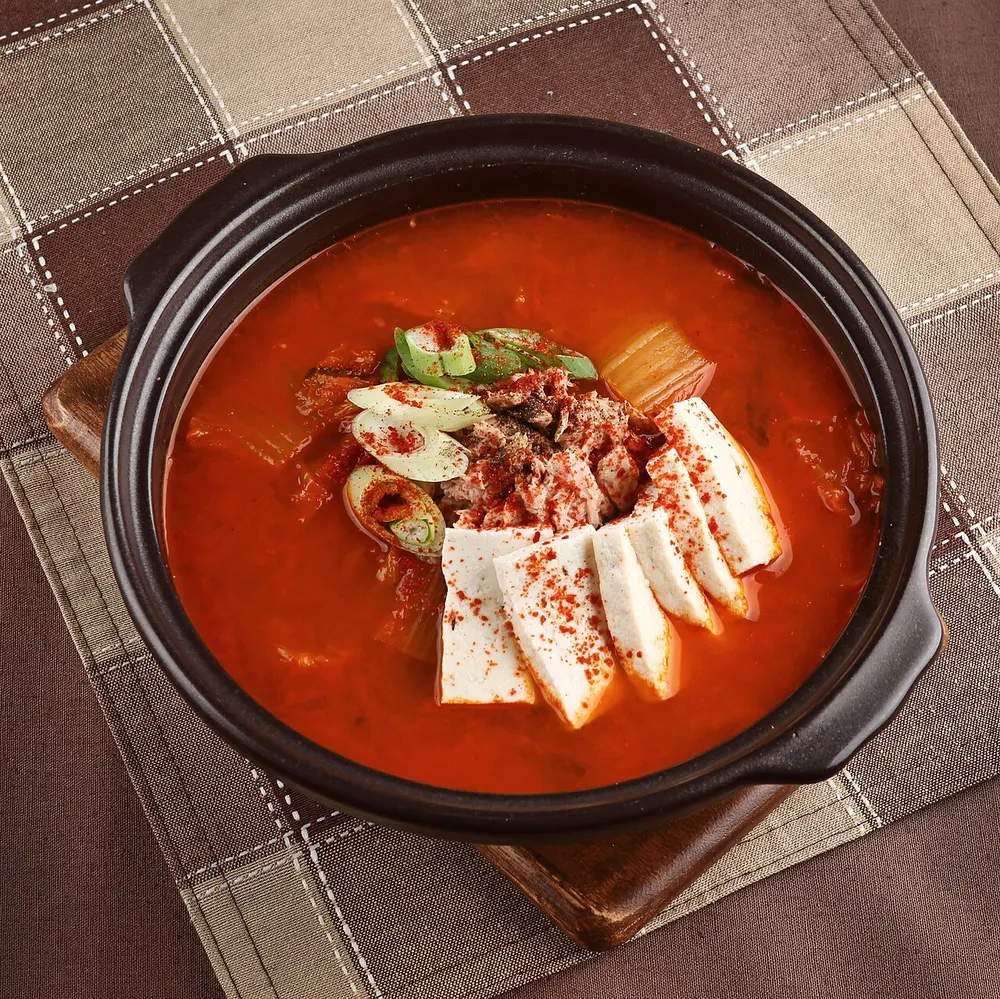
Kimchi Jjigae (Kimchi Stew)
المصدر: تقليدي
30 دقيقة3420 سعرة
خالٍ من الألبان🌶️🌶️
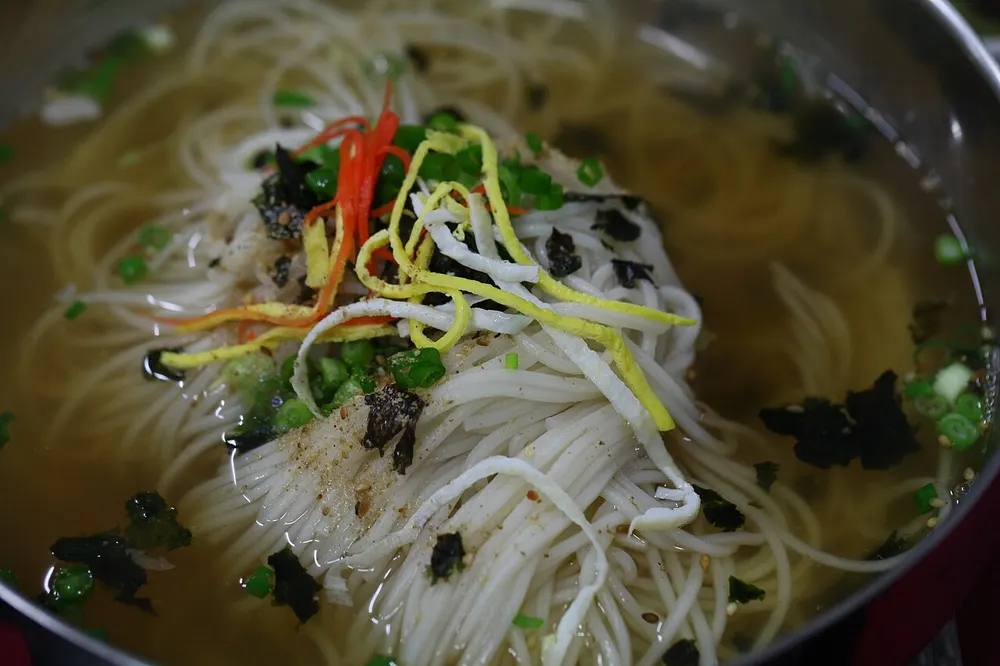
Banquet noodles when there are no anchovies in the house: zucchini, onion, shiitake and carrot are boiled into a fast vegetable stock, an egg is swirled straight in, and a fierce chili-soy sauce is spooned over at the table.
المصدر
الوصفة من 백종원 · 👨🍳 شيف · Paik Jong-won — chef & restaurateur, 백종원의 요리비책
تظهر أسماء الطهاة وصانعي المحتوى للإشارة إلى المصدر فقط. More Recipes Please مستقلة وليست تابعة لهم ولا معتمدة أو ممولة منهم.
Paik Jong-won (요리비책) — Published by Paik Jong-won on his own YouTube channel as '멸치 없이 채수로~ 쉽고 빠른 잔치국수 만들기', with the full gram/ml table, his separate methods for stock, seasoned soy and per-bowl assembly, and an official English translation in the description. Janchi-guksu is normally built on an anchovy-and-kelp broth; his premise is that you have neither the anchovies nor the time, so zucchini, onion, shiitake and carrot are boiled into a stock in minutes and an egg is swirled directly into it.
الطاهي: 백종원
شاهد طريقة التحضير
Julienne the onion and the Korean zucchini about 0.5 cm thick. Julienne the carrot and the shiitake a little finer, about 0.3 cm.
Make the seasoned soy first. Slice the green onion into thin 0.3 cm rounds — halve the stalk lengthways first if it is thick — and halve the Cheongyang chilies lengthways before slicing them the same thickness.
💡 Make this before the noodles, not after. Once the somyeon is cooked you have about a minute before it turns soft — you do not want to be chopping chilies then.
In a deep bowl combine the green onion, Cheongyang chili, jin-ganjang, coarse gochugaru, ground sesame, brown sugar and minced garlic. Stir in the sesame oil last.
💡 Sesame oil goes in last because it coats everything in a film — add it early and the sugar and gochugaru slide around in the oil instead of dissolving into the soy.
Bring the 1.1 L of stock water to a boil in a pot over high heat.
When it boils, tip in all the prepared vegetables and keep boiling for about 8–10 minutes, until the zucchini turns translucent and the broth smells sweet and vegetal rather than of raw onion.
💡 His method gives no time here — 8–10 minutes is our figure. This is the whole trick of the recipe: the vegetables ARE the stock. There is no anchovy, no kelp, no stock cube, and the sweetness comes from the onion and zucchini breaking down.
Once the stock is boiling hard, season it with the guk-ganjang and the fine salt.
Beat the egg lightly, pour it around the pot in a circle, stir once gently, then turn off the heat.
💡 The egg goes INTO the stock here — it is not a garnish on top. One gentle stir only: the residual heat finishes it, and stirring hard would cloud the clear broth into something murky.
In a separate pot bring 1 L of water to a rolling boil over high heat for each serving of noodles.
Add the somyeon and boil about 3 minutes 30 seconds, stirring so the strands do not clump. Each time the foam surges up the sides of the pot, splash in 1/4 cup of cold water — do this twice.
💡 The cold-water splash is his written instruction and it does two jobs at once: it knocks the foam down before it boils over, and it drops the temperature so the outside of the noodle stops cooking while the core catches up.
Drain the noodles, drop them into cold water, and scrub them between your palms as if you were washing laundry.
💡 Be rough with them — he says to rub as if washing clothes. You are stripping off the surface starch, which is what makes somyeon slimy and glues the strands into a block. This is also what gives the noodle its squeaky, springy bite.
Shake the noodles dry, coil them into a bowl, and ladle over half the stock with its vegetables and egg.
Spoon the seasoned soy on top, add a pinch of black pepper, and serve immediately.
💡 Add the seasoned soy a little at a time and stir it in as you eat — it is strong. He lists it as 'to your liking' rather than a fixed amount for exactly this reason.
Korean
المصدر: تقليدي
Korean
المصدر: طبخ منزلي
Korean
المصدر: طبخ منزلي
Korean
المصدر: تقليدي
طبخته؟ شارك صورة في المعرض.
شارك طبقك →