مبتدئ
Korean
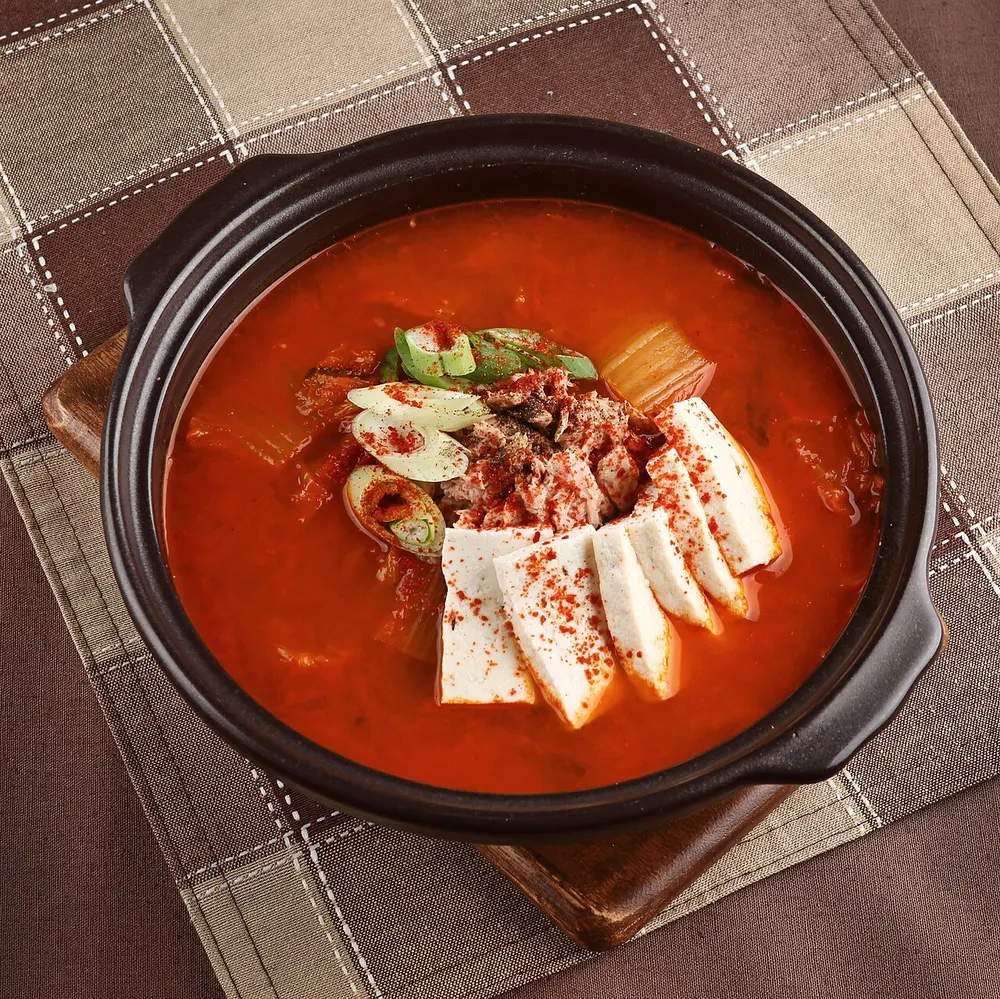
Kimchi Jjigae (Kimchi Stew)
المصدر: تقليدي
30 دقيقة3420 سعرة
خالٍ من الألبان🌶️🌶️
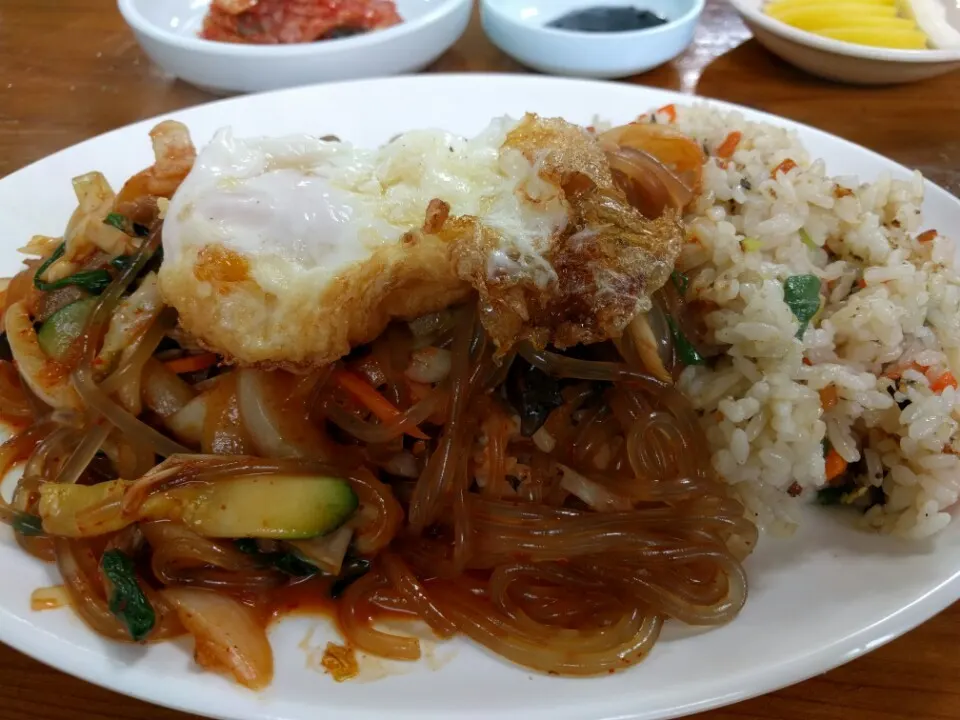
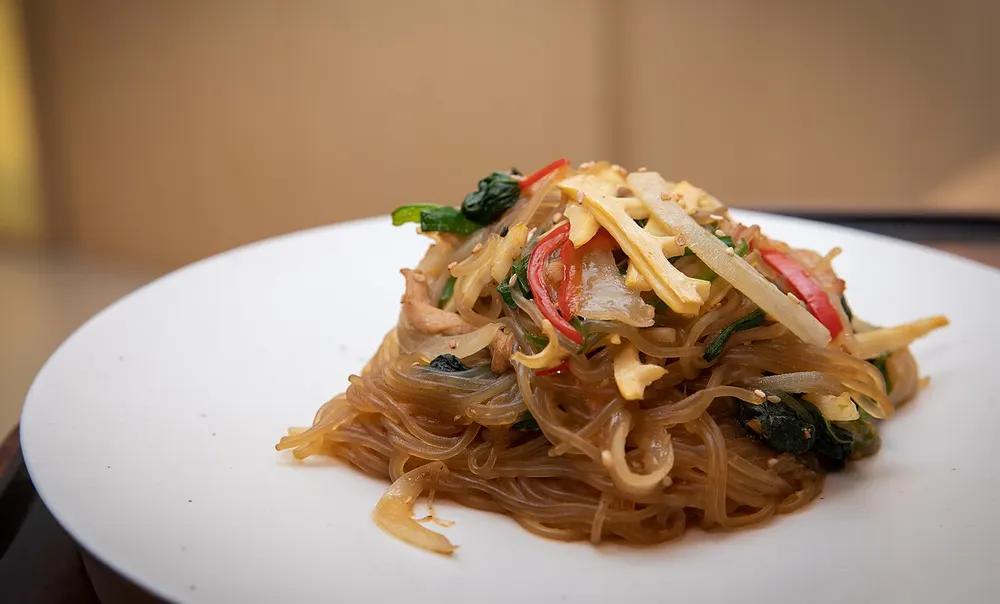
The Korean-Chinese takeaway plate, rebuilt for one pan. The fried egg goes first — nearly deep-fried in a slick of oil until its edges blister — and everything else is then fried in the oil the egg left behind.
المصدر
الوصفة من 자취요리신 (simple cooking) · 📱 صانع محتوى · Korean YouTuber specialising in fast one-pot recipes aimed at people living alone; posts the written recipe under most of his videos
تظهر أسماء الطهاة وصانعي المحتوى للإشارة إلى المصدر فقط. More Recipes Please مستقلة وليست تابعة لهم ولا معتمدة أو ممولة منهم.
Recipe published by 자취요리신 / 자취요리신이 공개한 레시피 — He publishes the full written recipe with amounts in this video's description, headed 잡채밥을 만들어 보자 and pitched as the thing to eat instead of instant noodles. Distinctive: it is the Korean-Chinese takeaway plate done in one pan and in strict order — the fried egg is cooked FIRST in a generous slick of oil, almost deep-fried until its edges blister, then lifted out so that the pork, onion, chili flakes and noodles all fry in the oil it left behind. SERVINGS: he never writes a serving count. Our reading of 1 rests on his own numbers — 100 g of pork, half an onion, one handful of noodles and 밥 1공기 — and is our inference, not his figure.
الطاهي: 자취요리신 (simple cooking)
شاهد طريقة التحضير
Soak the dangmyeon in cold water first — his method assumes it is already soaked when it hits the pan, and cold water takes about 30 minutes.
💡 Do this before anything else. The actual cooking is under ten minutes and there is no gap in it long enough to soak a noodle.
Slice the onion, cut the green onion, and have everything within arm's reach of the hob.
Pour a generous slick of oil into a pan over medium-high heat — more than feels reasonable for one egg. It should pool, not just coat.
Crack the egg in. The white should seize and puff the instant it lands, and the edges should go brown and frilly within a minute.
💡 This is the 중국집 fried egg and it is half the reason to make this dish. If the white just spreads out flat and pale, the oil was not hot enough or there was not enough of it. Crisp lacy edges, runny yolk.
Lift the egg out onto a plate and leave the oil in the pan. That oil is now an ingredient.
Into the same pan go the pork belly, the handful of green onion, the half onion and the half spoon of minced garlic, over medium-high heat.
Fry until the pork loses its pink and the green onion has gone soft and started to brown at the cut ends.
💡 The green onion is not a garnish here — it goes in at the start with the meat, which is how it gets sweet instead of sharp.
Drop the heat to low and add the tablespoon of gochugaru.
Stir it through the fat for well under a minute, until the oil runs clear red and the smell turns toasty. Then stop.
💡 Beginner warning: burnt gochugaru is bitter and permanent. Low heat, keep it moving, and go by colour and smell rather than the clock.
Turn the heat back to medium-high and add the drained dangmyeon, the sugar, the soy sauce and the oyster sauce all at once.
Toss it constantly. The noodles drink the soy and go from pale and cloudy to a deep glossy brown-red in about two minutes.
💡 Keep them moving or they weld to the pan and to each other. Soaked dangmyeon has a lot of surface starch and a hot dry pan is where it turns into glue.
Fry until the pan stays dry behind the noodles when you drag them aside instead of filling back up with sauce.
Put the bowl of rice on a plate, pile the japchae next to it or over it, and lay the fried egg on top.
Grind pepper over the lot and eat it while the egg edges are still crisp and the yolk still runs.
Korean
المصدر: تقليدي
Korean
المصدر: طبخ منزلي
Korean
المصدر: طبخ منزلي
Korean
المصدر: تقليدي
طبخته؟ شارك صورة في المعرض.
شارك طبقك →