مبتدئ
Korean
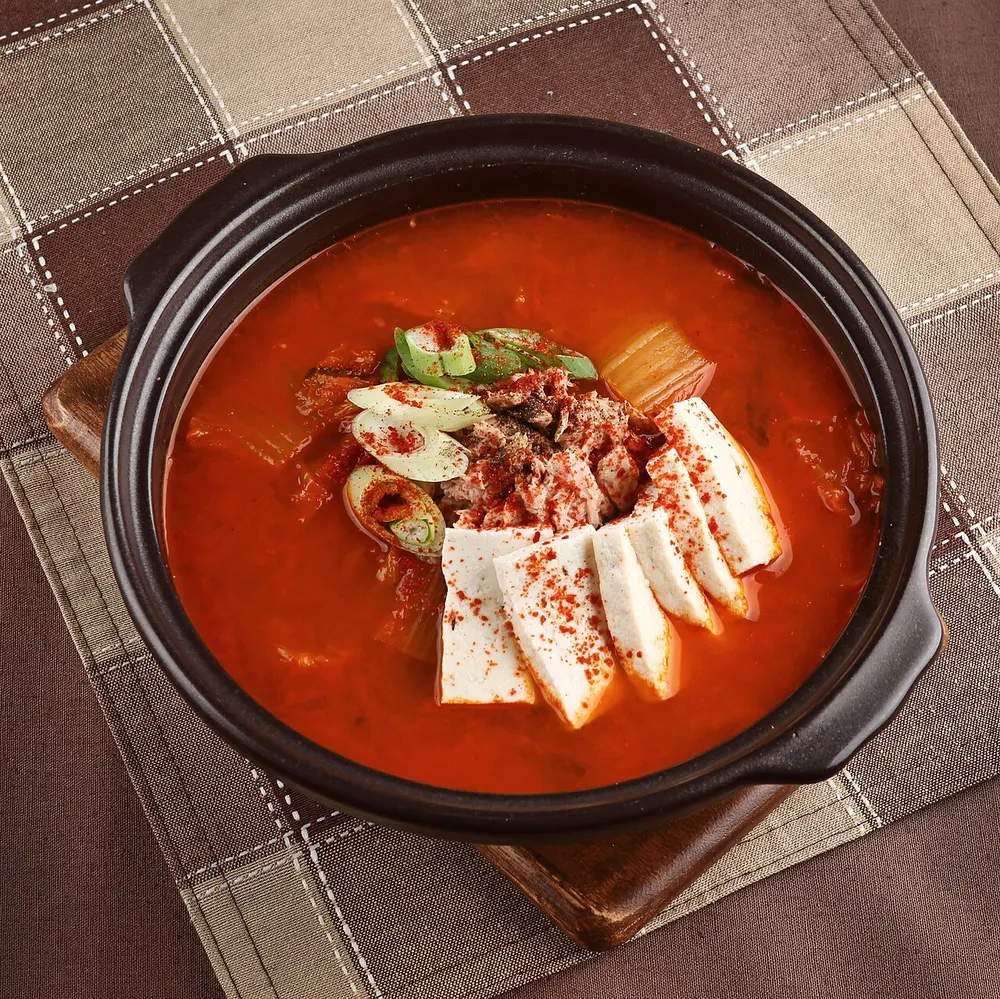
Kimchi Jjigae (Kimchi Stew)
المصدر: تقليدي
30 دقيقة3420 سعرة
خالٍ من الألبان🌶️🌶️
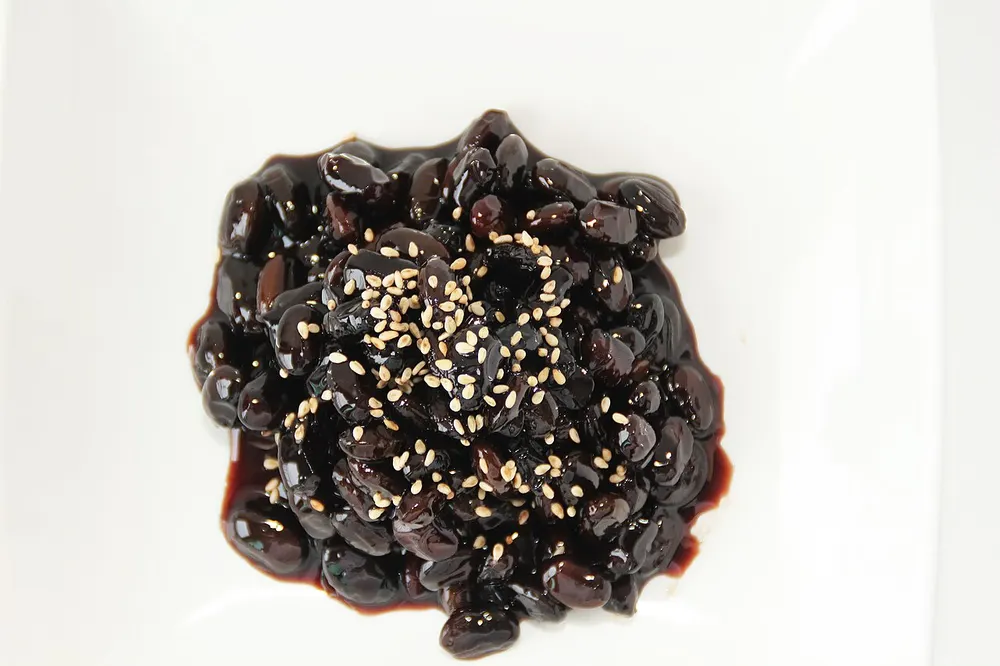
Kongjaban usually comes out like gravel. Shin Hyo-seop salts the soaking water, cooks the beans in their own soaking liquid plus kelp water, and adds the soy sauce only after they are already soft — so the skins stay chewy and the insides stay tender.
المصدر
الوصفة من 신효섭 · 👨🍳 شيف · Shin Hyo-seop — chef (셰프), a recurring cook on MBN's Altoran
تظهر أسماء الطهاة وصانعي المحتوى للإشارة إلى المصدر فقط. More Recipes Please مستقلة وليست تابعة لهم ولا معتمدة أو ممولة منهم.
MBN Altoran (알토란) — Published by MBN on Altoran's own channel (알토란 - 집밥 레시피, @Recipe_MBN); the description carries the full ingredient list and method and credits it as 'Altoran episode 334, kongjaban, #신효섭'. Broadcaster-published text, not a viewer's write-up. His departures from the standard method are all aimed at texture: salt goes into the soaking water, a cup of that soaking water goes back into the pot alongside kelp water, olive oil replaces the usual sesame oil at the boil, and the soy sauce waits until the beans have already had ten minutes.
الطاهي: 신효섭
شاهد طريقة التحضير
Wash the 300 g of seoritae 2–3 times in cold water, discarding any beans that float or look shrivelled.
Put them in 2 L of cold water with 2 tbsp of salt and soak 5 hours — his figure. They are ready when a bean splits cleanly under a fingernail with no chalky core.
💡 The salt in the soaking water is the whole trick. Salted water softens bean skins instead of tightening them, which is why his kongjaban is chewy rather than the usual bullet-hard.
Drain the beans but keep 200 ml of the soaking water. Do not pour it all away.
💡 Most recipes bin the soaking water. He puts a cup of it back — it already carries salt and bean flavour, so the pot starts seasoned instead of starting at zero.
Put the drained beans into a dry pan with the 200 ml reserved soaking water, 200 ml kelp water and 1 tbsp olive oil.
Boil hard on high heat for 10 minutes — his figure. The liquid should be rolling and the beans should be tumbling.
💡 Only 400 ml of liquid for 300 g of beans looks alarmingly little. That is the point — this is closer to a braise than a boil, and the small volume is what lets it reduce to a glaze later.
Add 3 tbsp of soy sauce and keep it on high for another 10 minutes, until the liquid has dropped to a shallow pool around the beans.
💡 Soy sauce goes in now and not at the start. Salt-plus-soy from minute one seizes the skins and locks the beans hard — by waiting until they have already softened, he gets flavour without the concrete.
Turn the heat down to low to add the 3 tbsp jocheong and 1 tbsp sugar, then bring it back up to reduce — his text reads '약 불로 줄인 후 … 센 불에 졸이다가', i.e. drop the heat to add the sweeteners, then raise it again to finish.
💡 Syrup and sugar burn far faster than soy sauce. Dropping the heat for the ten seconds it takes to stir them in is cheap insurance against a scorched pan.
Stir constantly now — everything from here happens fast, and the beans need to keep rolling through the syrup.
Kill the heat when only about 1–2 tbsp of sauce is left in the pan — his stopping point, and it is a precise one.
💡 This is the single moment that decides the dish. Stop here and the beans stay glossy and chewy as they cool. Reduce to a dry pan and the sugar sets like glass — you get candy-coated pebbles.
Off the heat, stir in the second 1 tbsp of olive oil and 1 tbsp of sesame seeds.
Toss until every bean is coated and the pan looks lacquered rather than wet.
💡 Oil at the end is what makes kongjaban shine and stops the beans cementing into one lump in the fridge. Adding it earlier would just have boiled away.
Spread the beans out on a plate in a single layer to cool — piled up, the residual heat keeps cooking them and they wrinkle.
Store in an airtight jar in the fridge. It keeps two weeks and is a standing banchan — a spoonful per meal, not a bowlful.
Korean
المصدر: تقليدي
Korean
المصدر: طبخ منزلي
Korean
المصدر: طبخ منزلي
Korean
المصدر: تقليدي
طبخته؟ شارك صورة في المعرض.
شارك طبقك →