Foto em breve
Iniciante
American
Fluffy Buttermilk Pancakes
Fonte: Cozinha caseira
25 min4350 kcal
Vegetariano
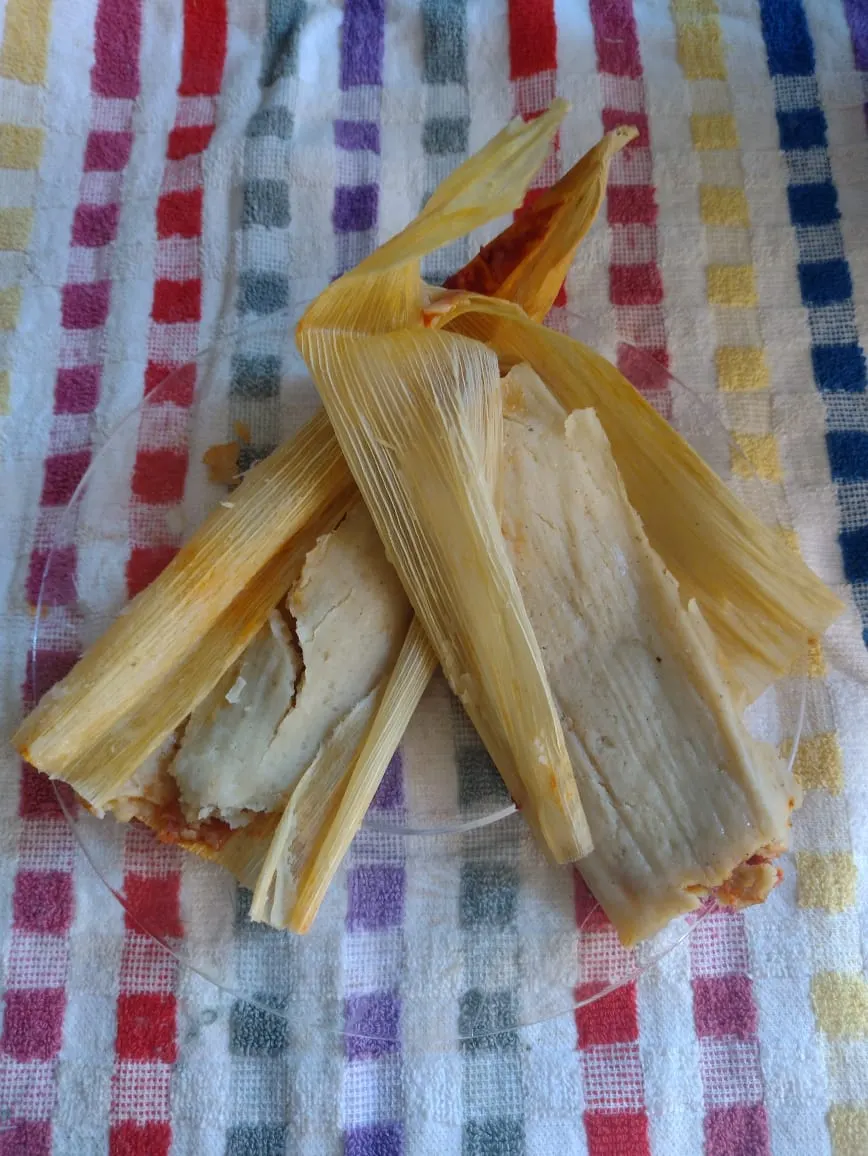
Masa whipped with lard until a spoonful floats in water, spread on soaked corn husks, filled with pork in red guajillo sauce, folded and steamed until the dough pulls cleanly from the husk.
Fonte
Receita de Mexican home kitchens · 🏺 Tradicional
Mesoamerican traditional — A traditional Mesoamerican dish of masa — dough made from nixtamalised corn — steamed in a corn husk or banana leaf. The wrapping is discarded before eating or used as a plate, and the filling can be meat, cheese, vegetables, chilies or fruit.
Veja como se faz · 3 vídeos
Simmer the pork in salted water with a chunk of onion, a garlic clove and the bay leaf for 90 minutes, until it shreds easily. Keep every drop of the broth.
💡 This broth goes into the masa, so it is doing double duty. Tamale dough made with water instead of pork broth tastes noticeably flat.
Cover the corn husks with very hot water, weigh them down with a plate, and soak for at least 30 minutes until pliable.
Toast the guajillo and ancho chilies in a dry pan for 20–30 seconds a side, then soak them in 400 ml of the hot pork broth for 20 minutes.
Blend the soaked chilies with the onion, garlic, cumin, oregano and their soaking broth until smooth, then pass it through a sieve.
💡 Sieve it even though it is going inside a tamale. Guajillo skin stays gritty, and grit is very obvious against soft masa.
Shred the cooked pork, fry the chili sauce in a little lard for 5 minutes until it darkens, then stir the pork through it and season. Let the filling cool completely.
Beat the lard on its own with an electric whisk for 5 minutes, until it is white, light and looks like whipped cream.
💡 You are beating air into the fat, and that air is the only thing that makes a tamale light instead of dense. Do not shortcut this — it is the single most important step in the whole recipe.
Mix the masa harina, baking powder and salt, then add it to the whipped lard in three additions, alternating with the warm broth, beating well between each.
Beat the finished masa for 5 more minutes, then test it: drop a small ball into a glass of cold water. If it floats, it is ready. If it sinks, beat for another 3 minutes and test again.
💡 The float test is not folklore — it is a real density check. Floating means enough air is trapped in the fat, and it is the only reliable way to know before you commit two hours to steaming.
Shake a soaked husk dry. Spread about 3 tbsp of masa over the wide half in a rectangle roughly 3 mm thick, leaving a clear border at the edges and the narrow tail bare.
💡 Thin masa, and leave the borders bare. Beginners spread it thick and fill it to the edges, and then the tamale cannot close and the filling boils out into the steamer.
Spoon a line of the cooled pork filling down the centre of the masa — about 2 tbsp, no more.
Fold one long side of the husk over so the masa wraps around the filling, then fold the other side over it and finally fold the narrow tail up underneath.
💡 Fold the tail up, not down, and stand the tamales tail-down in the steamer. That fold is what keeps water from getting in and the filling from getting out.
Stand the tamales upright and packed together in a steamer basket over boiling water, open side up. Cover them with spare husks and a clean cloth, then the lid.
💡 Packed tight so they hold each other upright — a tamale that tips over fills with water. If the basket is not full, wedge the gaps with balls of foil.
Steam over a steady, gentle boil for 90–120 minutes, topping up with boiling water from the side whenever it runs low.
💡 Top up with boiling water, never cold — cold water drops the steamer temperature and stalls the cooking. And never let it run dry, which scorches the pot and the tamales at the bottom.
Test one: take a tamale out, let it sit 5 minutes, then unwrap it. It is done when the masa is firm and peels cleanly away from the husk with nothing sticking.
💡 The 5-minute rest is part of the test, not impatience. Straight out of the steamer the masa is soft and always sticks — it firms up as it cools, and a tamale judged too early gets needlessly overcooked.
Serve them in their husks and let everyone unwrap their own — the husk is the plate, not part of the food.
American
Fonte: Cozinha caseira
American
Fonte: Cozinha caseira
Modern
Fonte: Tradicional
Modern / viral
Fonte: Influenciador
Fez esta receita? Compartilhe uma foto na Galeria.
Compartilhe sua criação →