الصورة قريبًا
مبتدئ
American
Fluffy Buttermilk Pancakes
المصدر: طبخ منزلي
25 دقيقة4350 سعرة
نباتي
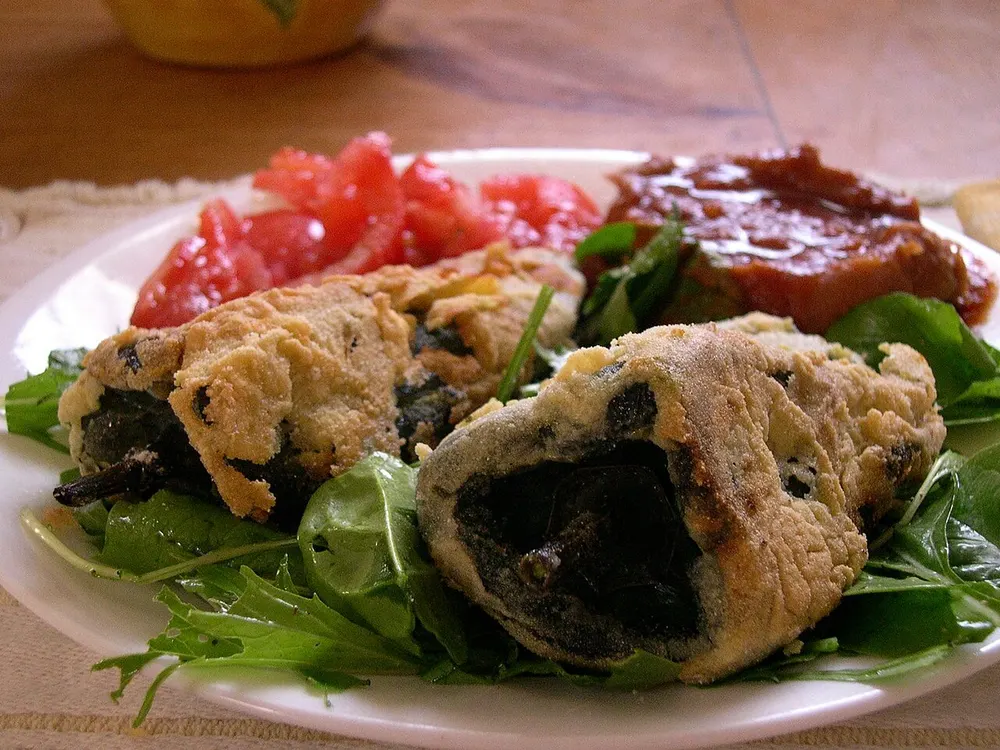
Poblano chilies blistered black over a flame, peeled, stuffed with cheese, then wrapped in a whipped-egg batter that puffs into a golden cloud in the pan and lands in a thin tomato broth.
المصدر
الوصفة من Puebla home kitchens · 🏺 تقليدي
Puebla, Mexico — A dish of Mexican cuisine that originated in the city of Puebla. A description from 1858 records it as a green chili pepper stuffed with minced meat and coated with eggs.
شاهد طريقة التحضير · 3 فيديو
Char the poblanos directly over a gas flame, turning with tongs, for 8–10 minutes, until the skin is blistered and blackened all over — genuinely black, not just brown.
💡 Be braver than feels right. You are burning the thin outer skin off, not the chili — under that black layer the flesh is only steaming. Timid charring means skin that will not come off later.
Put the charred chilies straight into a bowl and cover it tightly with a plate or cling film. Leave them 15 minutes.
💡 The trapped steam lifts the burnt skin away from the flesh. This is the whole reason the peel comes off in sheets instead of in maddening flecks.
Rub the skins off with your fingers or a kitchen towel. Do not rinse them under the tap.
💡 Water washes away the smoky, roasted flavour you just spent ten minutes building. A few stubborn black specks left behind are completely normal and taste good.
Cut a single lengthways slit in each chili, from just below the stem to about 2 cm from the tip, and pull the seed cluster out through it. Leave the stem attached.
💡 One slit only, and keep the stem. The chili has to hold molten cheese in a pan of hot oil — every extra cut is a place for it to escape, and the stem is the handle you turn it with.
Make the caldillo: blend the tomatoes, onion and garlic smooth, then fry the purée in a splash of oil over medium heat for 8 minutes until it darkens. Add the stock, season, and simmer 10 minutes. Keep it warm.
Stuff each chili with batons of cheese — fill it generously but do not force the slit wide open. Press the edges back together.
💡 Overstuffing is the classic failure. The cheese expands as it melts, and a chile packed too tight bursts in the oil and empties itself into the pan.
If a chili refuses to stay shut, close the slit with a toothpick woven through the edges. Remember which ones you pinned.
Roll each stuffed chili in flour, coating it all over, and tap the excess off firmly.
💡 The flour is glue. Egg batter slides straight off a bare, slightly damp chili — this thin dusting is the only thing giving it something to grip.
Whip the egg whites with a pinch of salt to stiff peaks — the bowl should hold them when tipped. Then beat the yolks with 1 tbsp of flour and fold them gently into the whites in three additions.
💡 Fold, do not stir. The air you beat into the whites is the entire structure of the batter — knock it out and you get a flat, greasy coating instead of a puffed cloud.
Heat the oil to 180°C. Drop in a spoonful of batter to test — it should rise and sizzle straight away, not sink or burn.
💡 Too cool and the batter drinks oil and slides off; too hot and it browns before the cheese melts. This is the one temperature to get right.
Holding a chili by the stem, dip it into the batter and turn it until fully coated, then lay it away from you into the oil.
💡 The batter has a short life — it starts collapsing within minutes of being folded. Dip and fry one chili at a time and do not batter them all in advance.
Fry for 2–3 minutes a side, spooning hot oil over the top as it cooks, until the batter is set and evenly golden.
💡 Turn it once, with two spoons, and be gentle. Poking or flipping it repeatedly tears the batter open and the cheese runs out.
Drain briefly on kitchen paper and pull out any toothpicks.
Ladle the warm caldillo into shallow bowls and sit the chiles rellenos in it, so the batter stays above the liquid. Serve at once, while the cheese is still molten.
American
المصدر: طبخ منزلي
American
المصدر: طبخ منزلي
Modern
المصدر: تقليدي
Modern / viral
المصدر: صانع محتوى
طبخته؟ شارك صورة في المعرض.
شارك طبقك →