ยังไม่มีรูป
มือใหม่
French
Classic French Omelette
แหล่งที่มา: เชฟ
10 นาที1300 แคล
มังสวิรัติปลอดกลูเตนคาร์บต่ำ+1
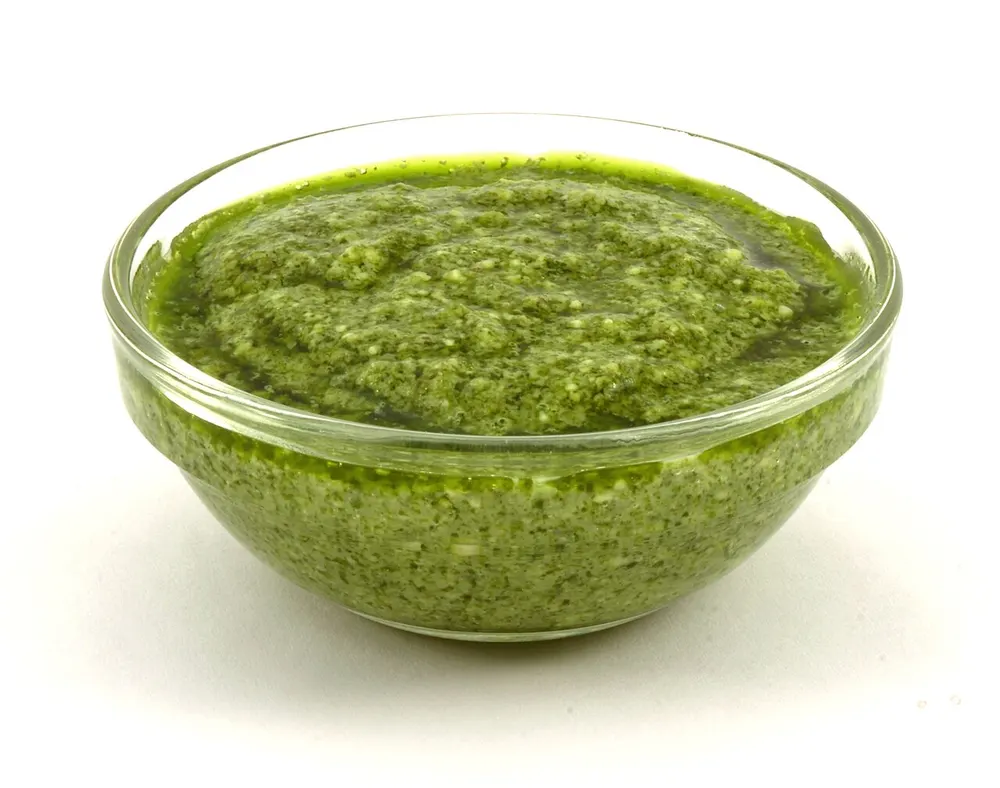
Seven ingredients pounded — never blitzed — into a green sauce that is never cooked. Genoa's whole cuisine in a mortar, and it takes ten minutes.
แหล่งที่มา
สูตรโดย Genoese home kitchens · 🏠 ครัวบ้าน · Ligurian home cooking; quantities here follow GialloZafferano's published version
GialloZafferano — Quantities follow GialloZafferano's published pesto alla genovese, which yields about 260 g and specifies the protected Ligurian ingredients — Genovese basil DOP, Ligurian olive oil DOP, stravecchio Parmigiano, Fiore Sardo pecorino, pine nuts, Vessalico garlic and coarse sea salt. Their schema credits the masthead rather than a person, so no individual is named here. The sauce itself is Genoese home cooking.
ดูวิธีทำเป็นวิดีโอ · 3 วิดีโอ
Pick the basil leaves off their stems. Do not wash them if you can avoid it — wipe them with a dry cloth instead.
💡 Water is the enemy: wet leaves bruise black and the sauce splits. If you must rinse them, dry each leaf properly.
Peel the garlic, halve each clove lengthways, and flick out the green shoot in the middle if you find one.
Put the garlic and the coarse salt into a mortar and pound them to a wet paste.
💡 Garlic goes first, always. Once the basil is in, nothing else will break the garlic down and you will be biting into raw chunks of it.
Add the pine nuts and pound until they disappear into a smooth, pale cream.
Add the basil a handful at a time with a few grains of the salt, and crush it against the wall of the mortar with a slow rotating motion — not a hammering one.
💡 This rubbing motion tears the leaf open and lets the oils out. Hammering just bruises them, and bruised basil turns black and bitter within minutes.
Keep going until the basil is a bright green paste with no leaf shapes left, then stop — 4 or 5 minutes is normal.
Work in the grated Parmigiano and the pecorino, pounding gently until the paste turns thick and pale green.
Pour the olive oil in a thin stream while stirring with the pestle, until the sauce is glossy and just loose enough to fall off a spoon.
💡 Streaming it in slowly builds an emulsion. Dumping it in all at once leaves you with green solids sitting under a puddle of oil.
Taste. It should be salty, sweet from the pine nuts and sharply green. Adjust with a pinch of salt only if it needs it — the two cheeses have already salted it.
To dress pasta, boil 320 g of trofie or linguine, and before draining loosen the pesto in a warm bowl with 2 tablespoons of the cooking water.
Toss the drained pasta through the loosened pesto in the bowl, off the heat, until every piece is coated.
💡 Never cook pesto in a pan. Heat turns the basil olive-drab and makes the cheese grainy — the sauce is finished raw, in the bowl, always.
Store any leftover pesto in a jar with a film of olive oil poured over the surface; it keeps 4–5 days in the fridge.
French
แหล่งที่มา: เชฟ
French
แหล่งที่มา: ดั้งเดิม
French
แหล่งที่มา: เชฟ
Italian
แหล่งที่มา: ครัวบ้าน
ทำแล้วใช่ไหม? แชร์รูปในหน้าผลงานสิ
แชร์ผลงานของคุณ →