Iniciante
Korean
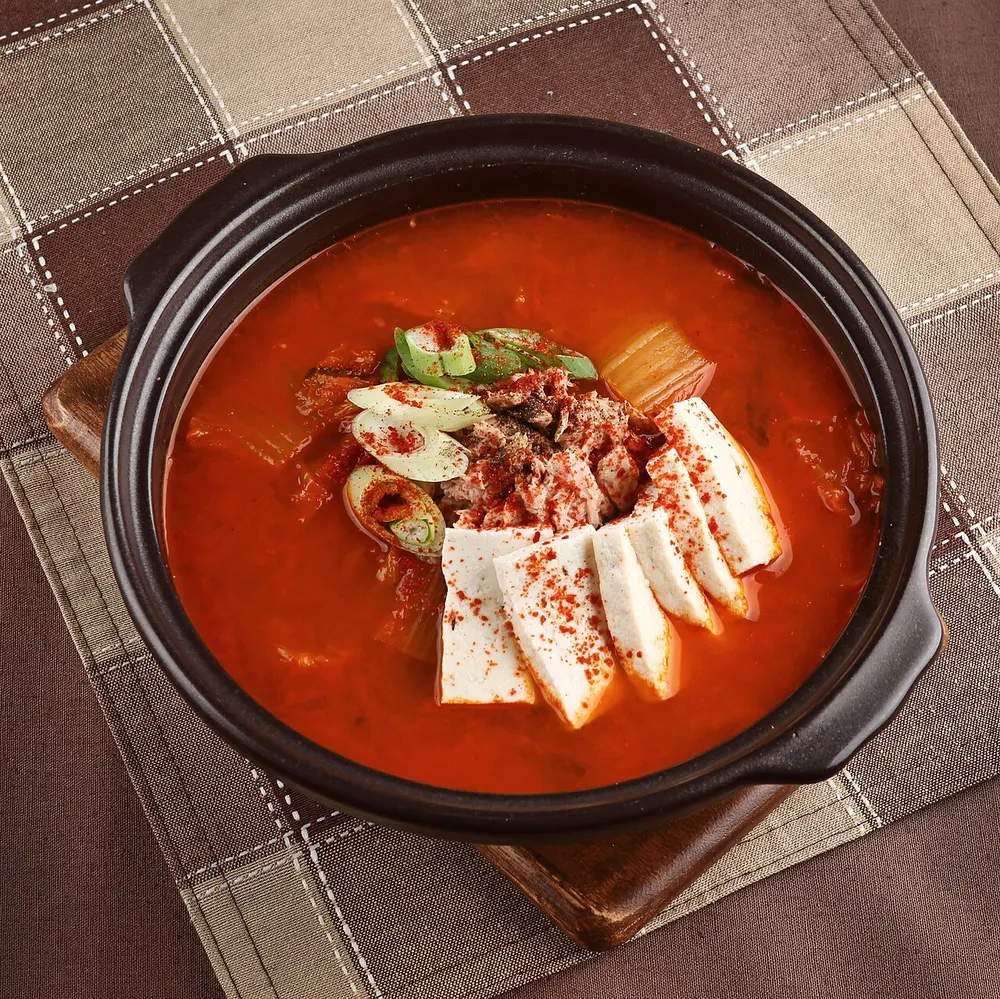
Kimchi Jjigae (Kimchi Stew)
Fonte: Tradicional
30 min3420 kcal
Sem lactose🌶️🌶️
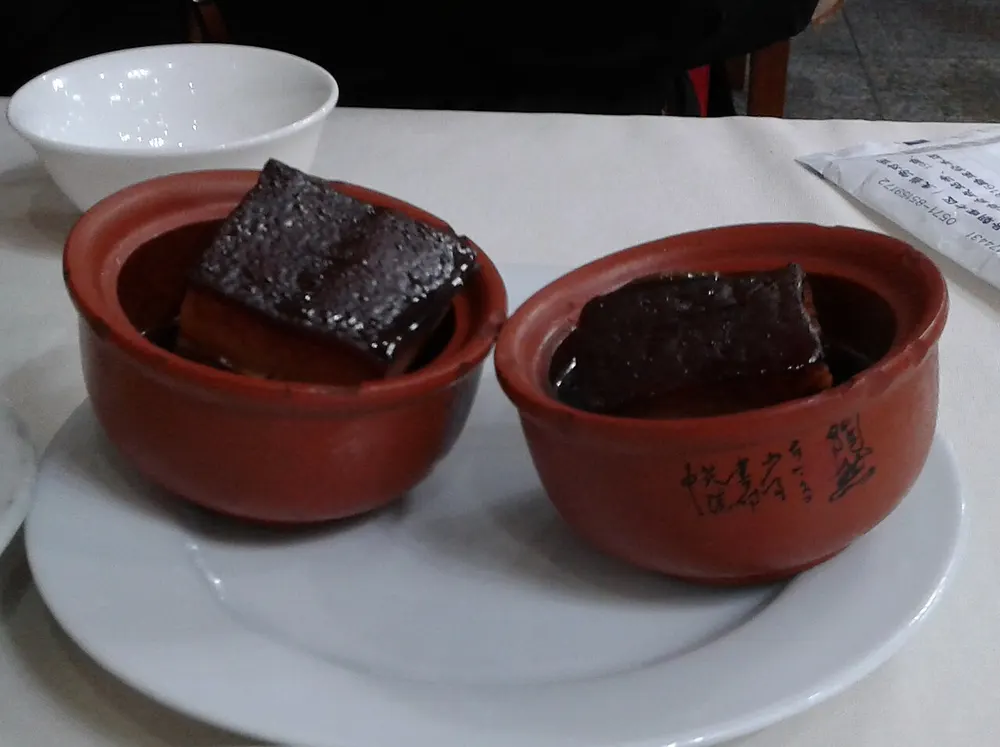
The Mokran braise scaled to a home kitchen: a 1.5 kg slab of pork belly is boiled whole, its skin seared until it blisters, then simmered two hours in soy, star anise and mirin until it collapses on the spoon.
Fonte
Receita de 이연복 · 👨🍳 Chef · Lee Yeon-bok — Chinese-cuisine chef, owner-chef of Mokran (목란)
Os nomes de cozinheiros e criadores aparecem apenas como crédito da fonte. A More Recipes Please é independente e não é afiliada, endossada nem patrocinada por eles.
Lee Yeon-bok (이연복의 복주머니) — Published by Lee Yeon-bok on his own YouTube channel, 이연복의 복주머니, as '목란 레시피를 집에서! 입에서 살살녹는 동파육' — the recipe from his restaurant Mokran, scaled for a home kitchen. The full ingredient list and numbered method are printed in the video description, which is where every quantity here comes from. Dongpo pork itself is a Hangzhou classic, not a Korean dish; what marks his version is the order of operations — boil the slab whole for 40 minutes, sear the skin alone until it blisters, and only then slice and braise for two hours.
Cozinheiro: 이연복
Veja como se faz
Bring a large pot of water to a rolling boil and lower the whole 1.5 kg slab of pork belly in. Cover it and boil for 40 minutes.
💡 Whole, not sliced. A slab holds together through two more hours of cooking; pre-cut pieces would shred into stringy scraps long before the fat has softened.
Watch the pot for the first few minutes and crack the lid slightly if it threatens to boil over.
💡 He calls this out specifically. Pork belly throws a lot of foam early on, and a covered pot will climb over the rim in seconds.
While it boils, cut the ginger and green onion into big rough chunks — thumb-sized, not minced — and tear the bird's-eye chilies apart with your fingers. Set them aside with the star anise.
Film a wide pan with a little oil and set it over medium heat until it shimmers.
Lift the boiled pork out of the water and lay it in the pan SKIN SIDE DOWN only. Sear just the skin — none of the other faces.
💡 Only the skin goes on the metal. Searing the meat sides would dry them out, and they are about to spend two hours in liquid anyway.
It will spatter hard. When it does, blot the surface oil off with a paper towel and put a lid on the pan to keep frying safely.
💡 Beginner warning: boiled pork skin is soaked with water, and water hitting hot oil is what launches it at your arms. Blot first, lid second — do not just turn the heat up and hope.
Keep going 5–8 minutes until the skin is golden brown and blistered — it should look puffed and pocked, not smooth.
Take the pork out and cut it into slices on the thick side — about 2 cm. Do not slice it thin.
Lay the slices in a pot and pour in 1 L of water and 150 ml of mat-ganjang. Set it on the heat.
💡 Liquid first, then seasonings. Adding the pastes and sauces to plain water lets them dissolve instead of scorching on the bottom of a dry pot.
Add the oyster sauce (5스푼) and the dark soy (2스푼), then the big chunks of ginger and green onion, and the star anise.
Add the mirin (100 ml), the sugar (2스푼) and the torn bird's-eye chilies. Cover, and simmer gently for about 2 hours.
💡 Gentle is the word — you want a lazy bubble, not a rolling boil. A hard boil for two hours will shake the slices to pieces and reduce the braise to a salt lick.
Check in once or twice as it goes: taste the liquid for salt and press a slice to gauge it. Kill the heat when the pork is so tender it nearly melts on the tongue.
💡 Time is a guide, doneness is the rule. Slab thickness and how hard your pot bubbles both move the clock — the melt test is what actually decides it.
Cut the eolgari cabbage into bite-size lengths. Drop the thick white stems into hot water first and let them go 30–60 seconds, then add the leaves and blanch just until they turn deep green and limp.
Bed the blanched cabbage on a plate, sit the pork on top, and spoon the braising sauce over everything.
💡 The greens are not garnish. They soak up the sauce and their bitterness resets your palate between bites of very rich fat — dongpo pork without something green gets cloying fast.
Korean
Fonte: Tradicional
Korean
Fonte: Cozinha caseira
Korean
Fonte: Cozinha caseira
Korean
Fonte: Tradicional
Fez esta receita? Compartilhe uma foto na Galeria.
Compartilhe sua criação →