Iniciante
Korean
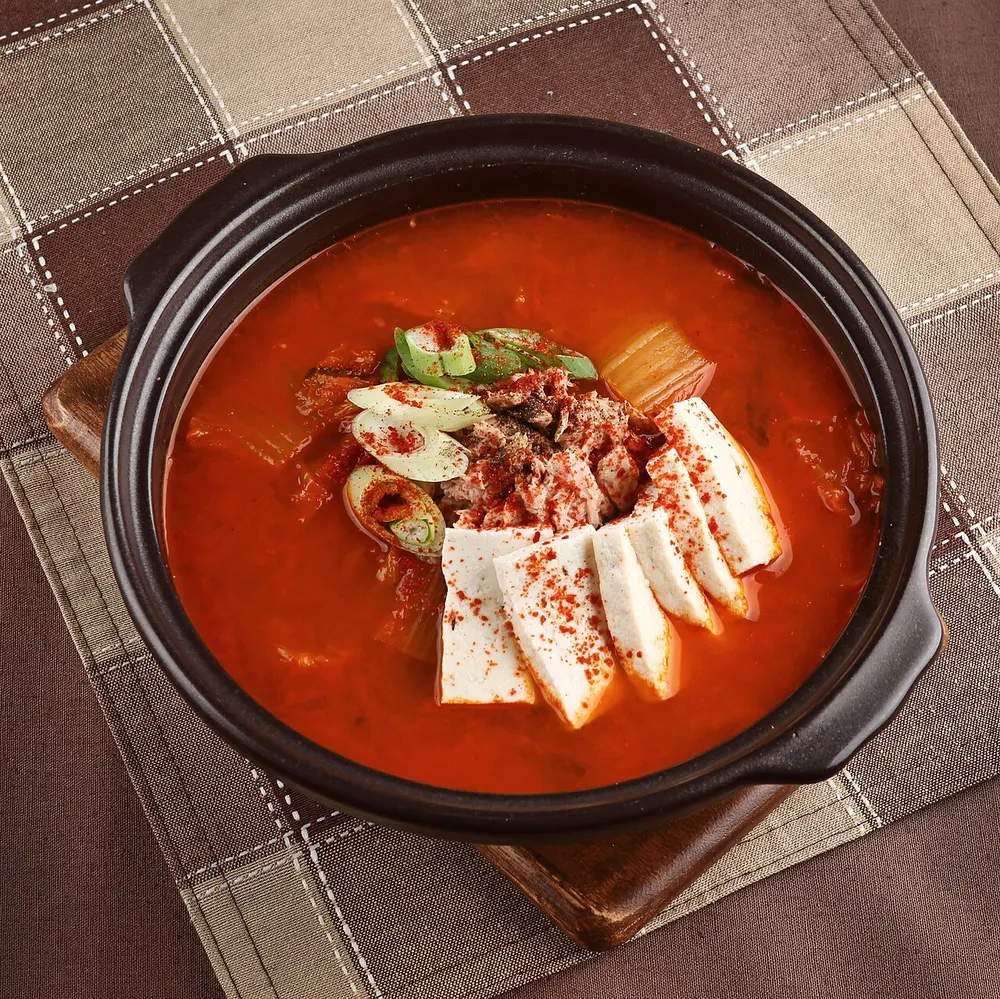
Kimchi Jjigae (Kimchi Stew)
Fonte: Tradicional
30 min3420 kcal
Sem lactose🌶️🌶️
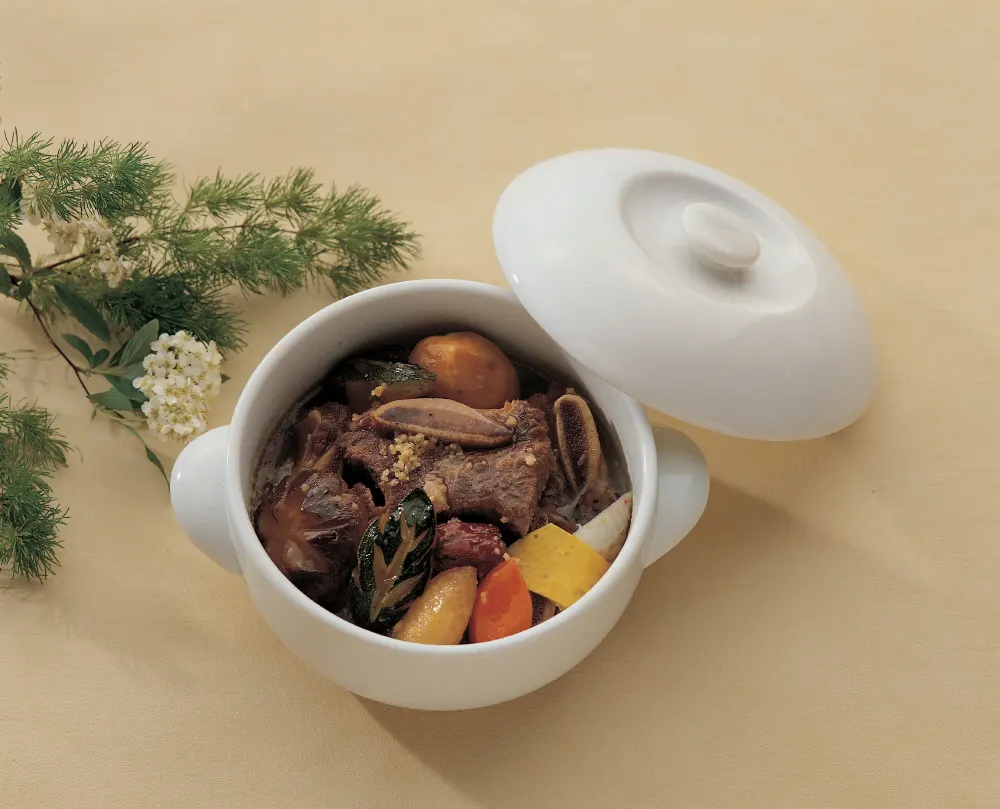
The softest galbijjim she says she has eaten in 35 years. An hour in sugar water pulls the blood out, the ribs boil naked in aromatics first, and only 800 g of that broth is carried back for the braise — so the sauce concentrates instead of drowning.
Fonte
Receita de 김진순 · 📱 Influenciador · Kim Jin-sun — Korean cooking YouTuber, '김진순의 점심시간'; former side-dish shop (반찬가게) owner
Os nomes de cozinheiros e criadores aparecem apenas como crédito da fonte. A More Recipes Please é independente e não é afiliada, endossada nem patrocinada por eles.
Kim Jin-sun's Lunchtime (김진순의 점심시간) — Published by Kim Jin-sun on her own YouTube channel 김진순의 점심시간 as '35년간 먹었던 소갈비찜 중, 가장 부드러웠어요!!', with the full ingredient list and numbered method in the video description — the 2 kg batch is used here. What marks her version out is the hour-long sugar-water soak with a change of water halfway, and carrying back only 800 g of the boiling broth for the braise so the sauce reduces onto the ribs. A third-party write-up of this same video exists at recipio.kr; the quantities here come from her own description, not from it.
Cozinheiro: 김진순
Veja como se faz
Dissolve the sugar in 4 L of cold water and submerge the ribs. Leave them 30 minutes, pour the reddened water away, refill with fresh cold water and give them another 30 minutes — one hour in total.
💡 Sugar water, not plain water. Sugar pulls liquid out of the meat by osmosis, so the blood leaves faster and more completely. Changing the water halfway is the half everyone skips — the first bath is already saturated and stops working.
While the ribs soak, bring a generous pot of water to a rolling boil over high heat.
Drop the soaked ribs into the boiling water and blanch about 3 minutes — timed from the moment the pot returns to a boil, not from when the ribs went in.
💡 She is explicit about this timing point. Cold ribs kill the boil for a minute or two; start counting too early and the ribs come out under-blanched with the scum still in them.
Lift the ribs out and rinse them under clean running water, rubbing every bone to strip off the grey scum and any bone dust clinging to it.
💡 Do not be gentle here. Anything left on the bone now ends up floating in your braising sauce later, and you cannot skim it out once the soy goes in.
Put the green onion, onion and whole peppercorns into a clean pot, pour in 4 L of water, and bring it to a boil over high heat.
Once the water is boiling, lower the blanched ribs in a few at a time.
💡 A few at a time, so the pot never drops off the boil. Dumping 2 kg of cold meat in at once stalls it and the ribs sit stewing in lukewarm water.
Put the lid on and boil 30 minutes. In an ordinary pot rather than a low-pressure one, give it 40 minutes.
💡 The +10 minutes is her own note. She cooks with a low-pressure pot; if yours is a plain stockpot the ribs simply need longer to reach the same tenderness.
Meanwhile, cut the radish and carrot into big chunks and shave the sharp corners off each piece.
💡 Rounding the corners is not decoration — sharp edges knock off during a long braise and cloud the sauce with mush.
Strain the pot: lift out only the meat, and keep the broth. Discard the boiled-out green onion and onion.
💡 Those aromatics have given everything they had and turned slimy. Their job was the broth, and the broth is what you are keeping.
Return the meat to the pot and pour back exactly 800 g of the broth — not all of it.
💡 This measurement is the whole recipe. 800 g barely comes up the sides, so the seasoning reduces onto the ribs instead of dispersing into 4 litres of soup. Pour it all back and you have made galbi-tang.
Add the soy sauce, cooking wine, oligosaccharide syrup and oyster sauce, then tuck in the radish and carrot chunks.
Lid on, braise 30 more minutes — 50 if you are using an ordinary pot. It is done when the radish has gone glossy and translucent and the meat gives way at the touch of chopsticks.
💡 The +20 minutes for a plain pot is again her own note — it is longer than the +10 on the first boil because the sauce is thicker and moves heat less freely.
Taste the sauce and serve the ribs hot with rice, spooning the reduced braising liquid over the top.
Korean
Fonte: Tradicional
Korean
Fonte: Cozinha caseira
Korean
Fonte: Cozinha caseira
Korean
Fonte: Tradicional
Fez esta receita? Compartilhe uma foto na Galeria.
Compartilhe sua criação →