Iniciante
Korean
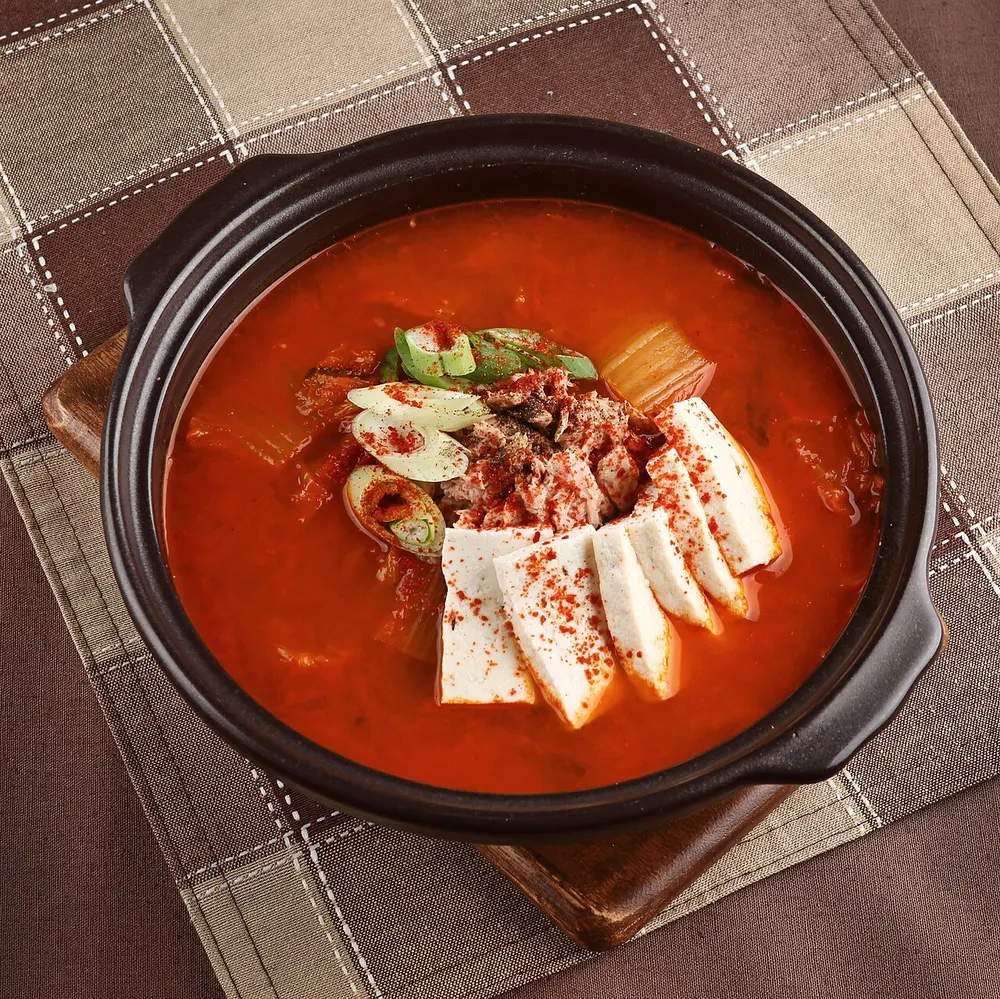
Kimchi Jjigae (Kimchi Stew)
Fonte: Tradicional
30 min3420 kcal
Sem lactose🌶️🌶️
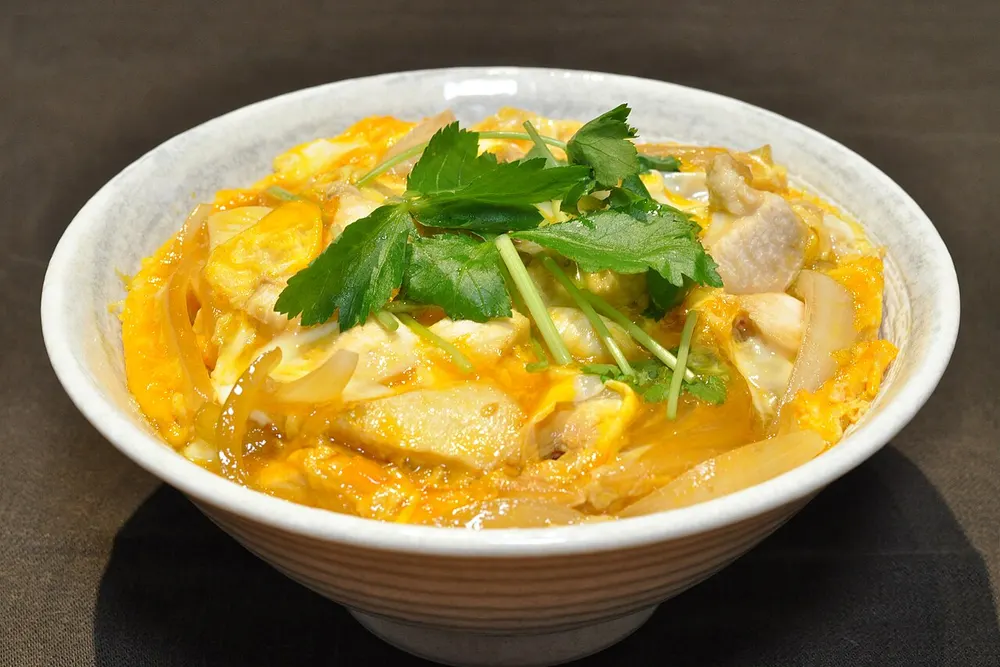
A yakitori-shop owner's chicken-and-egg bowl: an unusually mirin-heavy broth, shredded nori hidden under the topping rather than sprinkled on it, and one small pan cooked per person so the egg never overcooks.
Fonte
Receita de 笠原将弘 · 👨🍳 Chef · Masahiro Kasahara — Japanese-cuisine chef, owner of the Tokyo restaurant Sanpi Ryoron (賛否両論)
Os nomes de cozinheiros e criadores aparecem apenas como crédito da fonte. A More Recipes Please é independente e não é afiliada, endossada nem patrocinada por eles.
Masahiro Kasahara (笠原将弘の料理のほそ道) — Published by Masahiro Kasahara on his own YouTube channel 【賛否両論】笠原将弘の料理のほそ道 as '数え切れないほど作って辿り着いた【究極の親子丼】' — the oyakodon he arrived at after making it countless times. He introduces it as the version he now recommends most, drawing on his years running a yakitori restaurant. The full 材料 list for 2 servings and his numbered method are published as text in the video description; the quantities here are taken from it directly. What marks his version out: a broth of 4 parts dashi to 2 mirin to 1 soy — twice as much mirin as soy sauce — shredded nori laid under the topping instead of over it, and one small pan cooked per person.
Cozinheiro: 笠原将弘
Veja como se faz · 3 vídeos
Slice the naganegi thinly on the diagonal. Pull the mitsuba apart into leaves and stems, and cut the stems into fine rounds — keep the two piles separate.
💡 The split is deliberate: the leaves simmer in the pan and go soft and fragrant, while the raw chopped stems are scattered on top at the end for crunch and a fresh, celery-like lift.
Trim the chicken thigh and cut it into bite-size pieces with the knife held at a slant (sogigiri).
💡 Slanting the knife gives each piece a wider, thinner face than a straight cut. It cooks faster and stays juicier — the same reason it never turns rubbery in a good yakitori shop.
Rub the 1 tsp sugar and 2 tsp soy sauce into the chicken with your hands until every piece is coated.
In a bowl, stir together the broth: 200 ml dashi, 100 ml mirin and 50 ml soy sauce.
💡 Look at that ratio — 4 dashi : 2 mirin : 1 soy. That is twice as much mirin as soy sauce, far sweeter and glossier than the usual home oyakodon broth, and it is what makes this version taste like a restaurant's.
Beat the eggs lightly — 2 per serving, in their own bowl each. Stop while you can still see separate ribbons of white and yolk.
💡 Beginner's instinct is to whisk eggs smooth. Don't. Under-beaten egg sets in soft, uneven clouds of yellow and white — the marbled look that says oyakodon. Whisk it uniform and you get a flat omelette.
Divide the hot rice between two donburi bowls and lay the shredded nori over the rice.
💡 Nori UNDER the topping, not sprinkled over it. Buried between hot rice and hot egg it steams and melts into the rice, seasoning every mouthful. Scattered on top it just goes limp and sticks to your lip.
Now work one portion at a time, in a small frying pan. Into the pan go half the broth, half the chicken, half the naganegi and half the mitsuba leaves.
💡 This is the rule the whole recipe hangs on. A pan holding two portions is too wide: the egg spreads thin, sets before it can curd, and you cannot slide it out in one piece. Small pan, one bowl at a time. Yes, it means cooking twice.
Set the pan over medium heat and simmer until the chicken is cooked through — around 4–5 minutes, once the pieces have turned from pink to white all over and the broth is bubbling round the edge.
💡 The 4–5 minutes is our guide for beginners; Kasahara only says 'until the chicken is cooked through'. Trust his cue over the clock — pan sizes differ.
Take half of that portion's two beaten eggs and pour it in a spiral, starting at the centre and working outward. Drop the heat to somewhere between low and medium.
💡 Half the egg first, not all of it. The first half is sacrificed — it cooks firm and becomes the base that holds everything together.
Stir gently from the outside in as it sets, until the egg has firmed up moderately — about 30–40 seconds.
Pour in the remaining half of the egg the same way, spiralling from the centre out, and cook just until it is barely set — still glossy, still wobbling when you move the pan.
💡 The second half never fully cooks — that is the whole trick. Firm base, silky half-set crown. Keep it on the heat 'just to be safe' and you have thrown away the reason to make this at home.
Slide the whole thing onto the nori-covered rice in one movement, and scatter the chopped mitsuba stems over the top.
Wipe the pan out and make the second bowl exactly the same way. Eat each one the moment it is done — this dish does not wait.
Korean
Fonte: Tradicional
Korean
Fonte: Cozinha caseira
Korean
Fonte: Cozinha caseira
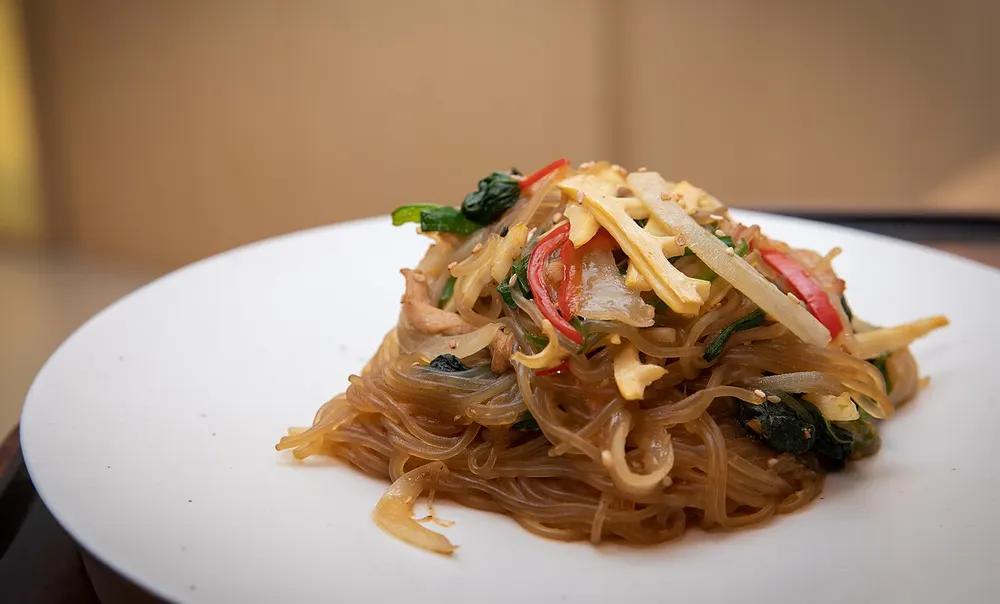
Korean
Fonte: Tradicional
Fez esta receita? Compartilhe uma foto na Galeria.
Compartilhe sua criação →