Iniciante
Korean
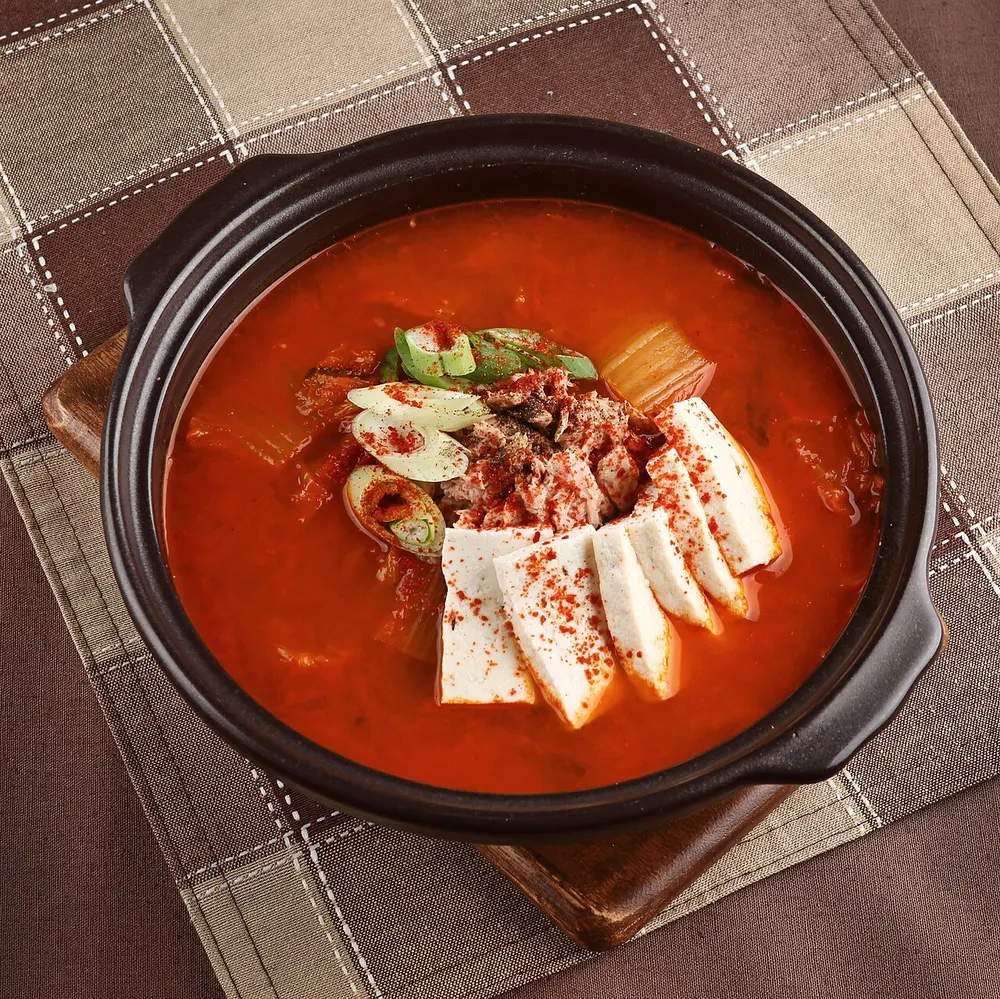
Kimchi Jjigae (Kimchi Stew)
Fonte: Tradicional
30 min3420 kcal
Sem lactose🌶️🌶️
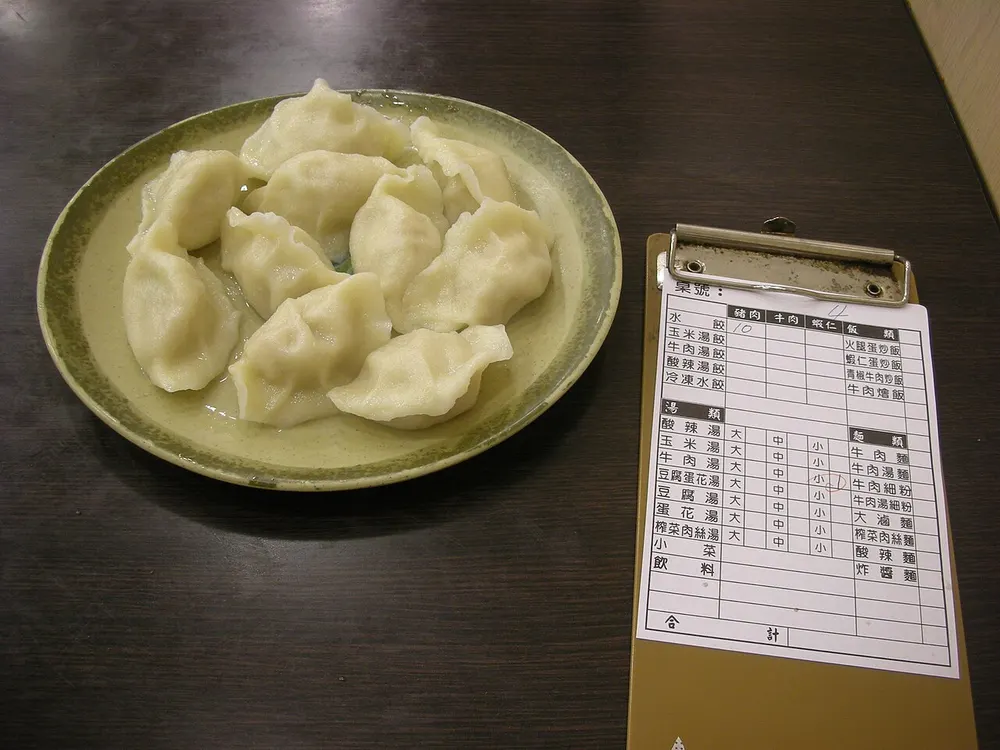
Pork and napa cabbage folded into hand-rolled wrappers and boiled — the dumpling northern China makes by the hundred at New Year, eaten with black vinegar and raw garlic.
Fonte
Receita de Northern Chinese home kitchens · 🏠 Cozinha caseira · The everyday and New Year dumpling of northern China — no single author
Northern Chinese home-style / 北方家常 — Jiaozi carry more cultural weight than almost any Chinese dish. They are traditionally credited to Zhang Zhongjing of the Eastern Han, who is said to have wrapped stewed lamb and warming medicines in dough to treat frostbitten ears among the poor — hence their old name, 'tender ears'. Their shape recalls the yuan bao gold and silver ingots used as Ming-dynasty currency, which is why families across northern China eat them at midnight on New Year's Eve, sometimes with a coin hidden inside for luck. Boiled they are shuijiao, steamed zhengjiao, pan-fried guotie.
Veja como se faz · 3 vídeos
Make the dough first: mix the flour with the cold water until it comes together, then knead 8–10 minutes until smooth. Cover and rest it 30 minutes.
💡 The rest is not optional. Freshly kneaded dough springs back and fights the rolling pin; 30 minutes lets the gluten relax and the wrappers roll out in half the time.
Chop the cabbage as finely as you can, put it in a bowl, toss it with the tablespoon of salt, and leave it 20 minutes.
Take the cabbage by the fistful and squeeze it hard over the sink. Keep squeezing until barely a drop comes out.
💡 You will be shocked how much water comes out, and this is the whole ballgame. Unsqueezed cabbage floods the filling, the wrappers go soggy and split, and the dumplings burst in the pot. Squeeze harder than feels reasonable.
Put the pork in a big bowl and beat in the 60 ml of water 20 ml at a time, stirring one direction until each addition disappears.
Add the ginger, scallion, soy, wine, white pepper and the teaspoon of salt, and stir one direction for 2 minutes until sticky.
Now fold in the squeezed cabbage and the sesame oil, mixing just until combined.
💡 Cabbage goes in at the end and gets folded, not beaten. Working it hard breaks the cell walls and releases the water you just spent five minutes squeezing out.
Roll the dough into a long snake, cut it into about 40 pieces, and press each one flat with your palm.
Roll each into a round about 8 cm across, turning it with one hand while the pin works only the outer edge, so the centre stays thicker.
💡 A thick centre and thin rim is deliberate. The centre carries the weight of the filling and the rim is doubled when you fold — an evenly thin wrapper splits at the bottom and turns gummy at the pleats.
Put a teaspoon of filling in the centre of a wrapper, fold it in half and pinch the middle shut, then pleat from the middle outwards on both sides.
💡 Resist overfilling — it is the reason most first-timers' dumplings burst. A teaspoon looks stingy and is correct.
If you cannot pleat, just press the edge flat and seal it firmly. A sealed dumpling always beats a pretty one that opens.
Bring a big pot of water to a hard boil and slide in 15–20 dumplings, stirring once with the back of a spoon so they do not stick to the bottom.
When it returns to the boil, add a cup of cold water. Let it come back to the boil and add a second cup, then a third.
💡 This is the northern 点水 trick, three cups of cold water. It drops the temperature so the wrappers cook through without the water thrashing them apart, and by the third cup the filling inside is done too.
They are ready when they all float, the wrappers look slightly translucent and puffed, and a test dumpling shows no pink pork inside.
Lift them out with a slotted spoon, drain briefly, and serve with black vinegar and a clove of raw garlic to bite between dumplings.
💡 The raw garlic clove is not a garnish. In the north you bite a peeled clove between dumplings, and its sharpness cutting the fat is genuinely part of how the dish is meant to taste.
Korean
Fonte: Tradicional
Korean
Fonte: Cozinha caseira
Korean
Fonte: Cozinha caseira
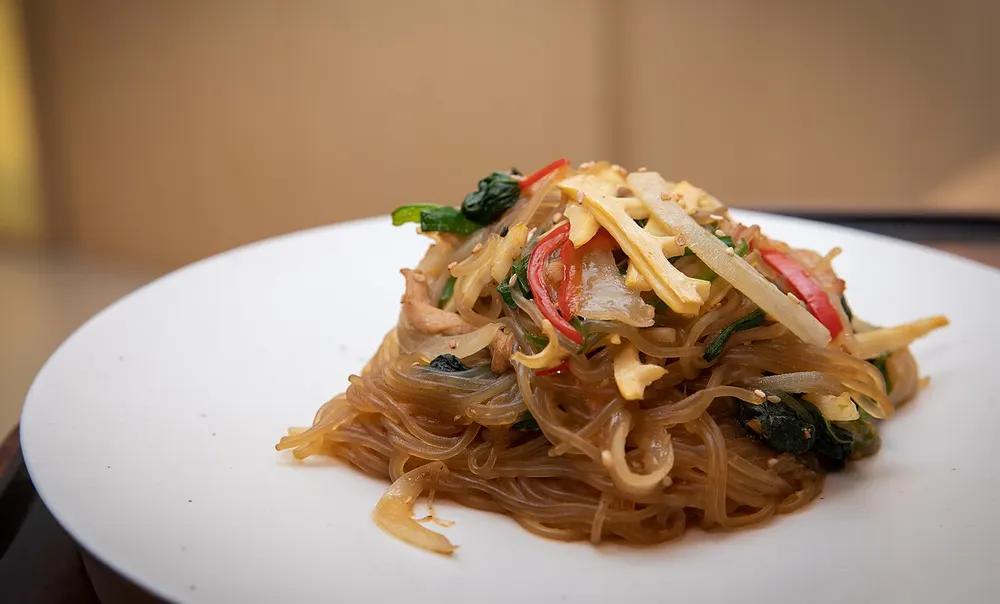
Korean
Fonte: Tradicional
Fez esta receita? Compartilhe uma foto na Galeria.
Compartilhe sua criação →