Iniciante
Korean
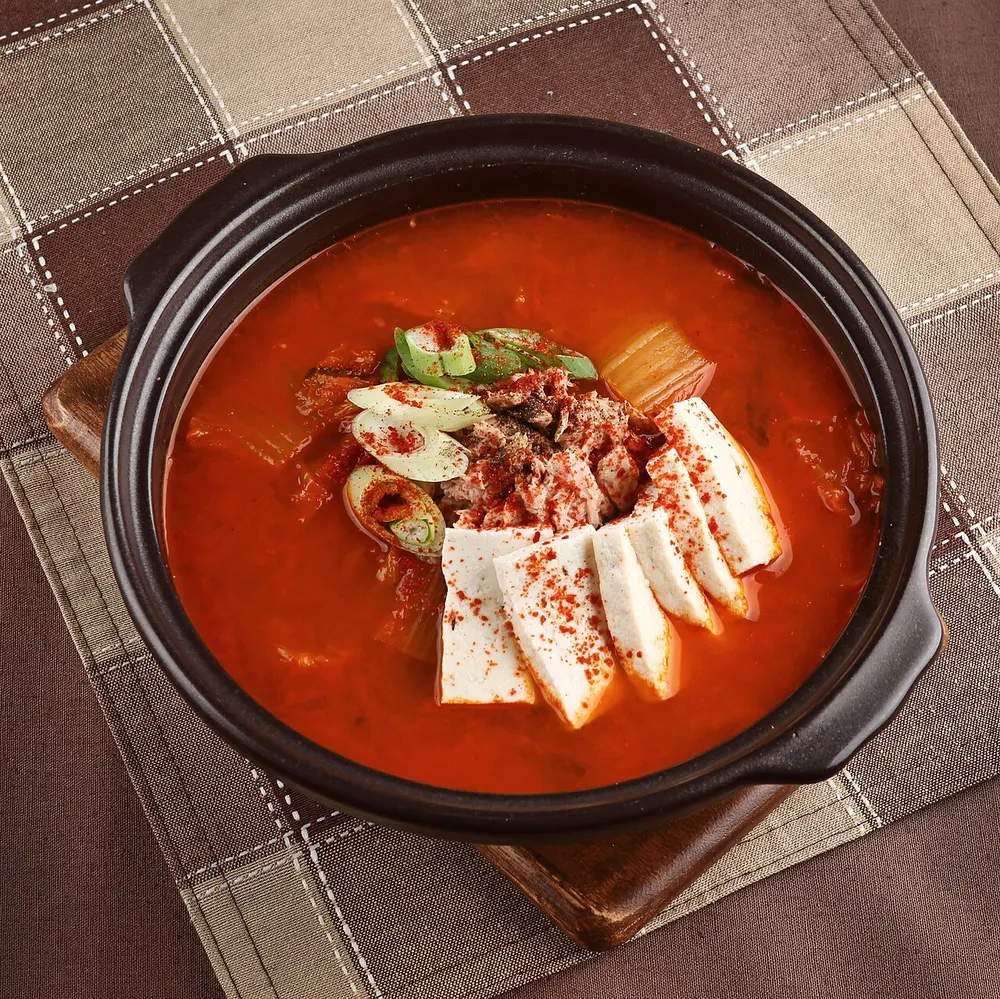
Kimchi Jjigae (Kimchi Stew)
Fonte: Tradicional
30 min3420 kcal
Sem lactose🌶️🌶️
The dish that converted a producer who could not eat chicken feet: blanched in salted cooking wine, rinsed clean, then braised in a litre of liquid so it stays a soupy dakbal you can dunk noodles into.
Fonte
Receita de 정호영 · 👨🍳 Chef · Jung Ho-young — Japanese-cuisine chef, trained at the Tsuji Culinary Institute, Japan
Os nomes de cozinheiros e criadores aparecem apenas como crédito da fonte. A More Recipes Please é independente e não é afiliada, endossada nem patrocinada por eles.
Jung Ho-young (Kitchen Caden) — Published by Jung Ho-young on his own YouTube channel, 정호영의 오늘도 요리 Kitchen Caden, as '닭발 못 먹는 PD가 이거 먹고 닭발 킬러가 됐습니다'. The ingredient list, the separate seasoning list, his numbered method and his two closing notes — that the sweetness and heat are yours to adjust, and that tteok, ramyeon or udon can go into the leftover broth — are all printed in the video description, which is where every quantity here comes from. His version is a soupy 국물닭발 rather than the sticky grilled kind: the feet are blanched in salted cooking wine and rinsed before a full litre of water goes into the braise.
Cozinheiro: 정호영
Veja como se faz · 3 vídeos
Bring a pot of water to a boil — enough to cover the chicken feet — and add the cooking wine (3큰술) and the salt (1큰술).
Drop the 500 g of boneless chicken feet in and blanch them for 2–3 minutes, until the surface turns opaque white and grey scum lifts to the top.
💡 This is not cooking — it is cleaning. Chicken feet carry a distinct smell, and the cooking wine's alcohol carries it off as it evaporates while the salt firms the skin. Skip this and no amount of gochugaru will hide it.
Drain the feet and rinse them under cold running water, rubbing them between your hands until the water runs clear and they no longer feel slippery.
💡 Rinse properly — that coagulated protein and fat clinging to them is exactly what makes a home dakbal taste muddy. Cold water also tightens the skin, which helps it stay springy through the braise.
Wipe the pot out, pour in 1 L of fresh water, and put the blanched feet in.
Add the seasonings all at once: minced garlic (1큰술), gochujang (1큰술), oyster sauce (2큰술), cooking wine (3큰술), sugar (3큰술), soy sauce (5큰술) and gochugaru (5큰술).
💡 Only 1 spoon of gochujang against 5 of gochugaru. Chili powder gives clean heat and red colour; gochujang would bring sweetness and body but also thicken and scorch. The ratio is why this stays a broth and not a sticky glaze.
Stir until the gochujang and chili powder have dissolved with no dry pockets, and bring it to a hard, noisy boil.
Keep it boiling 15–20 minutes. The feet should go from firm to yielding — bouncy when you bite, never mushy.
💡 Boneless feet are collagen and skin, and collagen needs time to soften. But this is a narrow window — go too far past it and they slump into gelatinous mush. Start biting one at 15 minutes.
While it braises, cut the onion (1/4개), the green onions (2대) and the Cheongyang chilies (2개).
Once the broth is boiling hard, tip all the vegetables in at once.
Boil again just until the vegetables are cooked — 3–4 minutes, until the onion turns translucent and the green onion softens but still has some spine.
💡 Two whole stalks of green onion is a lot, and that is intentional — it is the sweetness balancing 5 spoons of chili. Boil it to rags and you lose the counterweight.
Finish with the black pepper — a full 1큰술 — stirred through, and take it off the heat.
💡 A whole tablespoon sounds like a typo. It is not: pepper is the third leg of this dish alongside the chili and the sweetness, and it goes in at the end because its aroma is volatile — boil it for twenty minutes and it just tastes dusty.
Serve it bubbling. Because there is a whole litre of broth, drop in tteok, ramyeon or udon and let them cook right in the pot as you eat.
Korean
Fonte: Tradicional
Korean
Fonte: Cozinha caseira
Korean
Fonte: Cozinha caseira
Korean
Fonte: Tradicional
Fez esta receita? Compartilhe uma foto na Galeria.
Compartilhe sua criação →