Iniciante
Korean
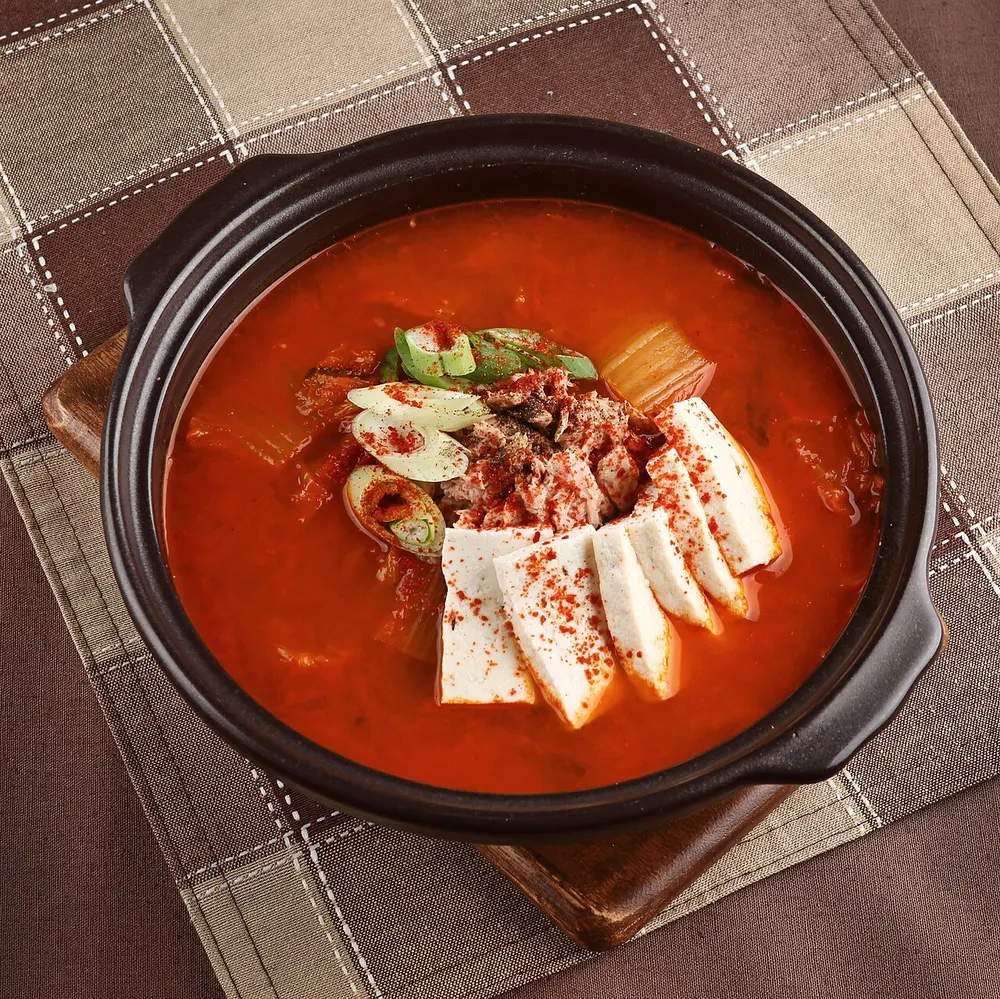
Kimchi Jjigae (Kimchi Stew)
Fonte: Tradicional
30 min3420 kcal
Sem lactose🌶️🌶️
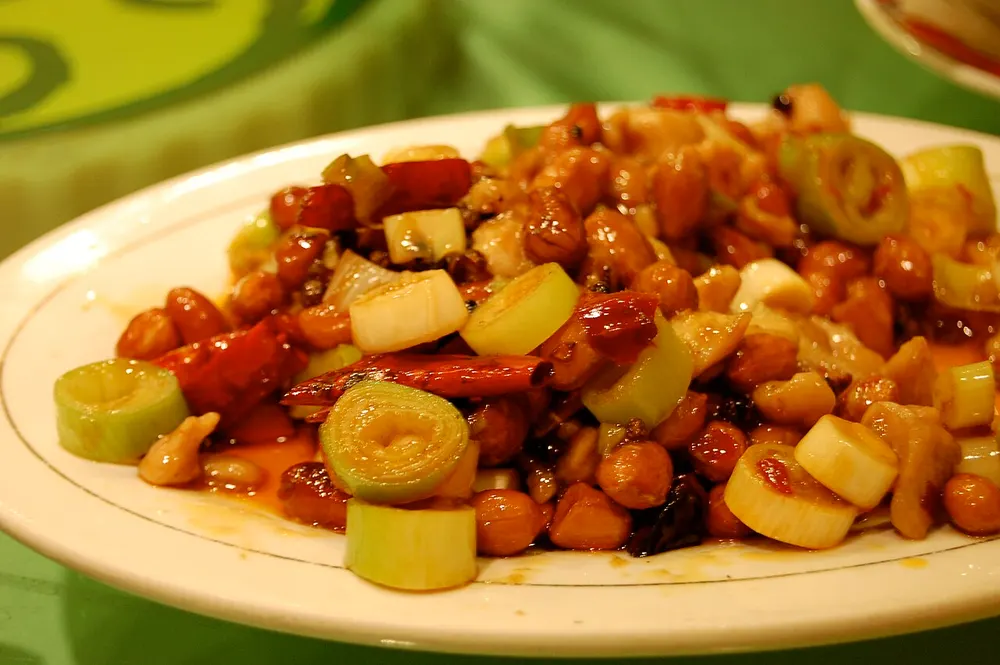
Diced chicken flashed through a wok of toasted chilies and Sichuan pepper, bound in a sweet-sour 'lychee' sauce and finished with crunchy peanuts.
Fonte
Receita de Sichuan home kitchens · 🏺 Tradicional · A Qing-era restaurant classic, now cooked in homes nationwide
Sichuan classic / 川菜名菜 — The name honours Ding Baozhen (1820–1886), a late-Qing governor of Sichuan whose honorary title Taizi Shaobao fell under the class of ranks called Gongbao, 'Palace Guardian'. The 丁 in the name puns on his surname and on 'small cube', which is how the chicken is cut. During the Cultural Revolution the imperial reference made the name unusable and it was sold as 'spicy chicken' until it was rehabilitated in the 1980s.
Veja como se faz · 3 vídeos
Dice the chicken thigh into 1.5 cm cubes and toss with the 10 ml soy, 10 ml Shaoxing wine and 5 g of the cornstarch. Leave it 15 minutes.
💡 That starch coating is called 上浆 — it forms a thin film that holds the chicken's juice in through the fierce heat. Skip it and the dice come out dry and stringy.
Stir the sauce in a small bowl: 15 ml black vinegar, 12 g sugar, 10 ml soy, 20 ml water and the remaining 3 g cornstarch. Set it by the stove.
💡 Pre-mixing is not optional here. The whole stir-fry takes under two minutes — there is no moment to measure vinegar while the chilies are burning.
Snip the dried chilies in half and shake out most of the seeds. Slice the garlic and ginger, and cut the scallion whites into chunks the size of the chicken dice.
💡 The seeds are what burn first and turn everything acrid. The chili flesh gives fragrance; the seeds mostly give bitterness.
If your peanuts are raw, fry them in cold oil over low heat until they turn pale gold, then lift them out — they keep darkening off the heat.
Heat the wok over high until it smokes faintly, add the 30 ml oil, then immediately drop the heat to medium-low.
💡 Hot wok, then cool oil. You want a well-seasoned hot surface so nothing sticks, but the chilies that go in next need gentle heat or they scorch on contact.
Add the chilies and Sichuan peppercorns and stir them slowly for 20–30 seconds, until the chilies deepen to a dark red and the air smells sharply toasted.
💡 Watch the colour, not the clock. Dark red and fragrant is right; black and smoking means bitter — start over, it will not recover.
Turn the heat to high and slide in the chicken, spreading it into one layer. Leave it alone for 30 seconds to take colour.
Now toss hard for about 1 minute, until the dice are white on all sides and just cooked through.
💡 'Just cooked' is the target — the sauce still has to go in and bubble, and that finishes it. Cooking it fully now guarantees rubbery chicken.
Add the garlic, ginger and scallion whites and stir 20 seconds, just until you can smell the garlic.
Give the sauce bowl a quick re-stir — the starch will have settled — and pour it around the rim of the wok, not into the middle.
💡 Pouring around the hot rim flashes the sauce to a boil on the way down, so it thickens instantly instead of cooling the wok into a stew.
Toss constantly for 20–30 seconds. The sauce will go from cloudy to clear and glossy and cling to every cube.
Kill the heat, fold in the peanuts, and plate at once.
💡 Peanuts go in off the heat, at the very last second. Any earlier and the sauce softens them — the crunch against the soft chicken is half of why this dish works.
Korean
Fonte: Tradicional
Korean
Fonte: Cozinha caseira
Korean
Fonte: Cozinha caseira
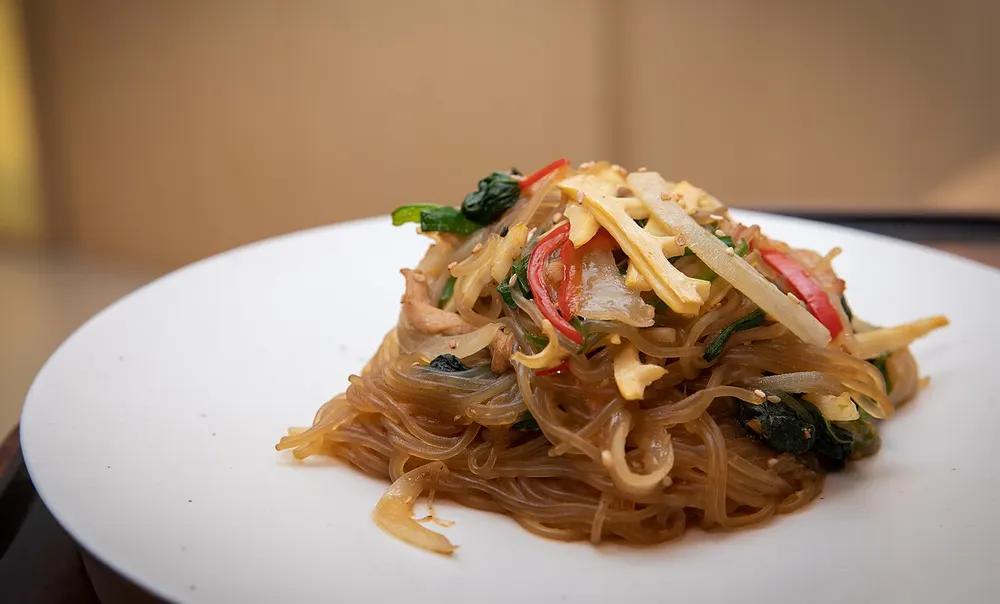
Korean
Fonte: Tradicional
Fez esta receita? Compartilhe uma foto na Galeria.
Compartilhe sua criação →