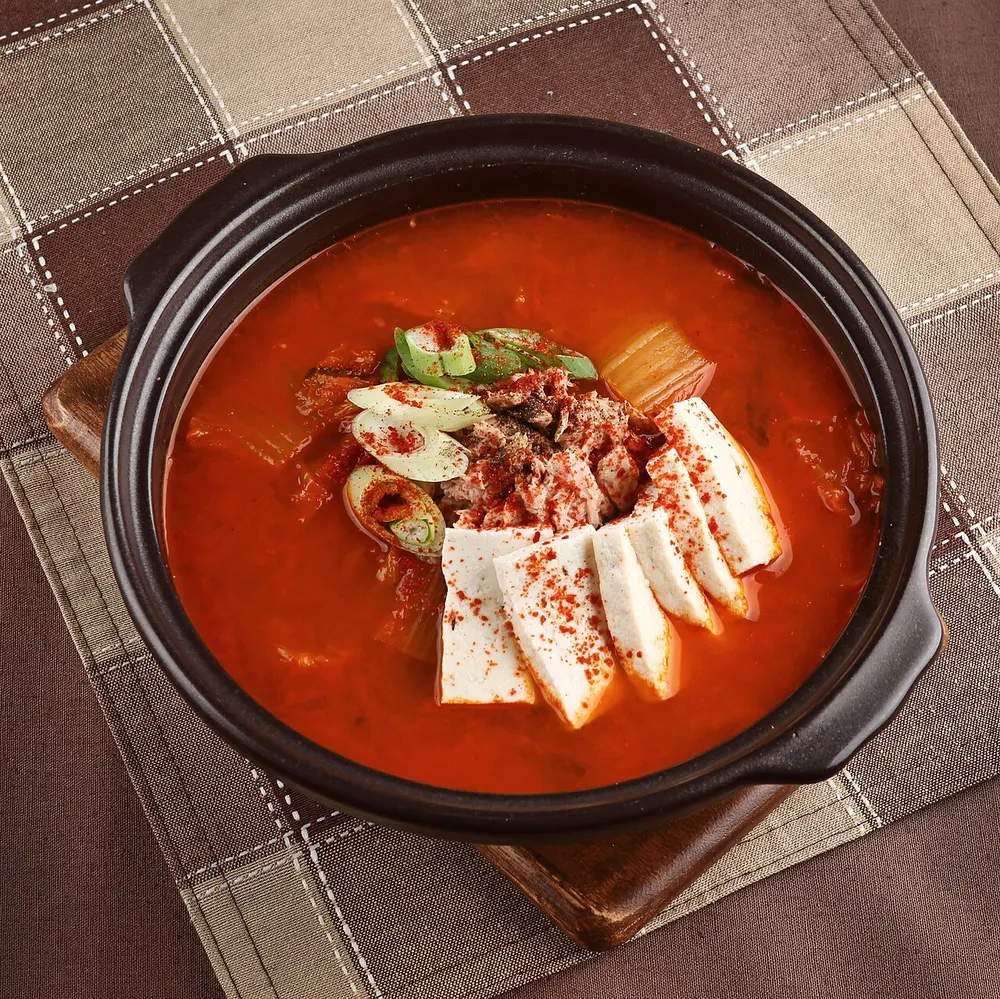
Iniciante
Korean
Kimchi Jjigae (Kimchi Stew)
Fonte: Tradicional
30 min3420 kcal
Sem lactose🌶️🌶️
Milk curdled with yoghurt, drained and then pressed flat between two boards under a stone — a mild, squeaky fresh cheese eaten in slices with tea, and made in an afternoon.
Fonte
Receita de Mongolian ger kitchens · 🏺 Tradicional · Cooking in a round felt tent with one stove in the middle — mutton, flour, and the white foods made from milk, with almost nothing that has to be bought.
Mongolian · fresh cheese — An ownerless traditional dish, so no cook is credited. `Byaslag` has no article of its own and redirects to `Mongolian_cuisine`, the country overview, which confirms that dairy products are the base of the cuisine and names byaslag among the white foods. That the cited page is the overview and not a dish article is stated here rather than glossed over. Quantities and method are this book's own.
Veja como se faz · 2 vídeos
Heat the milk in a heavy pot to 85°C, stirring so it does not catch on the bottom.
Take it off the heat and stir in the yoghurt. Leave it 10 minutes without touching it.
💡 Stir once and then leave it alone. Stirring while it separates breaks the curd into grains too small to press together.
The curds will rise in a mass and the whey below will turn clear yellow-green. If it is still milky, warm it again gently for 3 minutes.
Pour it all through a muslin-lined colander. Sprinkle the salt through the curd and let it drain 30 minutes.
Gather the cloth into a flat parcel, set it between two boards and put a 3 kg weight on top. Press 6 hours.
💡 Flat and heavy. Byaslag is meant to be a slab you can slice, not a ball — the pressing is what gives it the squeak.
Unwrap, slice thin and eat with suutei tsai. It keeps 5 days in the fridge.
Korean
Fonte: Tradicional
Korean
Fonte: Cozinha caseira
Korean
Fonte: Cozinha caseira
Korean
Fonte: Tradicional
Fez esta receita? Compartilhe uma foto na Galeria.
Compartilhe sua criação →