Iniciante
Korean
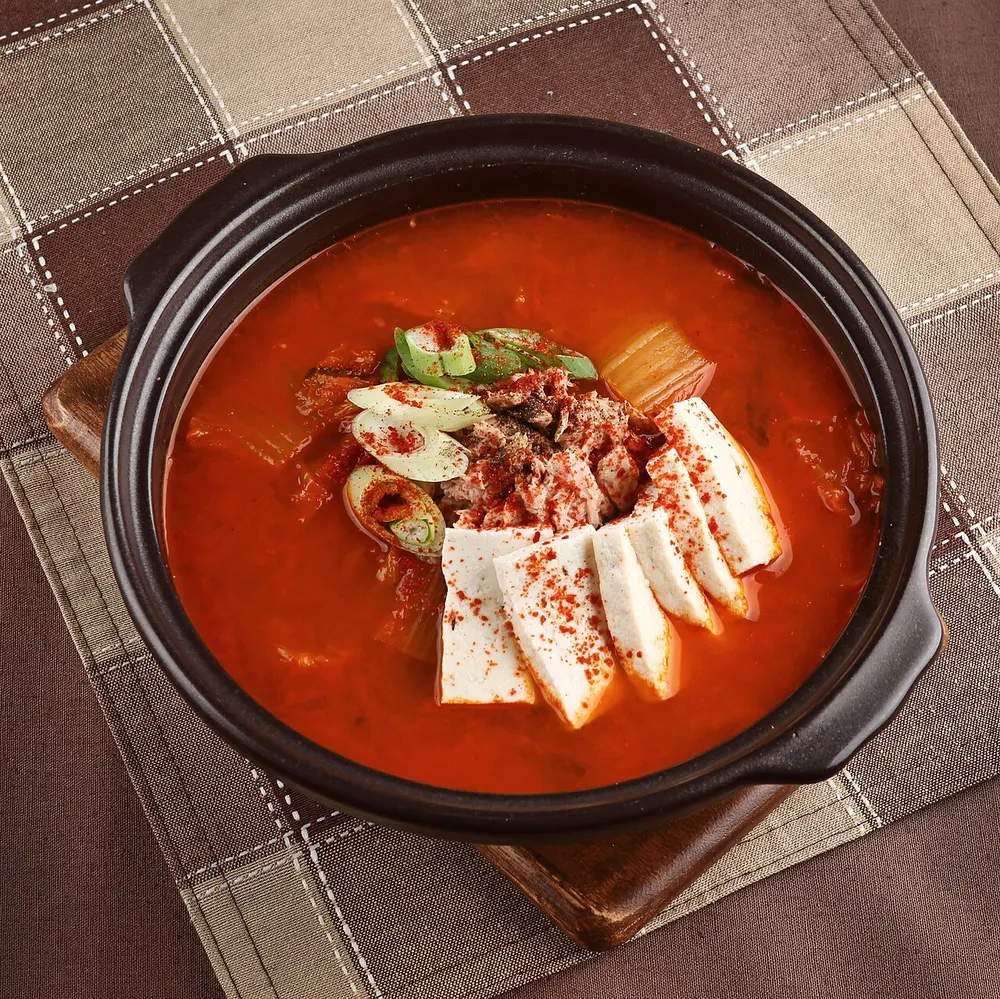
Kimchi Jjigae (Kimchi Stew)
Fonte: Tradicional
30 min3420 kcal
Sem lactose🌶️🌶️
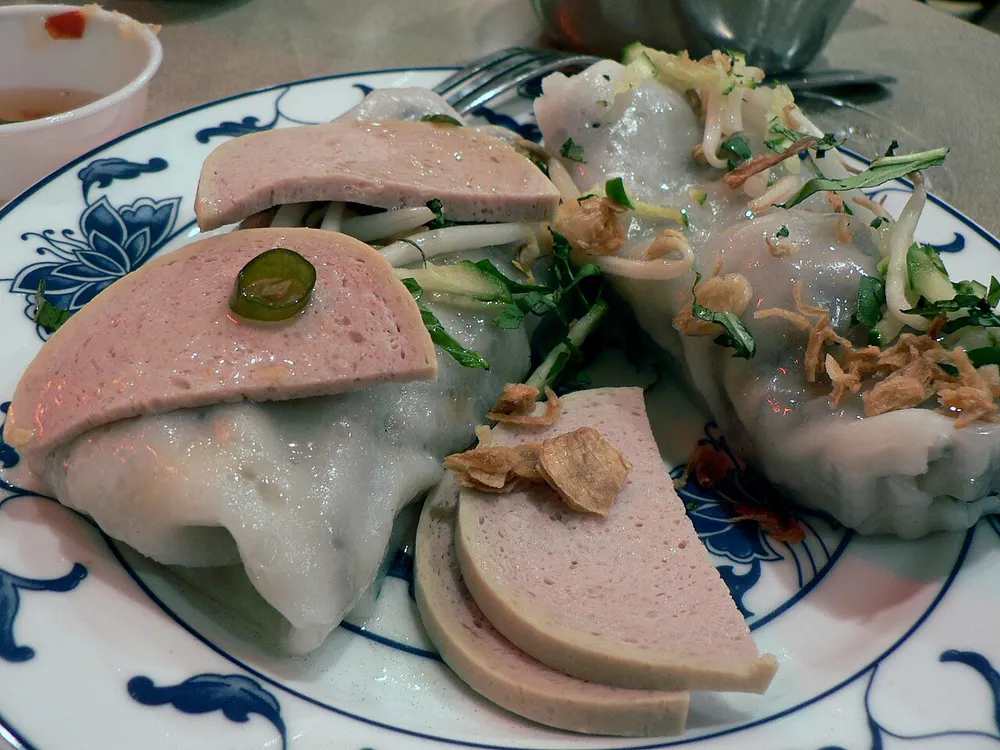
Northern Vietnam's breakfast of near-transparent rice sheets, steamed a few seconds each over a cloth-covered pot, rolled around pork and wood ear mushroom, and showered with fried shallots.
Fonte
Receita de Hanoi kitchens and street stalls · 🏺 Tradicional · Northern Vietnamese cooking — Hanoi households and the pavement stalls of the Old Quarter
Northern Vietnamese breakfast dish — An ownerless northern dish with no documented creator. The reference confirms the origin in northern Vietnam, the slightly fermented rice batter steamed on a cloth stretched over a pot of boiling water, the filling of seasoned ground pork with minced wood ear mushroom and shallots, the accompaniments of Vietnamese pork sausage, cucumber and bean sprouts, the nước chấm dipping sauce, and the unrolled Thanh Trì and Kênh village versions. The non-stick pan method given here is this book's home adaptation and is stated as such, not presented as traditional. Quantities are ordinary home proportions.
Veja como se faz · 3 vídeos
Whisk the rice flour, tapioca starch, cornflour, salt, oil and water together until completely smooth, then leave the batter to rest for at least an hour. Stir it again before every single sheet — the starch sinks fast.
💡 The batter must be thin — the consistency of single cream. A thick batter gives you a rubbery pancake instead of a sheet you can see light through.
Fry the shallots in a little oil until soft, add the pork and break it up, then stir in the chopped wood ear, 1 tbsp fish sauce and the pepper. Cook 5 minutes until dry and crumbly, and set aside.
💡 Dry filling, always. Any liquid left in it will soak through the fragile sheet and tear it while you are rolling.
Mix the dipping sauce: the remaining 4 tbsp fish sauce, 3 tbsp sugar, the lime juice and 350 ml warm water. It should taste light and drinkable, not concentrated.
Set up the steamer. Traditionally a cloth is stretched drum-tight over a pot of boiling water; at home, a wide non-stick frying pan with a lid over medium heat is far more forgiving and does the same job.
Brush the pan with the thinnest film of oil. Pour in a small ladle of batter, swirl to coat the base, cover, and steam for 30 to 40 seconds until the sheet turns from white to translucent and lifts at the edges.
💡 The first two or three will tear. That is normal even for people who have made this all their lives — eat the failures and carry on.
Slide the sheet onto an oiled board, put a spoonful of filling along one edge, fold the sides in and roll it up. Set the rolls on a plate seam-down and repeat until the batter is gone.
Shower the fried shallots over the top and serve warm with the sausage, blanched bean sprouts, cucumber and a bowl of the dipping sauce for each person.
💡 Bánh cuốn goes stiff in the fridge and never really comes back. It is a dish to make and eat within the hour, which is exactly why Hanoi eats it standing up at 7am.
Korean
Fonte: Tradicional
Korean
Fonte: Cozinha caseira
Korean
Fonte: Cozinha caseira
Korean
Fonte: Tradicional
Fez esta receita? Compartilhe uma foto na Galeria.
Compartilhe sua criação →