အစပြု
Korean
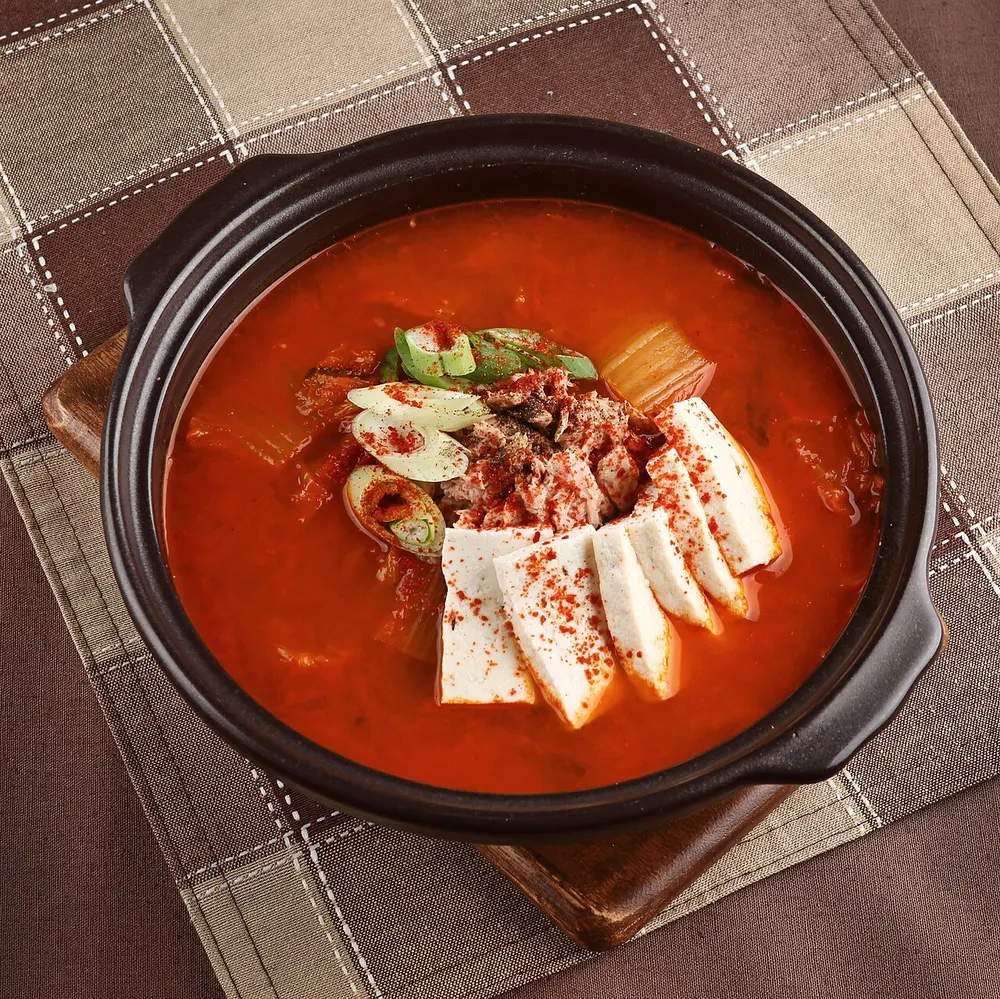
Kimchi Jjigae (Kimchi Stew)
မူလအရင်းအမြစ်: Traditional
30 မိနစ်3420 kcal
နို့ထွက်ပစ္စည်းကင်း🌶️🌶️
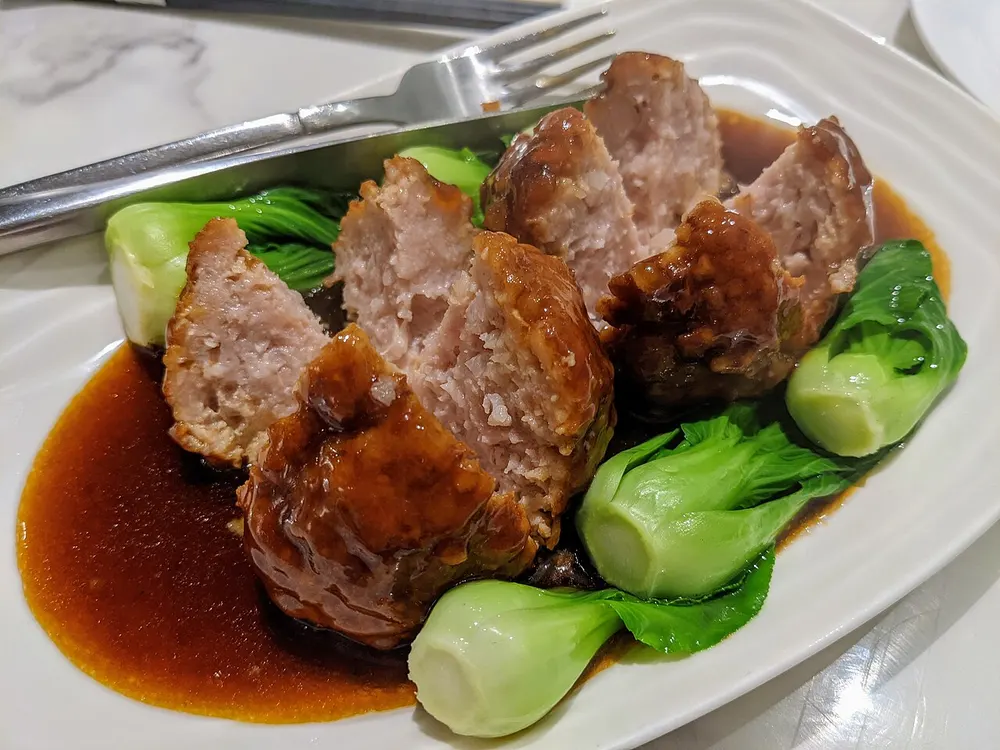
Fist-sized pork meatballs, hand-chopped and studded with water chestnut, braised whole with cabbage until they are soft enough to break with a spoon.
မူလအရင်းအမြစ်
ချက်ပြုတ်နည်း — Huaiyang home kitchens · 🏺 Traditional · From the Yangzhou–Zhenjiang table of Huaiyang cuisine — no single author
Huaiyang cuisine / 淮揚菜 — Lion's head is a Huaiyang dish from the Yangzhou and Zhenjiang area, and takes its name from the meatball's resemblance to the head of a Chinese guardian lion. It comes in two varieties: white, usually stewed or steamed plain with napa cabbage and more common in Yangzhou, and red, soy-braised and favoured in Zhenjiang. Folklore dates it to the Sui dynasty, but no evidence supports that; the earliest documented recipe appears in Xu Ke's Qing-dynasty compilation Qing bai lei chao. It later entered Shanghai cuisine through 19th- and 20th-century migration.
Wikipedia တွင် နောက်ခံအချက်အလက် ↗
ချက်နေပုံ ကြည့်ရန် · ဗီဒီယို 3 ခု
Chop the pork by hand: slice it thin, cut the slices into strips, dice the strips, then run the knife through it until it is coarsely minced with visible grains of fat and lean.
💡 Do not use a food processor. It purées the fat into an emulsion and the meatball comes out bouncy and rubbery, which is the exact opposite of what this dish is for. The knife is not nostalgia here; it is the technique.
Put the pork in a big bowl with the ginger, scallion, wine, soy, salt, sugar and white pepper.
Add the ginger-scallion water 20 ml at a time, stirring in one direction after each addition until the meat has absorbed it completely.
💡 This is what stops a meatball this big from turning into a dry lump in the middle. The water is held inside by the protein you are working up, and it steams the meatball from within during the hour-long braise.
Mix in the egg and cornstarch, then fold in the diced water chestnut last.
Divide into 4 balls and shape each one by throwing it hard from palm to palm 10–15 times.
💡 The throwing is not showmanship — it knocks the air pockets out and compacts the surface so the ball holds together in the pot. A gently patted meatball will crumble the moment the stock hits it.
Heat the oil in a wide pan over medium-high and brown the meatballs on all sides, about 2 minutes per side. Move them gently with two spoons.
💡 You are only building a crust, not cooking them through — they are still raw inside and very fragile at this stage. Handle them like eggs.
Line the bottom of a heavy pot or clay pot with a few cabbage leaves and set the browned meatballs on top of them.
💡 The leaves are a heatproof cushion. Without them the meatballs sit directly on metal and scorch on the bottom long before the middle is done.
Tuck the rest of the cabbage in around and over the meatballs and pour in the stock until they are two-thirds submerged.
Bring to a boil, then reduce to the barest simmer, cover, and cook 50–60 minutes.
💡 Never let it boil. A boil will tear these meatballs apart — they are held together by almost nothing, which is exactly why they end up so tender.
Do not stir, do not turn them, do not poke them. Leave the pot alone for the whole hour.
Test one at the end: a spoon should sink through the meatball with almost no pressure. If it resists, give it 15 minutes more.
Serve each meatball in a bowl with its cabbage and a ladle of the broth. Eat it with a spoon, not chopsticks.
💡 Chopsticks will simply break it apart on the way to your mouth. A properly cooked lion's head cannot be picked up, and that is the point of the dish.
Korean
မူလအရင်းအမြစ်: Traditional
Korean
မူလအရင်းအမြစ်: Home cook
Korean
မူလအရင်းအမြစ်: Home cook
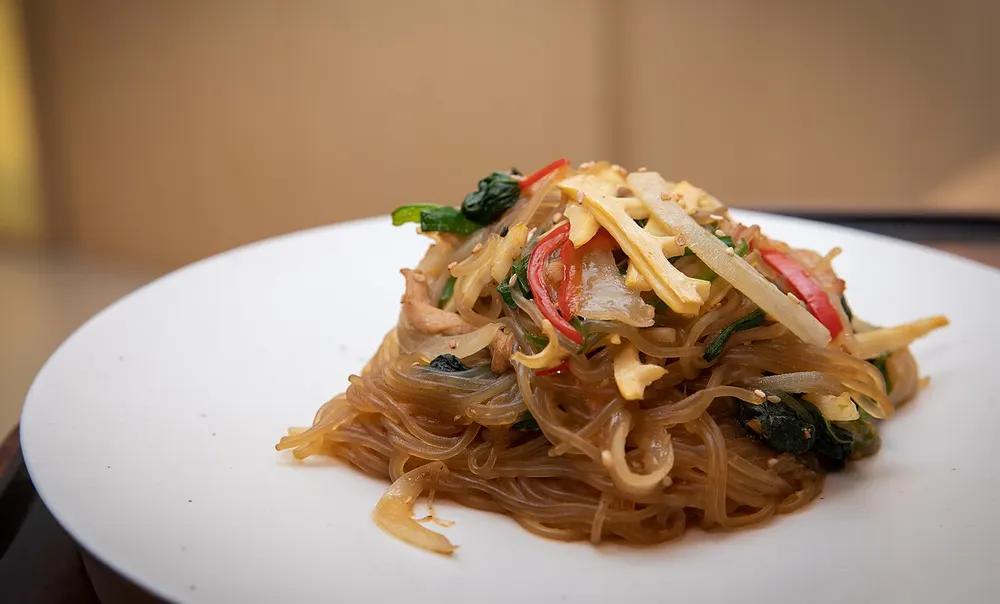
Korean
မူလအရင်းအမြစ်: Traditional
ချက်ပြီးပြီလား? ဓာတ်ပုံကို ပြသရန်တွင် မျှဝေပါ။
သင်ချက်ခဲ့သည်ကို မျှဝေပါ →