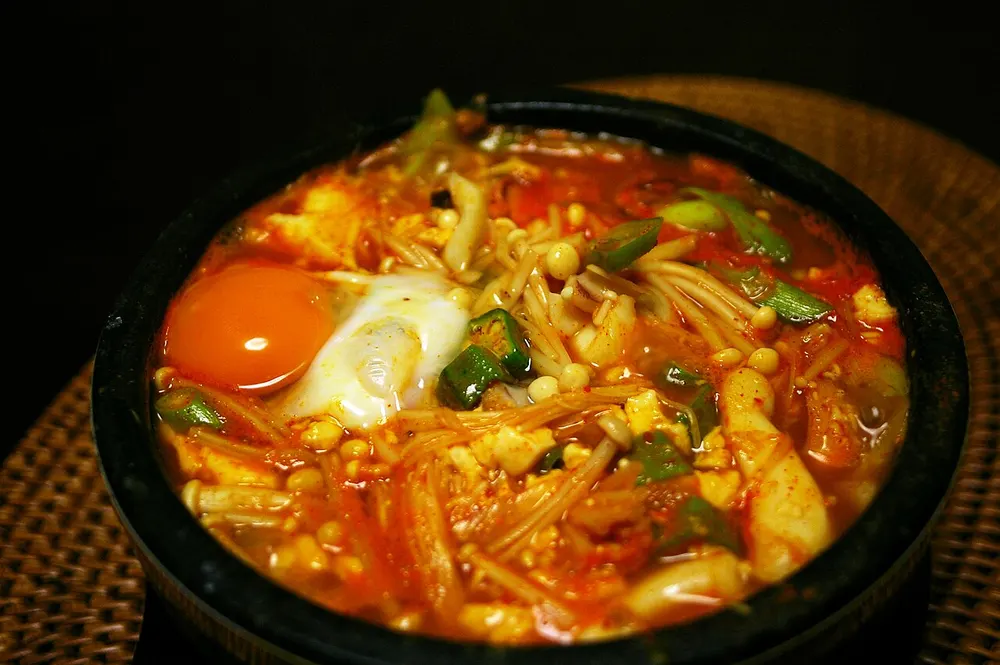
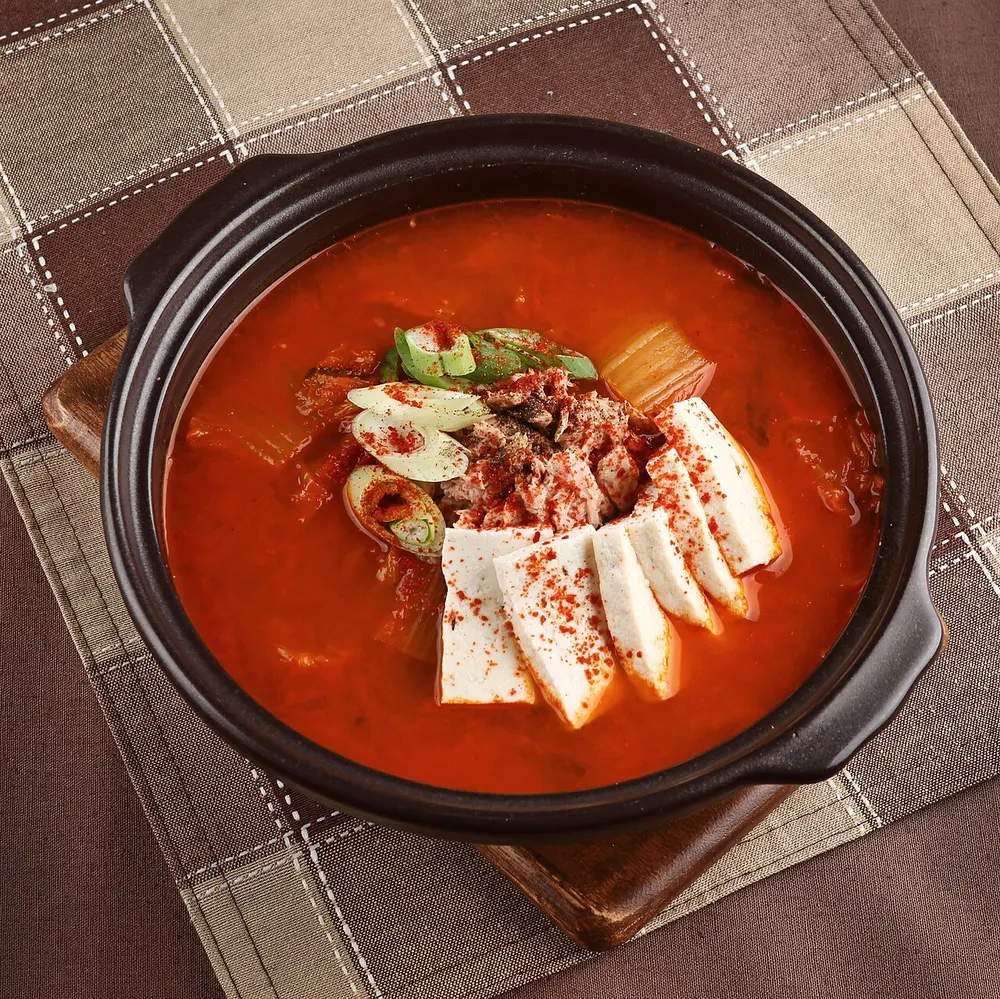
အစပြု
Korean
Kimchi Jjigae (Kimchi Stew)
မူလအရင်းအမြစ်: Traditional
30 မိနစ်3420 kcal
နို့ထွက်ပစ္စည်းကင်း🌶️🌶️
His zero-failure version: no separate seasoning paste to make in advance. Pork and onion fry in sesame oil, the chili powder goes in with the heat OFF to make chili oil without burning, and clams do the rest.
မူလအရင်းအမြစ်
ချက်ပြုတ်နည်း — 백종원 · 👨🍳 Chef · Paik Jong-won — chef & restaurateur, 백종원의 요리비책
ချက်ပြုတ်သူများနှင့် ဖန်တီးသူများ၏ အမည်များကို မူလအရင်းအမြစ် ဖော်ပြရန်အတွက်သာ အသုံးပြုသည်။ More Recipes Please သည် လွတ်လပ်စွာ လုပ်ဆောင်နေပြီး ၎င်းတို့နှင့် ဆက်စပ်မှု၊ ထောက်ခံမှု သို့မဟုတ် ကမကထမှု မရှိပါ။
Paik Jong-won (요리비책) — Published by Paik Jong-won on his own YouTube channel as 'K-FOOD 대표 순두부찌개! 실패율 0% 양념장 없는 레시피', where he says there are many ways to make sundubu-jjigae and that this is the one boiled in a single pass without making a seasoning paste first. Its defining move is that the chili powder is stirred into the hot fat with the heat switched OFF, so it blooms into chili oil on residual heat instead of scorching — which is what the zero-failure claim rests on. Sesame oil is used as the frying fat rather than a finishing drizzle, purged clams stand in for stock, and the minced garlic goes on raw at the very end.
ချက်ပြုတ်သူ: 백종원
ချက်နေပုံ ကြည့်ရန် · ဗီဒီယို 3 ခု
Purge the clams first: leave them in salted water so they spit out their grit while you prep everything else.
💡 Do not skip this. The clams ARE the stock in this recipe — there is no anchovy broth backing them up — so one sandy clam grits the entire pot.
Score and finely dice the onion. Slice the chives and Cheongyang chilies into thin rounds and set those two aside — they never see the heat.
Halve the green onion lengthways and chop it finely.
Pour the sesame oil into a pot over medium heat and add the green onion, onion and ground pork. Fry, breaking the pork up as you go.
💡 Three tablespoons of sesame oil as the frying fat looks alarming and is deliberate — it is the aromatic base the whole stew is built on. Medium heat, not high: sesame oil has a low smoke point and turns acrid if you push it.
Keep frying — about 3–4 minutes — until the pork has lost its pink, the moisture has cooked off and you can see clear oil pooling and hear it sizzle rather than steam.
TURN THE HEAT OFF. With the pot off the flame, add the fine gochugaru and stir it through the hot oil.
💡 This is the trick the recipe turns on. Chili powder scorches in seconds on a live flame and turns bitter and brown; the residual heat of the oil is more than enough to bloom it red. Off the heat, you cannot get it wrong — which is exactly why he calls this the zero-failure version.
When the oil has turned deep red and glossy — the gochu-gireum has formed — pour in the water.
Return the pot to the heat and add the jin-ganjang, the brown sugar and the purged clams.
Boil until the clams open — 3–5 minutes. Now taste the broth and season with the fine salt.
💡 Season AFTER the clams open, never before. Clams release their own sea-salty liquor as they open and how salty that is varies with every bag — salting first is how this stew gets ruined.
Cut the pack of sundubu in half and slide it into the pot in big lumps, then break it into rough chunks with a spoon.
💡 Chunks, not a mash. Craggy pieces hold pockets of broth and give you something to actually eat; stirred smooth, sundubu turns the stew into a gritty pink soup.
Once the stew comes back to a boil, ladle one portion into an earthenware ttukbaegi and bring that up to a boil on its own.
The moment it is about to boil, crack an egg into the middle and turn the heat off immediately.
💡 Off the heat, but the ttukbaegi keeps cooking. Its thick walls hold enough heat to set the white on the way to the table while the yolk stays runny — which is the entire reason this dish is served in earthenware.
Top with the Cheongyang chili and chives, then finish with the raw minced garlic and a pinch of black pepper. Serve at once, still bubbling.
💡 The garlic goes on RAW and uncooked — this is his call and it is unusual. Raw garlic hitting the hot surface gives a sharp, pungent hit that cooked-in garlic loses entirely.
Korean
မူလအရင်းအမြစ်: Traditional
Korean
မူလအရင်းအမြစ်: Home cook
Korean
မူလအရင်းအမြစ်: Home cook
Korean
မူလအရင်းအမြစ်: Traditional
ချက်ပြီးပြီလား? ဓာတ်ပုံကို ပြသရန်တွင် မျှဝေပါ။
သင်ချက်ခဲ့သည်ကို မျှဝေပါ →