အစပြု
Korean
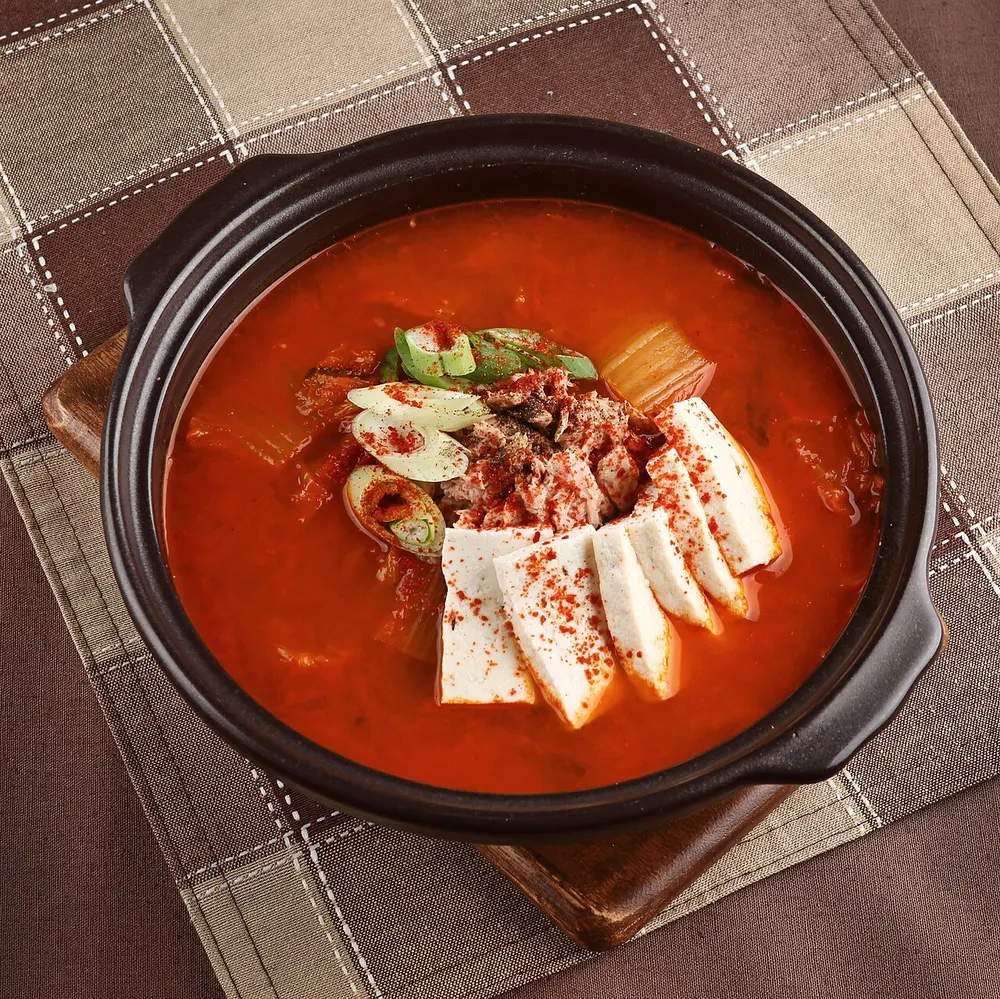
Kimchi Jjigae (Kimchi Stew)
မူလအရင်းအမြစ်: Traditional
30 မိနစ်3420 kcal
နို့ထွက်ပစ္စည်းကင်း🌶️🌶️
Paik's shortcut kimchi stew: skip the usual pre-frying, simmer pork straight in rice-rinse water to build the broth, then finish with two grinds of chili and a spoon of salted shrimp.
မူလအရင်းအမြစ်
ချက်ပြုတ်နည်း — 백종원 · 👨🍳 Chef · Paik Jong-won — chef & restaurateur, 백종원의 요리비책
ချက်ပြုတ်သူများနှင့် ဖန်တီးသူများ၏ အမည်များကို မူလအရင်းအမြစ် ဖော်ပြရန်အတွက်သာ အသုံးပြုသည်။ More Recipes Please သည် လွတ်လပ်စွာ လုပ်ဆောင်နေပြီး ၎င်းတို့နှင့် ဆက်စပ်မှု၊ ထောက်ခံမှု သို့မဟုတ် ကမကထမှု မရှိပါ။
Paik Jong-won (요리비책) — Published by Paik Jong-won on his own YouTube channel as '초간단 김치찌개' (Ultra-Simple Kimchi-jjigae), where he notes it is the kimchi-jjigae he demonstrated in episode 2 of Jipbap Baekseonsaeng season 1. What sets his version apart is that nothing is pre-fried: the pork simmers directly in rice-rinse water to make the broth, and he splits the chili powder between fine and coarse grinds.
ချက်ပြုတ်သူ: 백종원
ချက်နေပုံ ကြည့်ရန်
Save your rice-rinse water: wash rice, tip away the very first cloudy water, then keep 380 ml (about 2 cups) from the second or third rinse.
💡 The first rinse carries dust and bran. The later rinses carry starch, which gives the stew body and a gentle, toasty depth. Plain water works, but the broth will taste thinner.
Cut the pork shoulder into bite-size pieces, roughly 2–3 cm.
Cut the kimchi into bite-size pieces, and slice the green onion, Cheongyang chili and red chili into thin rounds. Have them ready by the stove — the stew moves quickly once it starts.
Put the pork straight into a pot with the rice-rinse water — no oil, no pre-frying — and set it over high heat.
💡 This is the whole point of his 'ultra-simple' version. Most kimchi-jjigae recipes fry the pork and kimchi in oil first; here the pot does that work by simmering instead.
Once it reaches a boil, drop to medium and simmer 7–10 minutes, until the pork is cooked through and the liquid turns milky and smells savoury rather than raw. Skim off any grey foam that rises.
💡 Don't rush this — you are making the pork broth that the whole stew stands on. Cutting it short is the single biggest reason a beginner's kimchi-jjigae tastes watery.
Add the kimchi and the minced garlic to the pot.
Keep it at a steady medium simmer for about 10 minutes, until the kimchi loses its raw crunch, turns slightly translucent at the edges and softens into the broth.
💡 Taste the kimchi here. If it still tastes sharp and fresh, give it a few more minutes — undercooked kimchi keeps the stew tasting harsh.
When the broth is bubbling hard again, add the green onion and both chilies.
Add both chili powders — 2 tbsp fine and 2 tbsp coarse — and stir until no dry pockets remain and the broth glows red.
💡 Using both grinds is his signature move: the fine powder dissolves for colour and clean heat, the coarse flakes stay whole for aroma and texture. One alone gives a flatter stew.
Stir in the guk-ganjang and the salted shrimp, breaking the shrimp up against the side of the pot so it disperses.
Simmer 2–3 minutes more, then taste. Adjust with a little more salted shrimp or soy only if it needs it.
💡 Never salt before tasting at this stage — kimchi and saeujeot both vary wildly in saltiness from jar to jar.
Serve straight from the pot, still boiling, with a bowl of hot rice.
Korean
မူလအရင်းအမြစ်: Traditional
Korean
မူလအရင်းအမြစ်: Home cook
Korean
မူလအရင်းအမြစ်: Home cook
Korean
မူလအရင်းအမြစ်: Traditional
ချက်ပြီးပြီလား? ဓာတ်ပုံကို ပြသရန်တွင် မျှဝေပါ။
သင်ချက်ခဲ့သည်ကို မျှဝေပါ →