အစပြု
Korean
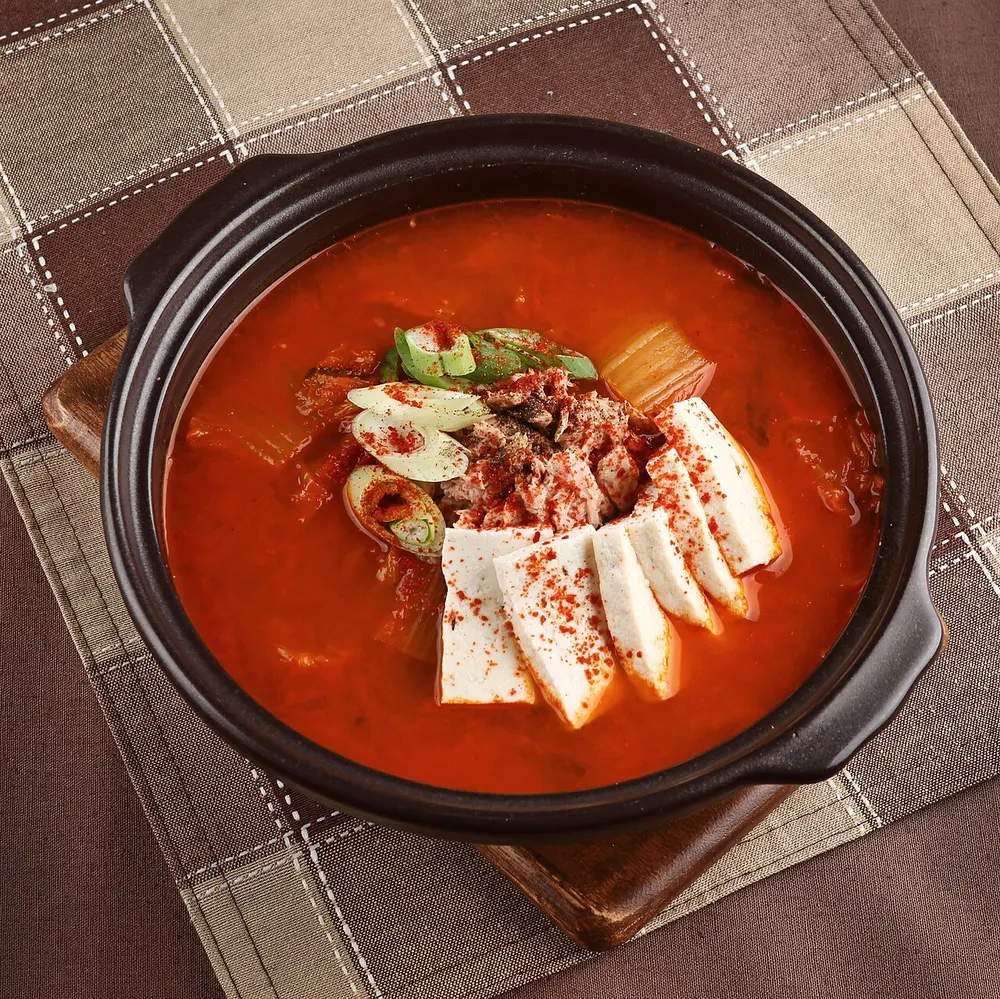
Kimchi Jjigae (Kimchi Stew)
မူလအရင်းအမြစ်: Traditional
30 မိနစ်3420 kcal
နို့ထွက်ပစ္စည်းကင်း🌶️🌶️
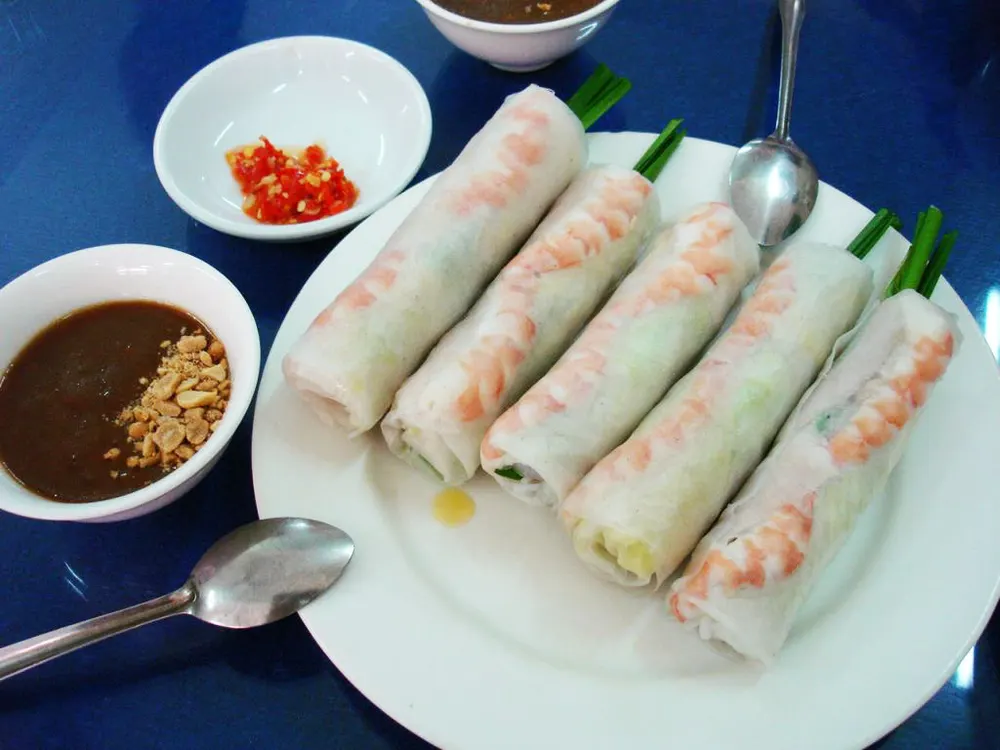
Nothing is cooked on the outside: softened rice paper wrapped around poached prawns, thin-sliced pork, cold vermicelli, lettuce and as many herbs as will fit, dipped in a thick peanut-hoisin sauce.
မူလအရင်းအမြစ်
ချက်ပြုတ်နည်း — Vietnamese home kitchens · 🏺 Traditional · Everyday Vietnamese home cooking, made the same way from Hanoi to Cà Mau
Vietnamese home cooking · nationwide — An ownerless dish eaten communally in homes across Vietnam, with no documented creator. The reference confirms the rice paper (bánh tráng) wrapper softened in water, the filling of pork slices, shrimp, fresh herbs, lettuce and rice vermicelli, that the rolls are served fresh and uncooked on the outside unlike chả giò, the two usual dips — peanut sauce and tương xào, a hoisin sauce ground with coconut water and stir-fried with garlic, sugar, chilli powder and peanuts, or nước chấm — and the names gỏi cuốn in the south against nem cuốn in the north. The peanut-butter shortcut in this sauce is this book's own and is flagged as such. Quantities are ordinary home proportions.
Wikipedia တွင် နောက်ခံအချက်အလက် ↗
ချက်နေပုံ ကြည့်ရန် · ဗီဒီယို 3 ခု
Simmer the pork belly in salted water for 25 minutes, then lift it out and cool it completely — the fridge is best. Poach the prawns in the same water for 2 minutes, then peel them and slice each one in half lengthways.
💡 Cold pork slices thin; warm pork shreds. This is the same rule as the beef in bún bò Huế, and it matters more here because the slices have to be almost translucent.
Cook the vermicelli, rinse it cold, and let it drain in a sieve for 10 minutes. Wash and dry the herbs and lettuce thoroughly.
Make the sauce: fry the garlic in 1 tbsp oil for 20 seconds, add the hoisin, peanut butter and coconut water, and stir over low heat until smooth. Cool it, then top with the crushed peanuts and chilli paste.
Fill a wide shallow dish with warm water. Dip one sheet of rice paper in for 2 seconds — no longer — and lay it on a damp board. It will still feel stiff; it carries on softening while you work.
💡 Two seconds. Everyone soaks it too long the first time, and a soggy sheet tears the moment you try to roll it.
Lay two prawn halves cut-side down across the lower third of the sheet — they will show through the finished roll. Then add a lettuce leaf, a small nest of noodles, two slices of pork and a good pinch of herbs.
Fold the bottom edge up over the filling, tuck in both sides, and roll it away from you, keeping it snug but not tight. Set the finished rolls apart on the plate so they do not weld to each other.
💡 Roll them too tight and the paper splits as the filling settles. Snug is the word — firm enough to hold, loose enough to give.
Serve within the hour, cut in half on the diagonal or left whole, with the peanut sauce alongside.
Korean
မူလအရင်းအမြစ်: Traditional
Korean
မူလအရင်းအမြစ်: Home cook
Korean
မူလအရင်းအမြစ်: Home cook
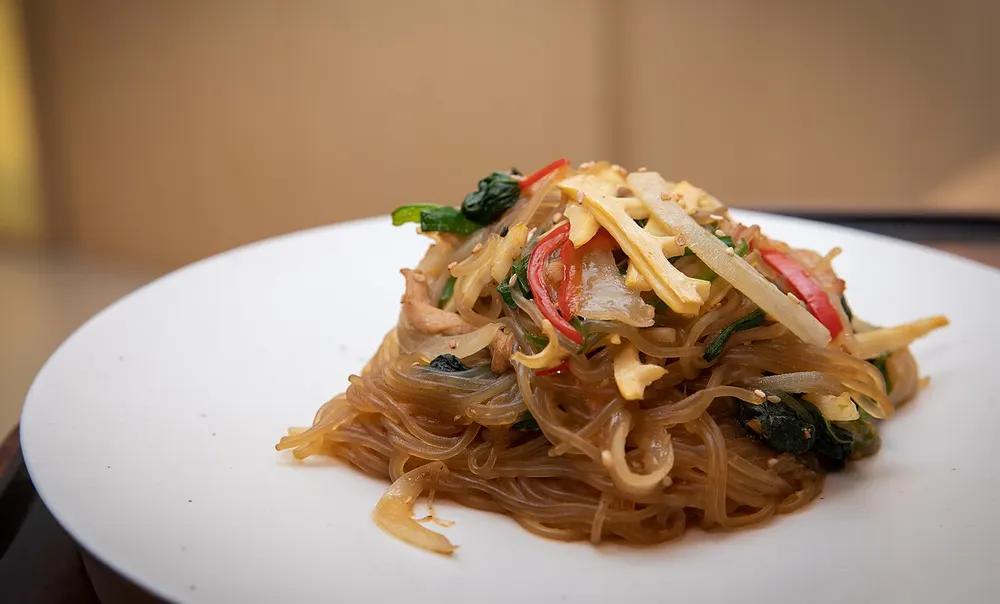
Korean
မူလအရင်းအမြစ်: Traditional
ချက်ပြီးပြီလား? ဓာတ်ပုံကို ပြသရန်တွင် မျှဝေပါ။
သင်ချက်ခဲ့သည်ကို မျှဝေပါ →