初級
Korean
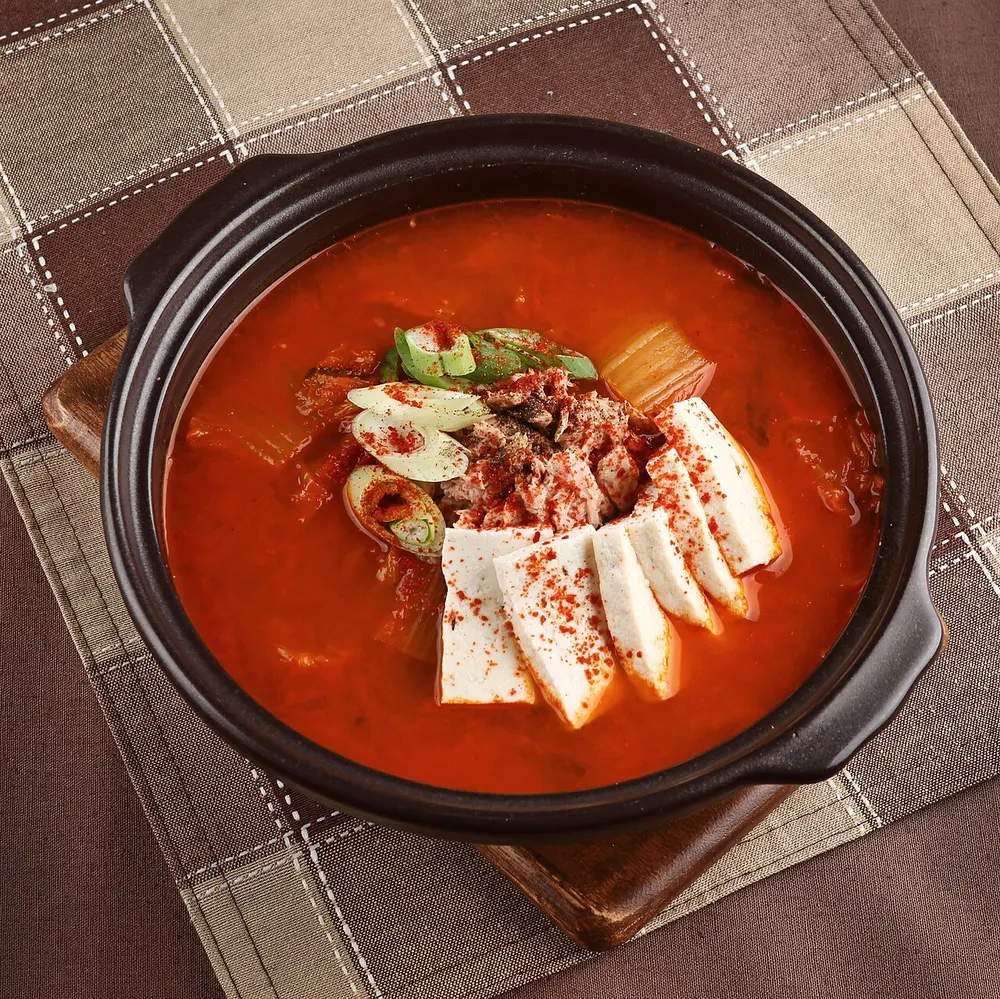
Kimchi Jjigae (Kimchi Stew)
出典: 伝統
30 分3420 kcal
乳製品不使用🌶️🌶️
The New Year soup without a drop of bone broth: brisket is browned in sesame oil, then seasoned in just 500 ml of water so the meat itself takes on the salt — only then is the rest of the water poured in.
出典
レシピ提供 백종원 · 👨🍳 シェフ · Paik Jong-won — chef & restaurateur, 백종원의 요리비책
料理人・クリエイターの名前は出典表記としてのみ使用しています。More Recipes Please は独立して運営されており、提携・後援・推奨の関係はありません。
Paik Jong-won (요리비책) — Published by Paik Jong-won on his own YouTube channel as '떡만둣국, 사골 육수 없이 '이것'먼저 넣으면 풍미가 폭발합니다', posted for the Seollal (Lunar New Year) holiday, with the full gram/ml table, his numbered method and an official English translation in the description. Tteok-manduguk normally rests on a long-boiled beef-bone broth; his answer is a sequence instead. The brisket is browned in sesame and cooking oil, then simmered and fully seasoned in only 500 ml of water so the meat itself absorbs the salt, and the remaining 1.5 L is added only afterwards.
料理人: 백종원
Watch it being made · 3 videos
Soak the rice cake slices in water for at least 30 minutes, until they bend slightly instead of snapping.
💡 Start this first. Unsoaked rice cake goes into the pot hard, so you boil it longer to soften it — and by then it has released so much starch that the broth turns to paste.
Make the jidan: beat 2 eggs, wipe a lightly oiled pan, and cook them over low heat into a thin flat sheet without letting it colour. Slide it out, roll it up and slice into fine ribbons.
💡 Low heat and almost no oil. Jidan should stay pale yellow — if it browns or puffs it has been too hot, and it will taste like scrambled egg instead of the clean garnish this soup wants.
Slice the green onion into thin rounds and cut the brisket into bite-size pieces.
Heat the sesame oil and cooking oil in a pot, add the beef, and fry it over medium-high heat until well browned — about 4–5 minutes.
💡 Browning matters here more than in most of his soups. There is no sagol broth coming to rescue this — the colour on the meat IS the depth of the finished bowl. Mixing sesame oil with cooking oil raises the smoke point enough to brown without the sesame burning.
Once the beef is browned, add only 500 ml of the water — not the full 2 L.
💡 This is the 'add THIS first' the title promises. A quarter of the water means a small, concentrated pot the meat can actually absorb seasoning from.
Add the fine salt, the guk-ganjang and the fish sauce to that small amount of liquid and boil it together for about 5 minutes, until the beef has taken on the seasoning and the liquid is dark and intense.
💡 Season now, while the pot is small. Seasoned meat in a concentrated liquid soaks the flavour up; the same spoonfuls dropped into 2 L at the end would just make salty water with bland beef floating in it. This is the whole reason his soup works without bone broth.
When the beef is seasoned through, pour in the remaining water — about 1.5 L — and bring the pot back to a boil over high heat.
When the broth boils, add the drained rice cake, the mandu and the minced garlic.
Boil 5–7 minutes, until the rice cakes float and turn soft and glossy and the dumplings have risen to the surface.
💡 Floating is the signal for both. Do not stir hard while they cook — dumpling skins split easily once softened, and a burst mandu clouds the broth with its filling.
Taste the broth and adjust with a little more fine salt or fish sauce if it needs it.
💡 Taste after the rice cake has cooked, never before. Tteok is starchy and unsalted — it soaks up salt and quietly dilutes a broth that tasted perfect ten minutes earlier.
Right before serving, beat the remaining 2 eggs well and pour them into the boiling soup.
💡 'Right before serving' is his own wording — the egg should set in soft clouds and go straight to the table, not sit in the pot going rubbery.
Add the sliced green onion — either boiled briefly into the broth or scattered on top raw as a garnish.
💡 He gives both options and leaves the choice to you. Boiled in, the scallion turns sweet and melts into the soup; raw on top, it stays sharp and green against the mild broth.
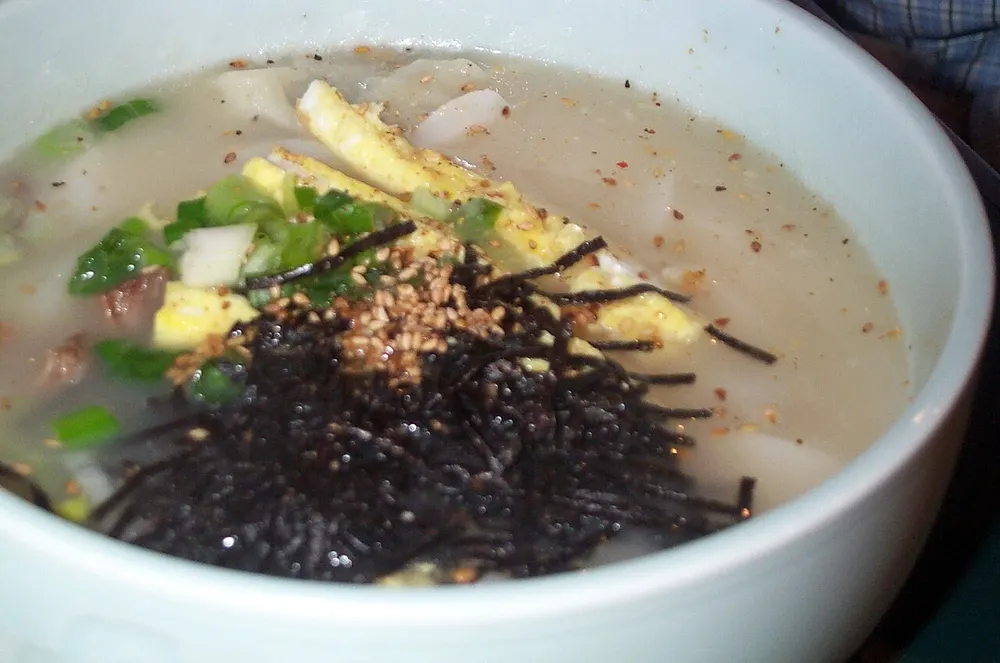
Ladle into bowls, top with the jidan ribbons, a scatter of gim-garu and a good pinch of black pepper, and serve immediately.
作ってみましたか?写真を「作ってみた」に投稿してください。
あなたの作品をシェア →