初級
Korean
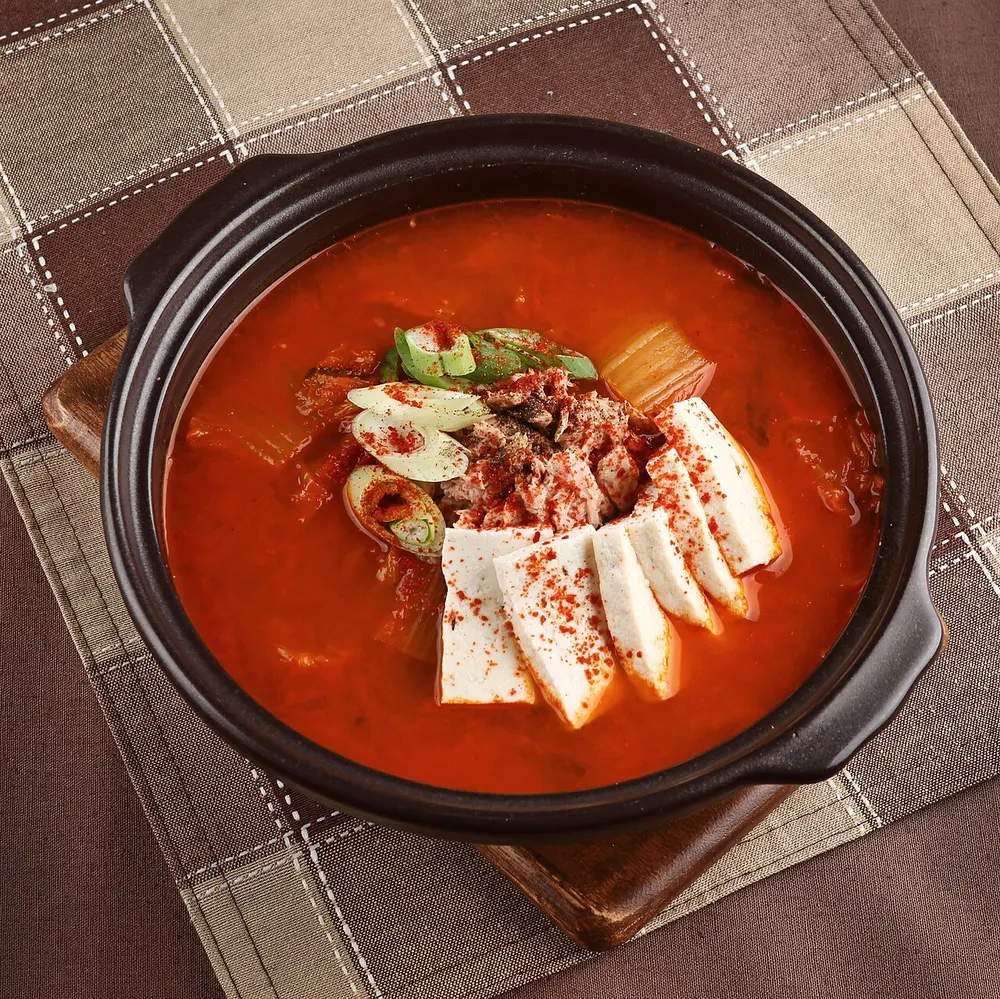
Kimchi Jjigae (Kimchi Stew)
出典: 伝統
30 分3420 kcal
乳製品不使用🌶️🌶️
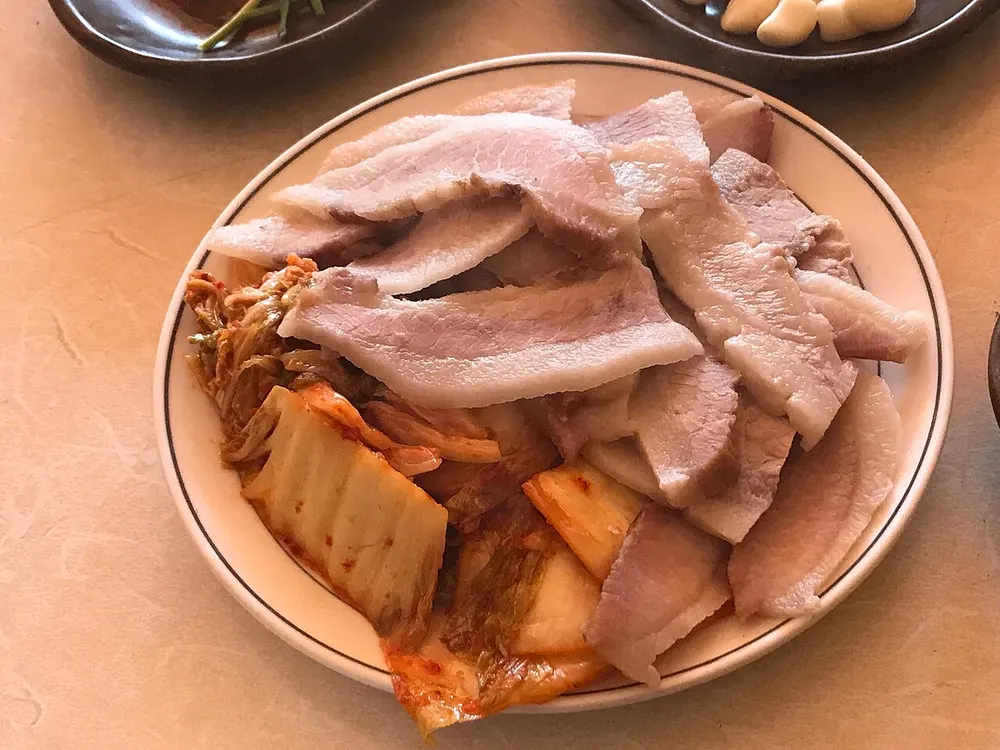
Her answer to pork smell, in three moves: scour the belly with flour and then coarse salt, boil it in an aromatic pot spiked with 180 ml of soju, then lift it into a steamer, splash on another 90 ml and steam it a final 15 minutes.
出典
レシピ提供 이혜정 · ⭐ 有名人 · Lee Hye-jung — Korean 요리연구가 known as 'Big Mama'; runs the YouTube channel 빅마마 이혜정 and cooks regularly on MBN's Altoran
料理人・クリエイターの名前は出典表記としてのみ使用しています。More Recipes Please は独立して運営されており、提携・後援・推奨の関係はありません。
Big Mama Lee Hye-jung (빅마마 이혜정) — Published by Lee Hye-jung herself on her own YouTube channel (빅마마 이혜정), which prints her ingredient list and a twenty-step numbered method under the video, including her exact heat levels and times (센불 15분, 중불 25분, 찜기 중불 15분) and her exact soju volumes (180 ml, then 90 ml). Her own text, not a third-party retelling. What sets it apart is that the pork is boiled AND then steamed, with the alcohol split across both stages, and scoured with flour and then coarse salt before either. Three gaps we flag rather than fill: her list has two onions where the method uses one, four chilies the method never touches, and a plum/soy/vinegar line the method never explains.
料理人: 이혜정
Watch it being made
Rub the flour all over the pork belly, working it into the surface to lift off any grit and loose bits.
💡 Flour is an abrasive here, not an ingredient — it grabs onto what a rinse alone slides past. This is step one of her three-part answer to pork smell, and it costs you thirty seconds.
Now rub the coarse salt over the floured meat, grain by grain, all over.
💡 Coarse, not fine. The crystals are doing mechanical work on the surface; fine salt just dissolves and seasons, which is a different job entirely.
Leave the floured, salted meat to sit for about 5 minutes — her own timing.
💡 Five minutes lets the salt pull a little moisture — and the smell that rides in it — to the surface, where the rinse in step 6 takes it away.
Put a generous pot of water on to boil — enough to cover the belly comfortably later.
Into the water go the aromatics: one onion cut in quarters, the green leaf tops of the daepa, the ginger in big chunks, the halved garlic and the peppercorns.
Pour in 180 ml of the soju, and while the pot comes up to the boil, rinse the meat clean under running water.
💡 She uses the waiting time to wash — that is deliberate sequencing, not filler. The meat must go into water that is already boiling, so the rinse has to happen now.
When the pot is at a full boil, lower the whole slab of belly in.
💡 Boiling water, always. It seizes the outside instantly and keeps the fat and juice inside the meat. Start it in cold water and you make pork stock and eat the leftovers.
Boil it 15 minutes on HIGH, then drop to MEDIUM for 25 minutes — 40 minutes total, and both figures are hers.
💡 The high-then-medium split matters. High seals and drives off the raw smell fast; medium keeps the water trembling rather than thrashing, which is what stops the belly from tightening and going dry.
Lift the cooked meat out of the pot.
Set up a steamer. If there's too much liquid in the base, ladle some out first — she calls this out specifically.
💡 Water touching the meat would boil it again, and this stage is meant to be steam only. Keep the liquid well below the basket.
Sit the pork in the steamer basket.
Splash the remaining 90 ml of soju over the top of the meat.
💡 This is the third and final move against pork smell, and it is the one people skip. The alcohol vaporises in the steam and carries the last of the odour compounds up and out with it — which a pot of water can't do, because it has nowhere to go.
Put the lid on and steam over MEDIUM heat for 15 minutes — her figure.
Check it with a chopstick: it should slide through the thickest part with no resistance and the juice should run clear. Take it out and slice it thin while it is still hot.
💡 Slice hot and slice thin, across the grain. Let suyuk cool and the fat sets waxy — the same meat that was silky at the stove turns greasy on the plate ten minutes later.
作ってみましたか?写真を「作ってみた」に投稿してください。
あなたの作品をシェア →