初級
Korean
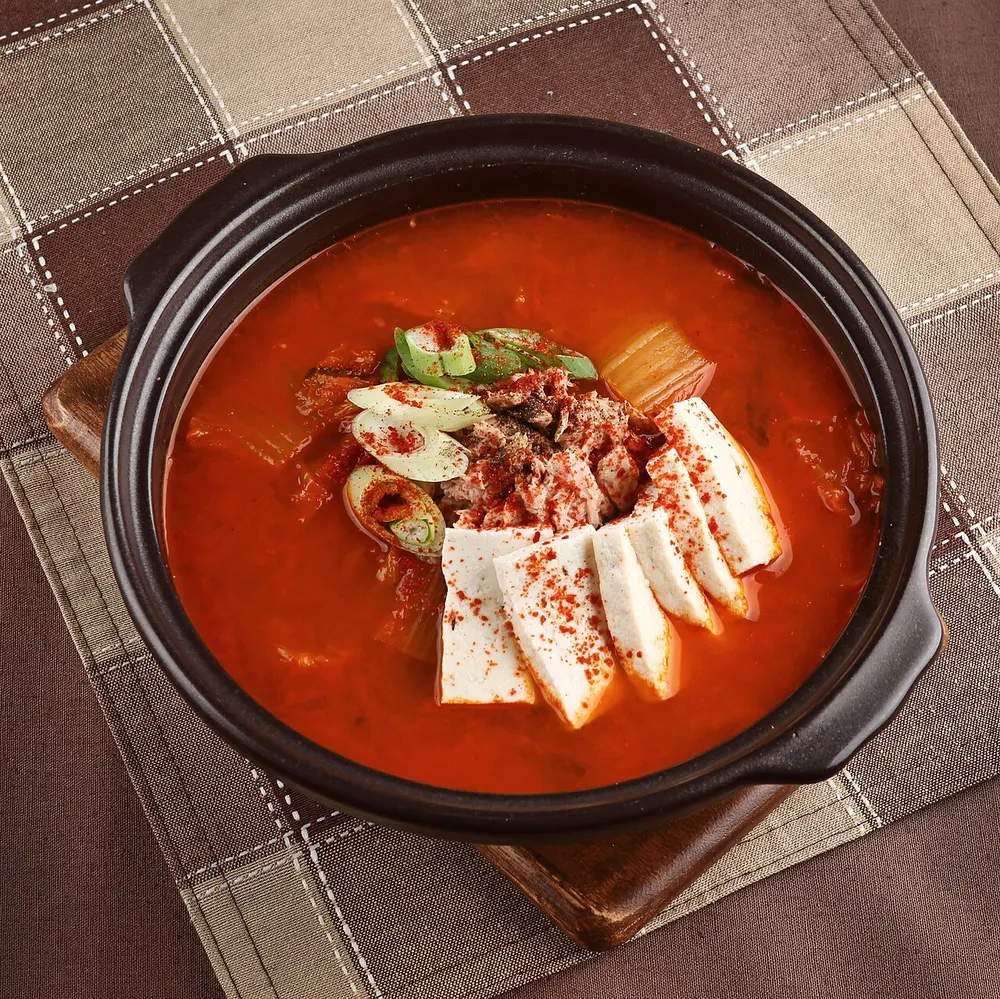
Kimchi Jjigae (Kimchi Stew)
出典: 伝統
30 分3420 kcal
乳製品不使用🌶️🌶️
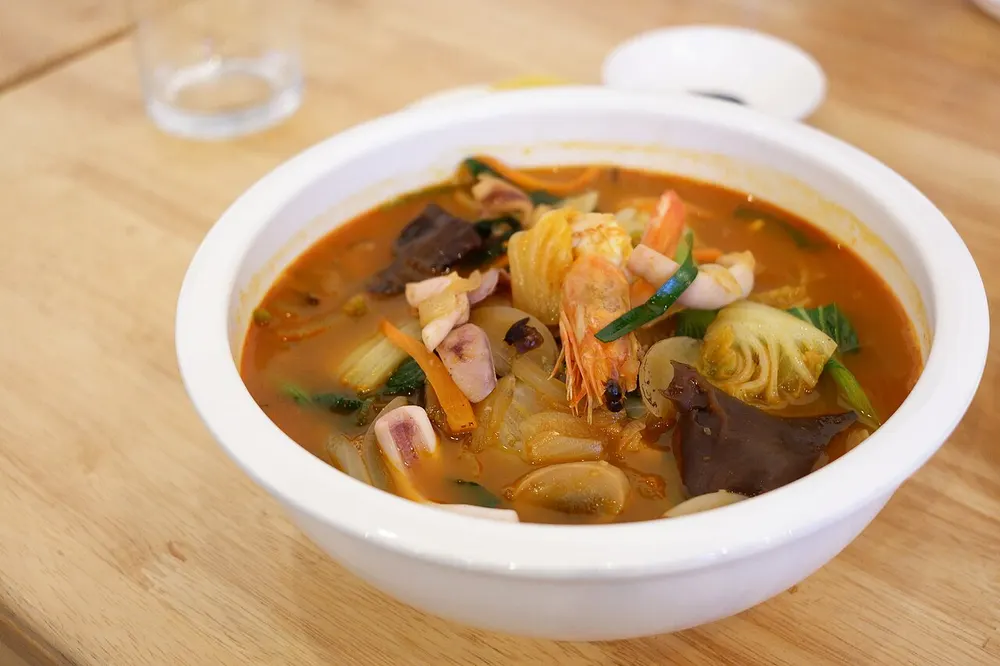
A jjamppong with no seafood in it at all. Chef Park builds the red broth on mushrooms and 50 g of minced pork, blooms fine chili powder in the pan oil, then slides in a whole block of silken tofu and ladles it over udon.
出典
レシピ提供 박은영 · 👨🍳 シェフ · Park Eun-young — chef (셰프); her segments on EBS's Choego-ui Yori Bigyeol are Chinese-style dishes
料理人・クリエイターの名前は出典表記としてのみ使用しています。More Recipes Please は独立して運営されており、提携・後援・推奨の関係はありません。
EBS Choego-ui Yori Bigyeol (최고의 요리비결) — Published by EBS on the programme's own channel (EBS 최고의 요리비결, @EBS_best.cooking.secrets), which prints Park Eun-young's full ingredient list in grams and ml and her numbered method in the video description, and names her in the title. Broadcaster-published text, not a viewer's write-up. It is a Chinese-kitchen take on a Korean-Chinese classic: no seafood at all, 300 g of oyster mushrooms carrying the body, fine chili powder bloomed in 4 tbsp of pan oil, hot water added in stages, and a whole 400 g block of silken tofu going in at the end.
料理人: 박은영
Watch it being made
Cut the onion (100 g), aehobak (120 g) and shiitake (60 g) into bite-size pieces.
Trim the root end off the bok choy (180 g) so the leaves separate, and cut the daepa (30 g) into thick pieces.
Pull the oyster mushrooms (300 g) apart into strips along their grain rather than cutting them.
Set a wide pan over medium-high heat, add 4 tbsp of oil, and fry the minced pork (50 g), breaking it up, until it has lost all pink and started to catch and brown in places.
💡 50 g of pork in a two-portion pot is a seasoning, not a topping. Its whole job is to render fat and leave browned bits in the pan — which is why it needs to actually brown, not just turn grey.
Add the daepa and 1 tbsp minced garlic and stir until the garlic smells sweet rather than raw — about 30 seconds.
Add the oyster mushrooms, shiitake, onion, aehobak and bok choy and stir-fry until the mushrooms have wilted and given up their water.
Push everything to one side, add the 2 tbsp of fine gochugaru into the oil pooled at the base and stir it there for a few seconds until the oil turns bright red — then mix it through the vegetables.
💡 This is the single most important move in the whole recipe. Chili powder bloomed in hot oil gives a jjamppong its red gloss and roasted aroma; chili powder dumped into water just makes cloudy, dusty broth. Watch it closely — burnt gochugaru is bitter and unrecoverable.
Pour in the 1 L of hot water in two or three goes, letting the pan come back to a boil between each addition.
💡 Hot water, added in stages, is a wok-cooking habit worth stealing. Cold water dropped in all at once kills the pan's heat, and the chili oil you just built splits out of the broth instead of emulsifying into it.
Season with ½ tbsp salt, 1 tbsp oyster sauce, 1 tsp white pepper and 2 tbsp soybean essence, and let it boil a couple of minutes.
Taste the broth now, before the tofu goes in. Once 400 g of tofu is in the pot it will dilute everything, so it should taste a touch too strong at this point.
Drain the sundubu of its packing liquid, slide the whole block in, and bring it back to one rolling boil — 한소끔 — breaking the tofu into big soft curds with the edge of a ladle.
💡 Break it coarsely and stir as little as possible. Silken tofu shatters into grit if you work it, and the big soft curds sitting in red broth are the point of the dish.
Divide the cooked udon (190 g) between two deep bowls.
Ladle the jjamppong broth over the noodles, spooning the tofu and vegetables on top rather than burying them, and serve immediately while the broth is scalding.
作ってみましたか?写真を「作ってみた」に投稿してください。
あなたの作品をシェア →