初級
Korean
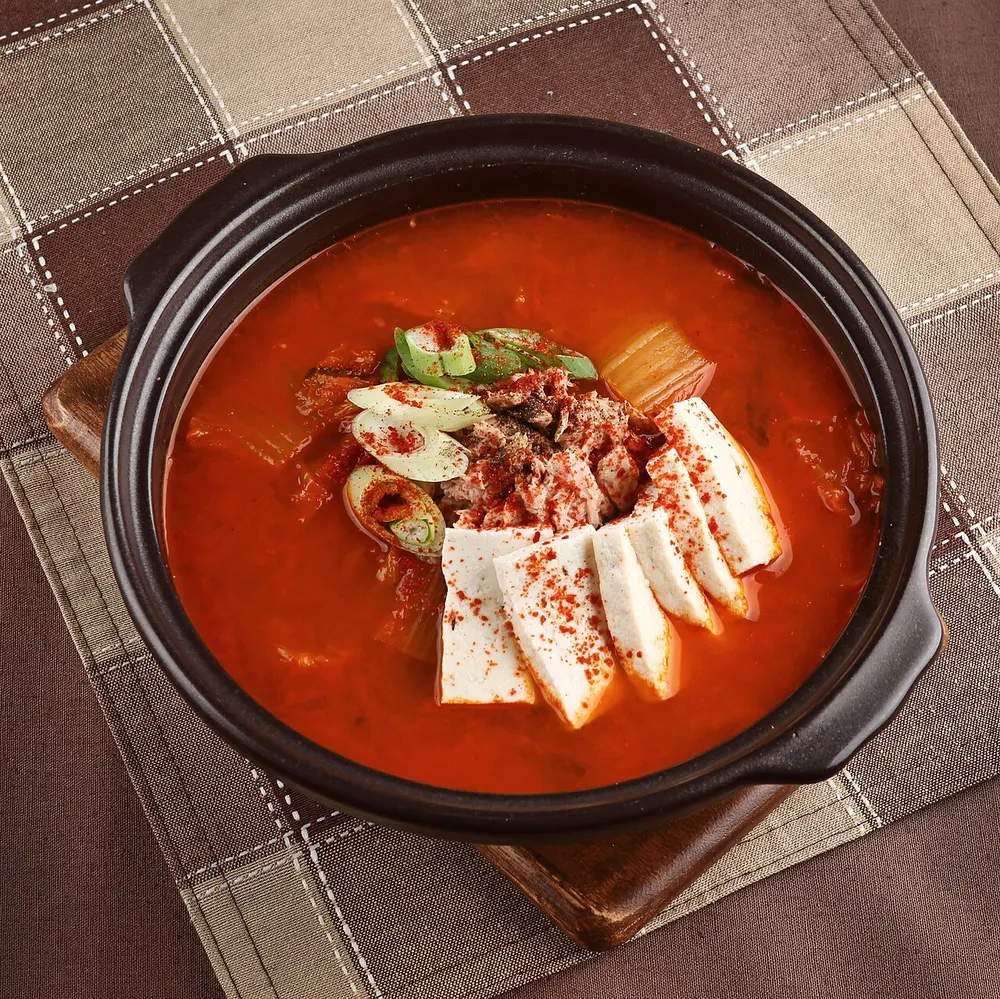
Kimchi Jjigae (Kimchi Stew)
出典: 伝統
30 分3420 kcal
乳製品不使用🌶️🌶️
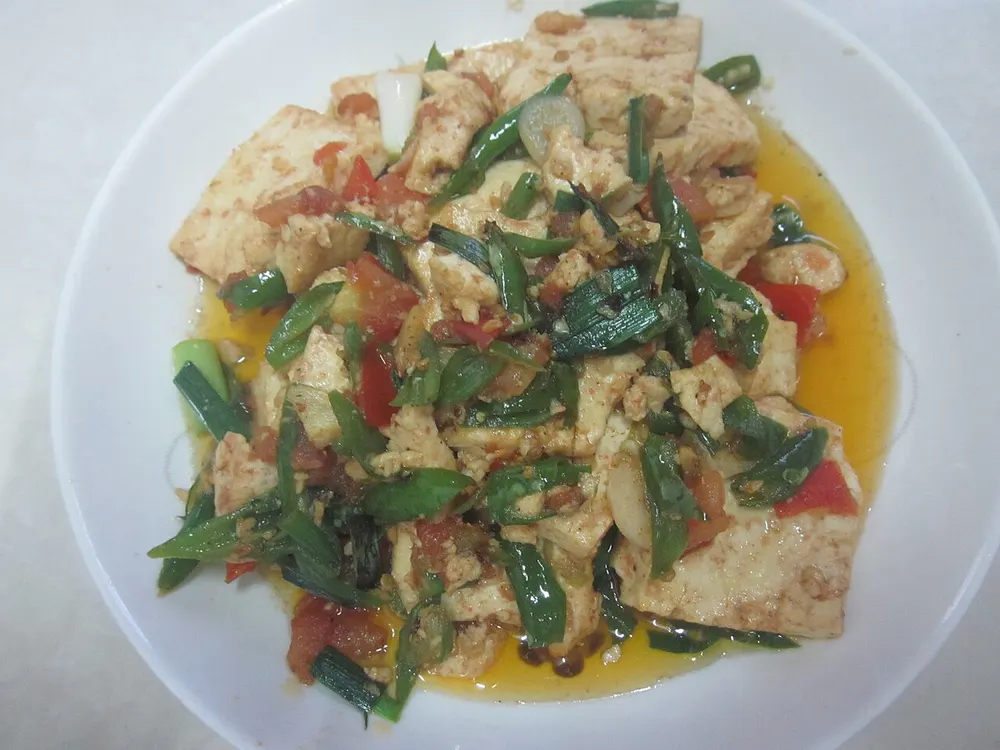
Soft tofu broken straight into the wok, pan-fried in lard, then simmered down in water stained red with Hunanese chopped fermented chili. A rustic 1980s village technique — no cornstarch, no gloss, just tofu and chili water.
出典
レシピ提供 Chinese Cooking Demystified · 📱 インフルエンサー · Steph & Chris — a China-based cooking channel that publishes every recipe in full, free, on its Substack
料理人・クリエイターの名前は出典表記としてのみ使用しています。More Recipes Please は独立して運営されており、提携・後援・推奨の関係はありません。
Chinese Cooking Demystified (Substack) — Published free by Chinese Cooking Demystified on their own Substack, in the same 'Poor Man's Stir Fry' post as their Chili-Fried Chili. They are explicit about where it comes from: 'chili-simmering' is a technique they took from writer Huang Xiaoji's (黄孝纪) book on food in a 1980s Hunan village, Menu from a Village (一个乡村的食单), and this recipe is their own expansion of what he described. They also flag their one departure — the village original uses only celery and scallion, and the cilantro is their addition. The amounts above are theirs, unchanged. Their post does not state a yield: the 2-serving figure is ours, read off the 400 g block of tofu.
料理人: Chinese Cooking Demystified (Steph & Chris)
Watch it being made
Roughly mince the large clove of garlic and set it aside.
Chop the 10 g of cilantro and the 10 g of Chinese celery (or scallion) into roughly 1 cm sections. Set aside — they go in right at the end.
💡 Cut them now while the wok is cold. Once the tofu is simmering you will not want to walk away from the pan.
Heat the wok, swirl in the 1.5 tbsp of oil (lard, ideally) and let it melt. Over a medium flame, add the minced garlic and fry until fragrant — about 30 seconds.
Add the whole 400 g block of soft tofu and break it up with your spatula into rough rectangles about 2 cm thick.
💡 Breaking it in the wok rather than cutting it on a board is deliberate. Torn faces are rough and porous, so they grip the chili water; knife-cut faces are slick and shed it.
Let the tofu pan-fry for about 2 minutes, until the oil in the wok begins to look clear again.
💡 'The oil goes clear again' is the cue to watch for. Cloudy, spitting oil means the tofu is still shedding water; once it clears, the surface has set and the tofu will hold together when you simmer it.
Add the 1.5 tbsp of duojiao, spread it out across the pan a little, then flip the tofu pieces over.
Swirl in the 1 tsp of soy sauce.
Pour in enough water to almost submerge the tofu — about 1.5 cups (360 ml) in a standard wok — then add the 1/8 tsp of salt and the 1/2 tsp of chili powder.
💡 Measure by the tofu, not by the cup. A wide pan needs more water to reach the same level and a narrow one needs less — 'almost submerged' is the actual instruction.
Cover with a breathable lid — or simply leave the lid ajar — and bring it up to a boil.
💡 The gap matters. A sealed lid traps steam and the liquid will never reduce; you would end up with tofu soup instead of tofu in a thick chili glaze.
Boil for about 5 minutes, until the water has reduced by roughly half and what is left clings around the tofu.
💡 There is no cornstarch here and there is not meant to be. The body comes only from reduction, which is exactly why this tastes like village food rather than restaurant food.
Season to taste — CCD add 1/4 tsp of MSG here. Then add the chopped cilantro and celery and mix gently. Serve hot.
💡 'Gently' is doing real work. The tofu is soft and already fried at the edges — stir it like a stir-fry now and you will turn the dish into scramble.
作ってみましたか?写真を「作ってみた」に投稿してください。
あなたの作品をシェア →