写真準備中
初級
French
Classic French Omelette
出典: シェフ
10 分1300 kcal
ベジタリアングルテンフリー低糖質+1
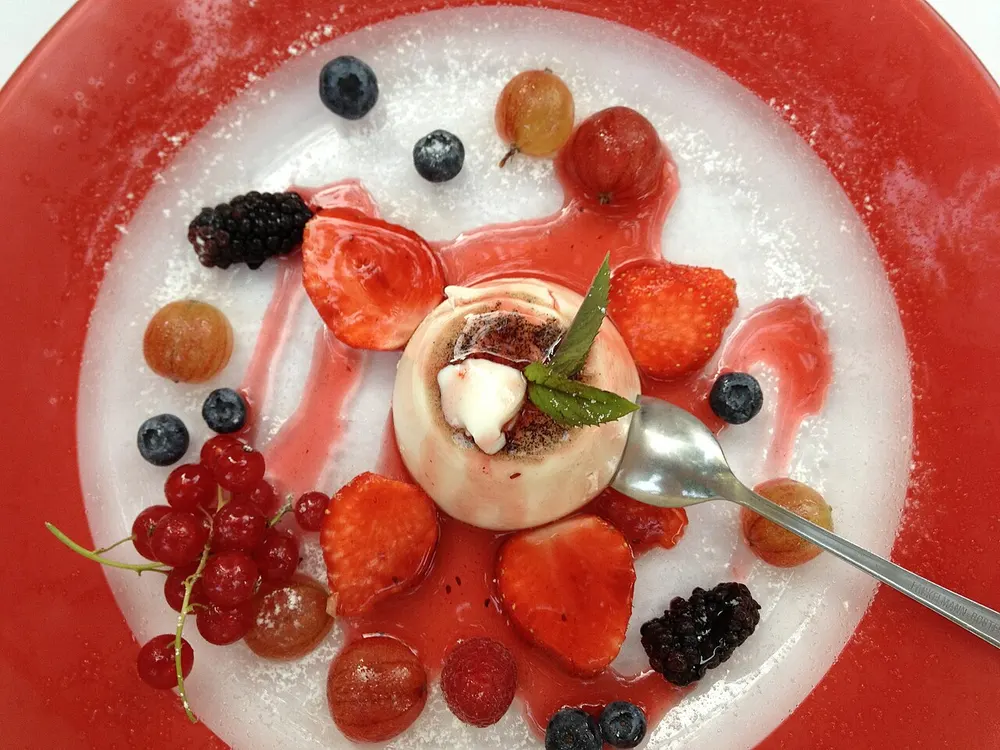
Four ingredients and a fridge: cream, sugar, vanilla and a few grams of gelatine, warmed just short of the boil and left to set into a dessert that trembles when you carry it to the table.
出典
レシピ提供 Benedetta Rossi · ⭐ 有名人 · Italy's most-followed home cook, publishing everyday family recipes from Le Marche for over 15 years.
料理人・クリエイターの名前は出典表記としてのみ使用しています。More Recipes Please は独立して運営されており、提携・後援・推奨の関係はありません。
Fatto in Casa da Benedetta — Benedetta Rossi — From Benedetta Rossi's own site, credited to her on the page. Amounts and the 4-serving yield are taken from the recipe as published; the step prose here is written for this book.
料理人: Benedetta Rossi
Watch it being made · 3 videos
Drop the 6 g of leaf gelatine into a bowl of cold water and leave it for 5–10 minutes, until the sheets go from brittle to limp and floppy.
💡 Cold water only. Warm water starts dissolving the sheets into the bowl, and the gelatine you lose there is gelatine your dessert never sets with.
Pour the 500 ml of cream into a small saucepan and add the 100 g of sugar and the sachet of vanillin.
Set the pan over medium-low heat and stir with a whisk. Within about 2 minutes the sugar grains stop dragging against the base and the cream turns silky.
💡 Keep the whisk moving along the bottom. Sugared cream scorches there first, and one scorched patch flavours the whole pan.
Keep heating and stirring for another 4–5 minutes, until steam rises steadily and a ring of fine bubbles appears where the cream meets the pan — hot, but not boiling.
💡 Do not let it reach a rolling boil. Boiling weakens gelatine's setting power and can leave the cream tasting cooked instead of fresh.
Take the pan off the heat. Lift the softened gelatine out of its water and squeeze it firmly in your fist until it stops dripping.
💡 Squeeze harder than feels polite. Carried-over soaking water thins the cream and shows up as a watery layer at the bottom of the glass.
Add the squeezed gelatine to the hot cream and whisk for 20–30 seconds until it vanishes completely — lift the whisk and no jelly threads should trail from it.
For an extra-smooth result, pour the cream through a fine sieve into a jug. Anything that didn't dissolve stays behind.
💡 Optional, but it is the cheapest insurance against biting into a rubbery speck of undissolved gelatine.
Ladle the cream into 4 glasses or moulds, stopping about a finger's width below the rim so there is room for the topping.
Leave the glasses on the counter for about 20 minutes, until they stop steaming and feel merely warm to the back of your hand.
💡 Putting steaming-hot glasses straight into the fridge warms everything around them and drops condensation onto the surface of the panna cotta.
Cover the glasses and refrigerate for at least 4 hours. They are ready when a gentle tilt makes the whole surface wobble as one piece rather than sloshing.
💡 Overnight is even better and changes nothing for the worse — this is the dessert to make the day before guests come.
For the strawberry topping, hull and slice the strawberries, squeeze over a little lemon juice and leave them 10 minutes until they release a bright red syrup.
For the other three finishes: simmer mixed berries with a spoon of sugar for 5 minutes into a loose compote; melt dark chocolate in a bowl over barely simmering water; or simply have cold espresso ready in a jug.
💡 Keep every topping loose and pourable. A thick one sits on the surface like a lid and hides the wobble that is the whole point.
Spoon the topping over each glass just before serving and bring them to the table straight from the fridge, still cold.
作ってみましたか?写真を「作ってみた」に投稿してください。
あなたの作品をシェア →