写真準備中
初級
French
Classic French Omelette
出典: シェフ
10 分1300 kcal
ベジタリアングルテンフリー低糖質+1
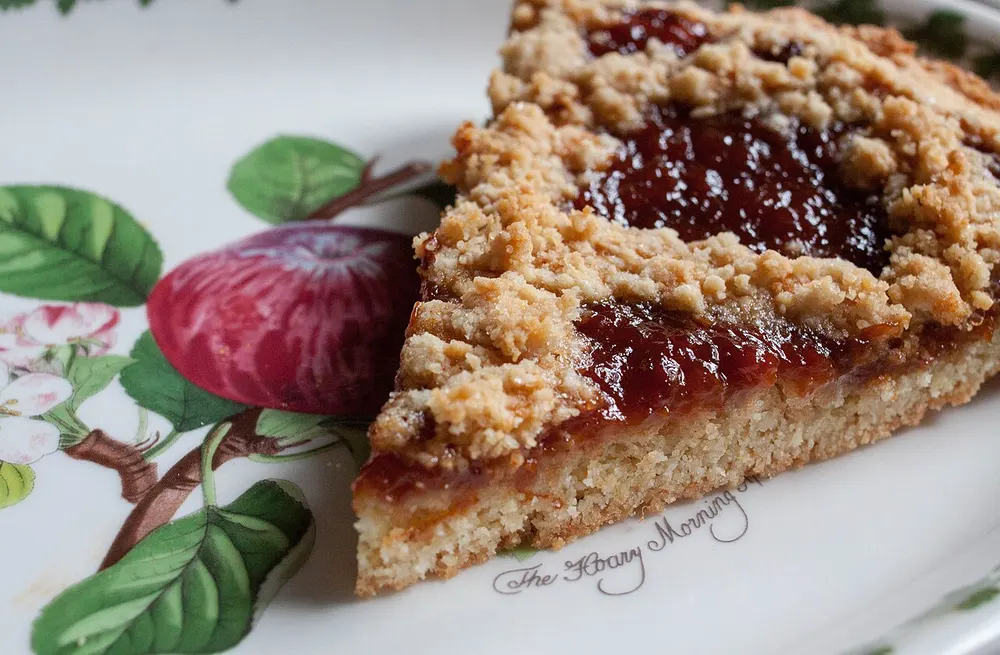
The tart every Italian household can make from the cupboard: an oil-based pastry that needs no chilling, a jar of jam, and a lattice on top. Breakfast, not dessert — and it is better on day two.
出典
レシピ提供 Benedetta Rossi · ⭐ 有名人 · Italy's most-followed home cook, publishing everyday family recipes from Le Marche for over 15 years.
料理人・クリエイターの名前は出典表記としてのみ使用しています。More Recipes Please は独立して運営されており、提携・後援・推奨の関係はありません。
Fatto in Casa da Benedetta — Benedetta Rossi — From Benedetta Rossi's own site, credited to her on the page. Amounts, the 28 cm tin and the 10-serving yield are as published; the step prose here is written for this book.
料理人: Benedetta Rossi
Watch it being made · 3 videos
Heat the oven to 180°C conventional, or 170°C fan. Grease a 28 cm tart tin and dust it with flour, tipping out the excess.
💡 The source uses a 28 cm tin. A smaller one means thicker pastry and needs an extra 5 minutes in the oven.
Crack the 2 eggs into a large bowl, add the 100 g of sugar and whisk for about a minute, until the mixture pales slightly and loosens.
Pour in the 80 g of sunflower oil and whisk another 30 seconds, until the mixture looks uniformly glossy with no oil floating on top.
💡 This oil pastry is why the dough needs no fridge rest — there is no butter to firm up, so you can roll it straight away.
Grate the zest of half a lemon straight into the bowl and stir it through.
💡 Grate over the bowl so the oils that spray out land in the batter — that mist is most of the lemon flavour.
In a second bowl, stir the 300 g of flour together with the 8 g of baking powder so the raising agent is evenly spread before it goes anywhere near the wet mix.
Add the flour to the egg mixture a handful at a time, working it in with a spoon and then with your hand. It goes from shaggy crumbs to a single ball in about 2 minutes.
💡 Add it gradually. Dumping all 300 g in at once leaves dry pockets you then over-knead to fix, and over-kneaded frolla bakes tough.
The pastry is ready the moment it stops sticking to your fingers and the surface looks smooth. Do not keep working it beyond that.
Flour a sheet of baking paper, put two thirds of the dough on it and roll out to about 3 mm — roughly the thickness of two coins.
💡 Rolling on paper means you never have to lift the fragile sheet by hand — you flip the whole paper over the tin instead.
Invert the sheet into the prepared tin, peel the paper away, press the pastry into the corners and trim the rim with a knife. Patch any tears with the offcuts.
Spread the 250 g of jam over the base in an even layer, leaving a clear 1 cm border around the edge.
💡 If your jam is very stiff, stir it loose with a spoon first — spreading a cold, solid jam drags the raw pastry up with it.
Roll the remaining third of the dough, flouring lightly if it sticks, and cut it into strips with a knife or a fluted pastry wheel.
Lay the strips over the jam in a lattice, pressing each end firmly onto the pastry rim so they don't slide as the tart heats.
Bake for 35–40 minutes at 180°C conventional (170°C fan), until the lattice is sandy gold and the jam is bubbling slowly at the edges.
💡 Go by the colour of the pastry, not the clock. Under-baked crostata looks fine and tastes raw and floury in the middle.
Let the tart cool completely in its tin — at least an hour. Hot jam is molten and hot pastry has no strength yet.
Turn it out using two large plates: one over the top, flip, then the second onto the base and flip back. Serve at room temperature, in slices.
作ってみましたか?写真を「作ってみた」に投稿してください。
あなたの作品をシェア →