初級
Korean
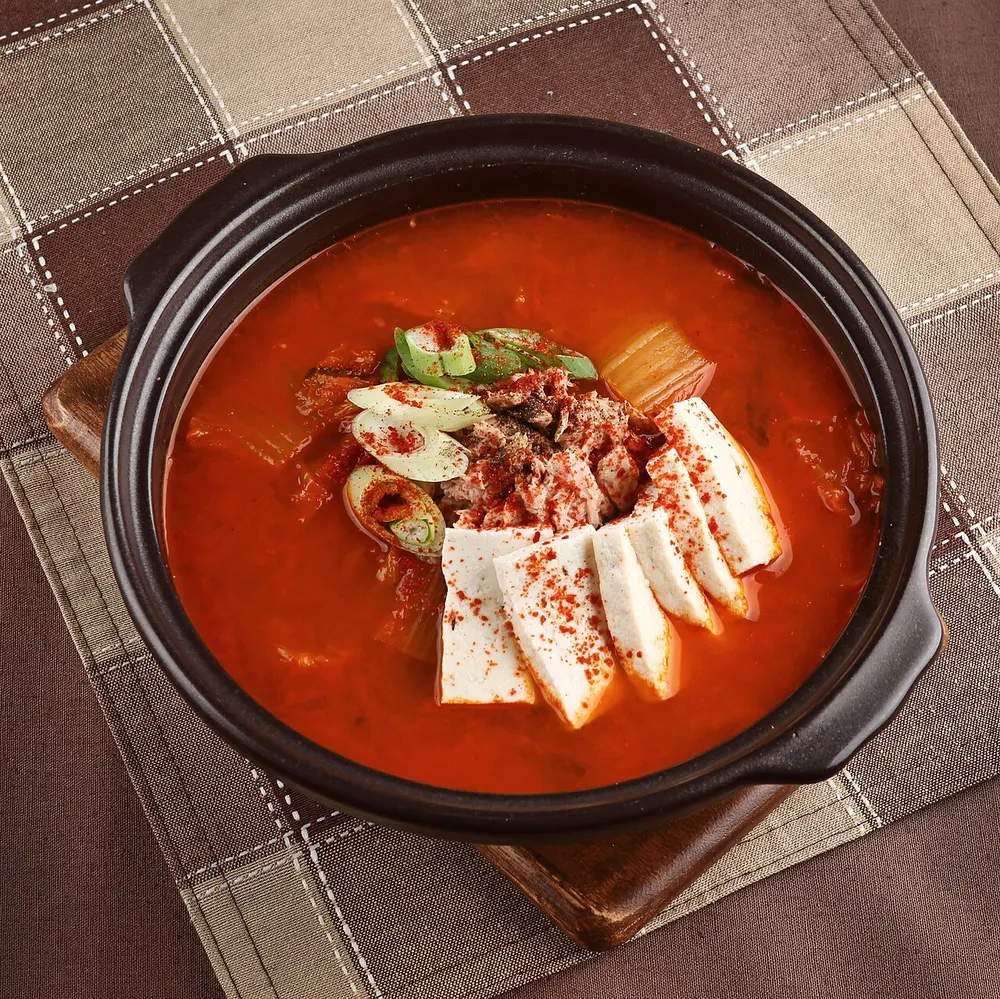
Kimchi Jjigae (Kimchi Stew)
出典: 伝統
30 分3420 kcal
乳製品不使用🌶️🌶️
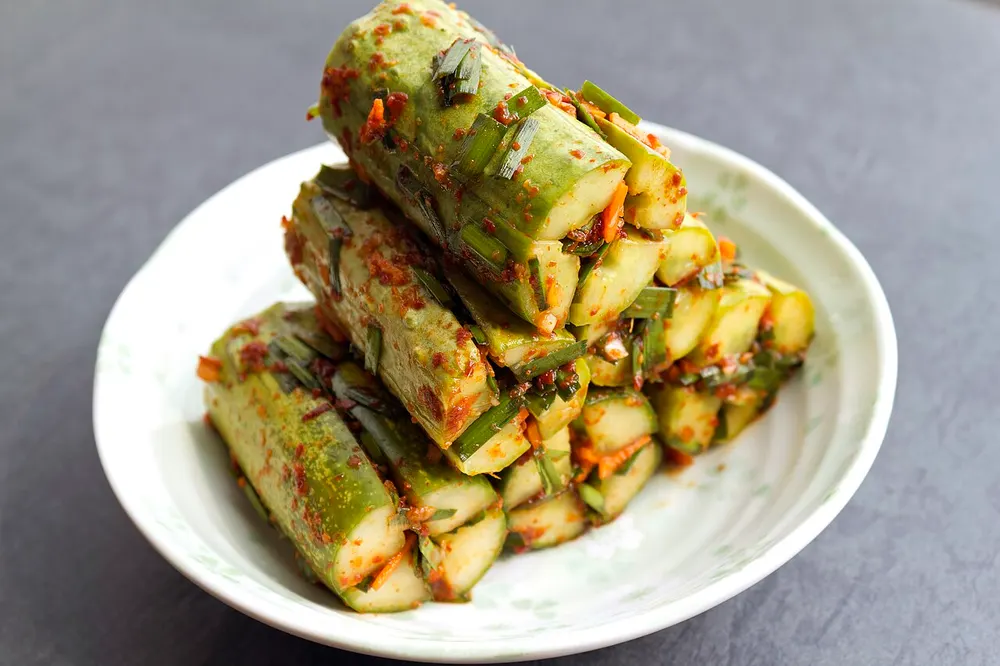
The complaint about oi-sobagi is always the same: it goes soft. Lee Jong-im's answer is a two-stage brine — whole cucumbers for an hour, then cut and re-brined for thirty minutes — plus a weighted drain, so the last one out of the jar still snaps.
出典
レシピ提供 이종임 · 👨🍳 シェフ · Lee Jong-im — Korean cooking researcher (요리연구가), a recurring cook on MBN's Altoran
料理人・クリエイターの名前は出典表記としてのみ使用しています。More Recipes Please は独立して運営されており、提携・後援・推奨の関係はありません。
MBN Altoran (알토란) — Published by MBN on Altoran's own channel (알토란 - 집밥 레시피, @Recipe_MBN); the description carries the full ingredient list and method and credits it as 'Altoran episode 333, oi-sobagi, #이종임'. Broadcaster-published text, not a viewer's write-up. The segment is billed as 40 years of craft aimed at one problem — cucumber kimchi going soft — and her answers are the two-stage brine (whole for an hour, cut for another thirty minutes), the weighted 30-minute drain, and rinsing the stuffing bowl out with salted water to make the jar liquid.
料理人: 이종임
Watch it being made · 3 videos
Dissolve 1 cup of coarse sea salt into 2 L of water and let the brine cool to just-warm before it goes anywhere near the cucumbers.
💡 Warm brine penetrates faster than cold; boiling-hot brine cooks the cucumber's outer layer and that is precisely where sogginess starts. 'One breath cooled' is the Korean instruction and it is a real spec.
Trim the stem ends off the 20 dadagi cucumbers and put them whole into a deep container.
Pour the cooled brine over them and leave for 1 hour, turning the cucumbers over every 30 minutes.
💡 Turning matters because cucumbers float. Whatever is above the waterline is not being brined, so half your batch ends up under-salted and watery unless you flip them.
Lift the cucumbers out, cut off the remaining end, halve each one crosswise, then cut a cross down each half — leaving 1.5 cm uncut at both ends so the piece stays in one hold.
💡 That 1.5 cm margin is the whole engineering of oi-sobagi. Cut through and you have a bowl of cucumber salad; leave the hinge and you have a pocket that holds stuffing.
Pour the same brine back over the cut cucumbers and give them another 30 minutes — 1 hour 30 minutes of brining in total, exactly as she calls for.
💡 This second brine is the answer to soggy oi-sobagi. The cut faces are freshly exposed and need salting too — brine only the whole cucumber and the inside of every cross stays raw, then weeps water into the jar for a week.
Rinse the brined cucumbers in cold water to wash off the surface salt.
Stand them in a colander, set a weight on top and let them drain 30 minutes, then wipe each one dry with a clean dry cloth.
💡 Do not skip the weight or the cloth. Every gram of water still in the cucumber dilutes the stuffing and slackens the kimchi — this step is why hers stay crisp to the last piece.
While they drain, cut the buchu (200 g) and jjokpa (80 g) into 2–3 cm lengths and julienne the radish (200 g) to a similar length.
Grate or blitz half a pear and one onion and strain out the juice.
In a wide bowl combine the jjokpa, radish, 1.5 cup gochugaru, ⅓ cup kkanari fish sauce, 2 tbsp minced saeujeot, 80 g minced garlic, 10 g minced ginger and the pear-onion juice. Add the buchu and 2 tbsp sesame seeds last.
💡 Garlic chives bruise the moment they are handled roughly, and bruised buchu turns slimy in the jar. Adding them last means they get mixed the fewest number of times.
Toss it all together gently — she says 살살, lightly — until the chili powder has bloomed to a deep even red and no dry powder is left.
💡 Squeeze and knead it like a batter and the radish releases its water on the spot, leaving you with soup instead of stuffing.
Open each cucumber's cross with your thumb and pack the stuffing into the four channels, then press the piece closed once in your palm.
Stack them into an airtight container, packing them snugly so they cannot roll around.
Add 200 ml water and ½ tbsp fine salt to the now-empty stuffing bowl, swirl it around to lift every last trace of seasoning, and pour that liquid into the container.
💡 Nothing is wasted and the jar gets exactly the liquid it needs. Plain water on its own would dilute the kimchi — the half spoon of salt keeps the brine balanced with the cucumbers.
Leave it at room temperature to start fermenting — a day in summer, two in a cold kitchen — then move it to the fridge. It is good from day one and better from day three.
作ってみましたか?写真を「作ってみた」に投稿してください。
あなたの作品をシェア →