Débutant
Korean
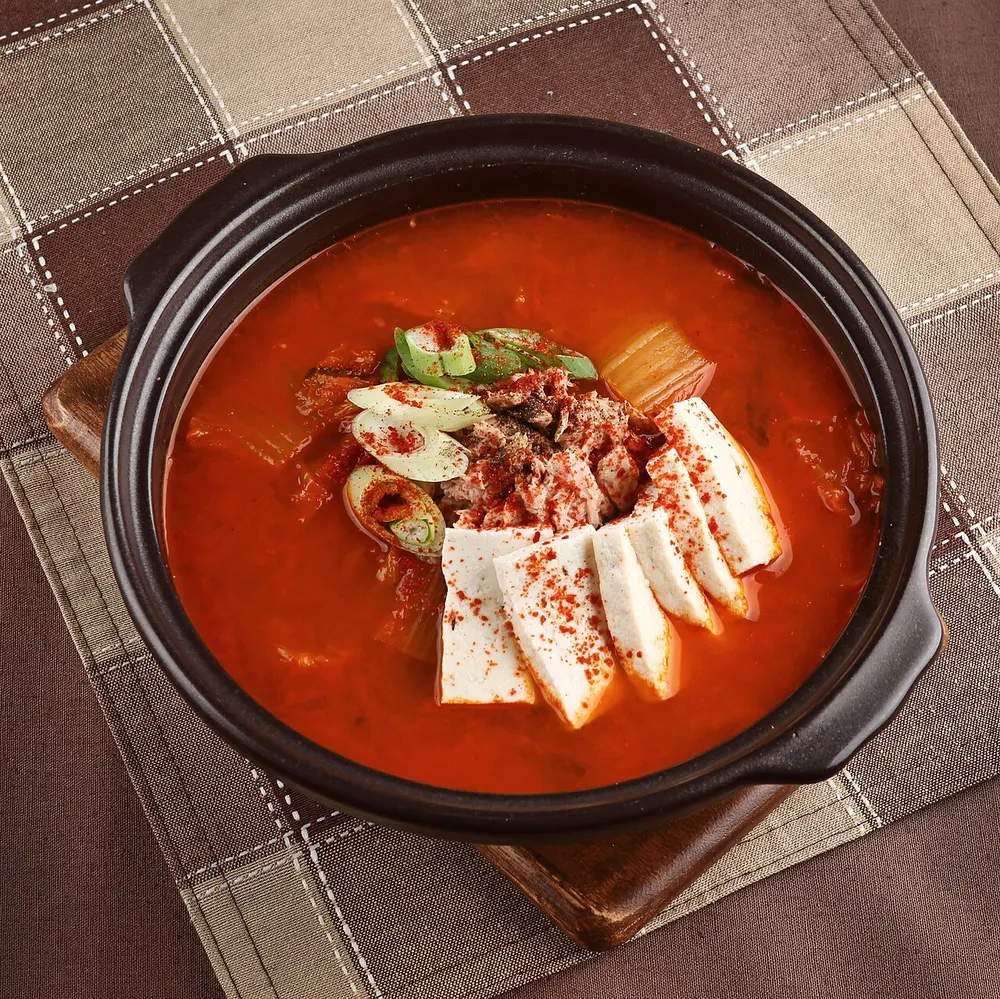
Kimchi Jjigae (Kimchi Stew)
Source: Traditionnel
30 min3420 kcal
Sans produits laitiers🌶️🌶️
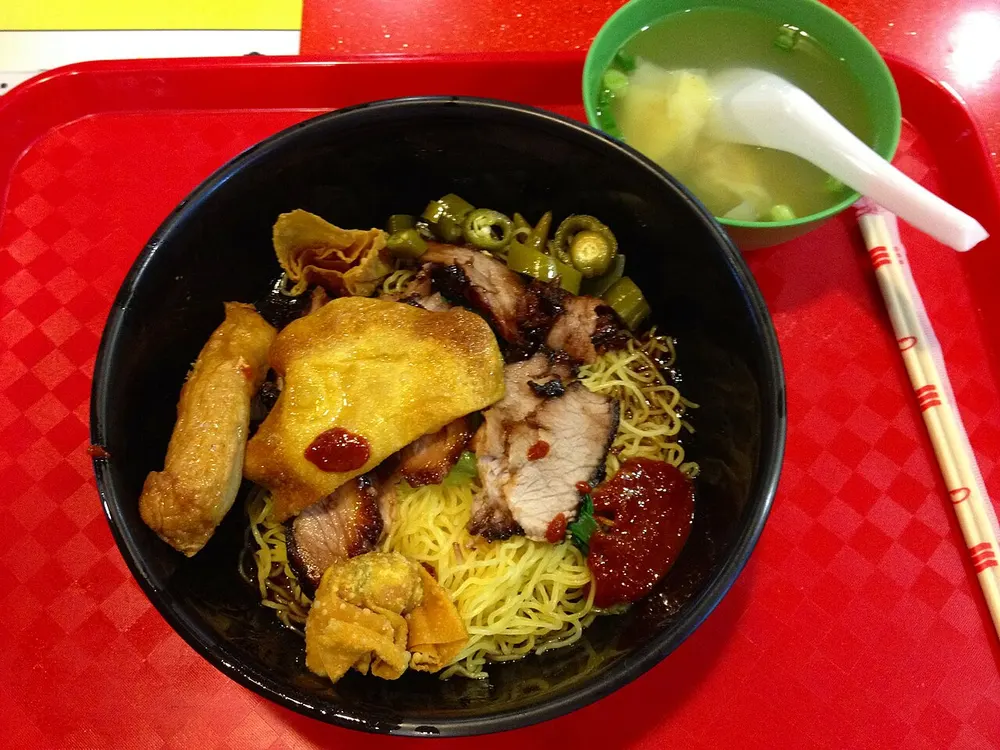
Thin springy egg noodles tossed dry in a light sweet-savoury sauce, crowned with slices of char siew and a few pork-and-prawn wontons, with the wonton soup served on the side.
Source
Recette de Chinese-Singaporean hawker stalls · 🏺 Traditionnel · Teochew, Hokkien and Cantonese stall cooking in Singapore's hawker centres and coffee shops
Singapore hawker dish · Cantonese origin — An ownerless dish, so no cook is credited. The reference is the canonical 'Wonton noodles' article (雲吞麵 / 云吞面) and confirms the points this recipe is built on: the Southeast Asian version is served dry more often than in soup; the Singapore and Malaysian versions are described as similar to each other; the Singapore one 'uses significantly less soy sauce and is often served with chilli ketchup'. The article credits the char siu topping to the regional Malaysian form — Singapore stalls serve it the same way, and the dish is Cantonese in origin, not a Singaporean invention. Quantities are this book's own.
Watch it being made · 3 videos
Mix the minced pork, chopped prawn, Shaoxing wine, cornflour, half the sesame oil, white pepper and a teaspoon of the light soy. Stir it in one direction for a minute until the mixture turns sticky and holds together.
💡 Stirring one way lines the proteins up and is what gives a wonton filling its bounce. Stirring randomly just mixes it.
Put a scant teaspoon of filling in the centre of each wrapper, wet the edges, and gather the wrapper up around it into a loose bundle with a frilly top. Do not try to force out every air pocket.
💡 The loose frilly tail is the point — it cooks into a soft ribbon that catches sauce. A tightly sealed parcel eats like a dumpling, not a wonton.
Slice the char siew thin. Whisk the sauce in each serving bowl: the rest of the light soy, oyster sauce, sesame oil, tomato chilli sauce, lard and 2 tablespoons of hot stock.
Bring the stock to a gentle simmer and poach the wontons for 3 to 4 minutes, until they float and the wrappers turn translucent. Keep them in the hot stock.
Blanch the choy sum 45 seconds in boiling water and lift out. Cook the noodles in the same water for 20 to 30 seconds — no longer — then lift, dunk in cold water for 3 seconds, and shake them completely dry.
💡 These noodles are thin enough to overcook while you look at them. Under-done is recoverable in the hot bowl; over-done is not.
Toss the noodles hard in the sauce, then arrange the char siew, greens and a few wontons on top with the spring onion. Ladle the remaining wontons and stock into a side bowl. Pickled green chillies go on the table, not in the bowl.
💡 One slice of pickled chilli per mouthful, chosen by you — that vinegar hit is how the bowl stays interesting to the last strand.
Korean
Source: Traditionnel
Korean
Source: Cuisine maison
Korean
Source: Cuisine maison
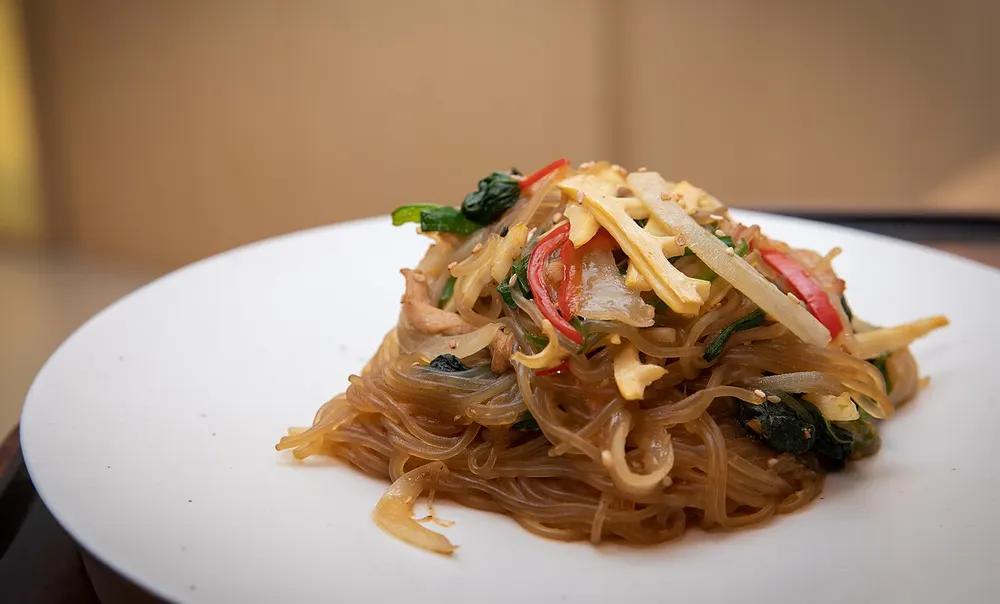
Korean
Source: Traditionnel
Vous l'avez préparé ? Partagez une photo dans la Vitrine.
Partagez votre création →