Débutant
Korean
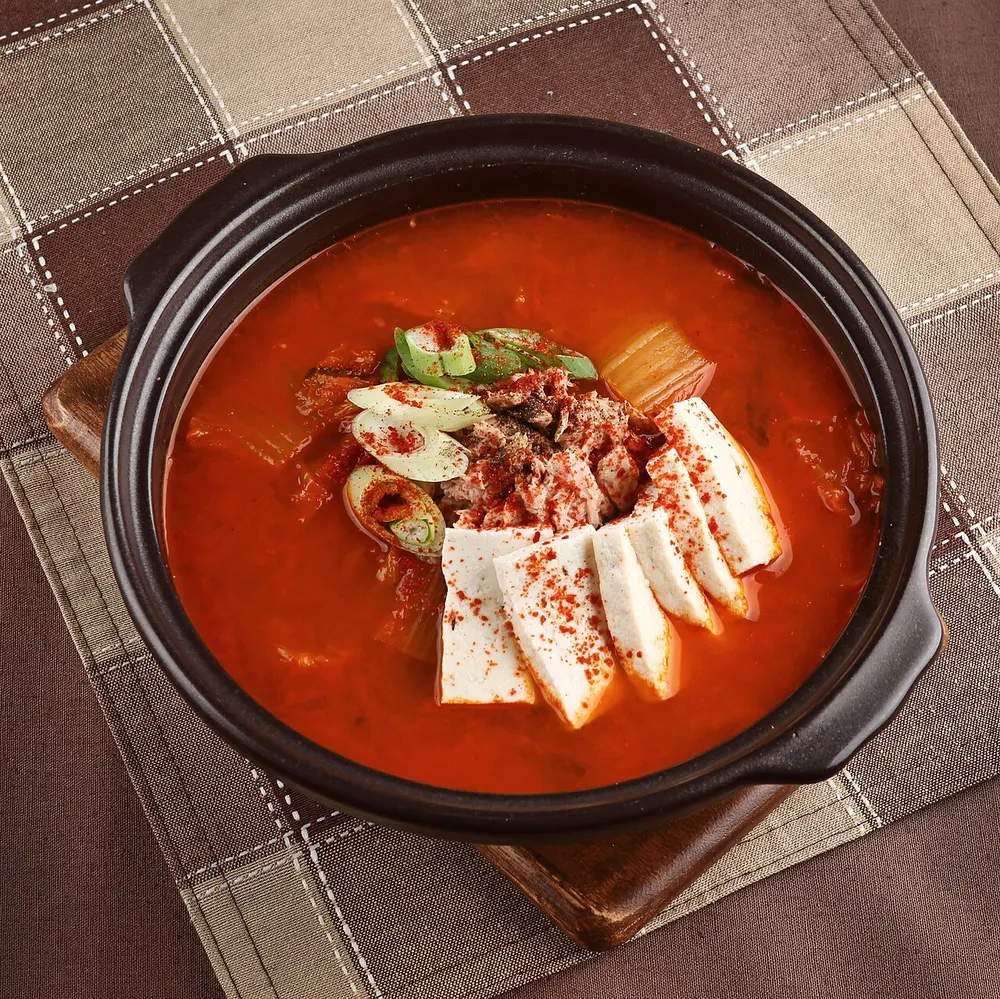
Kimchi Jjigae (Kimchi Stew)
Source: Traditionnel
30 min3420 kcal
Sans produits laitiers🌶️🌶️
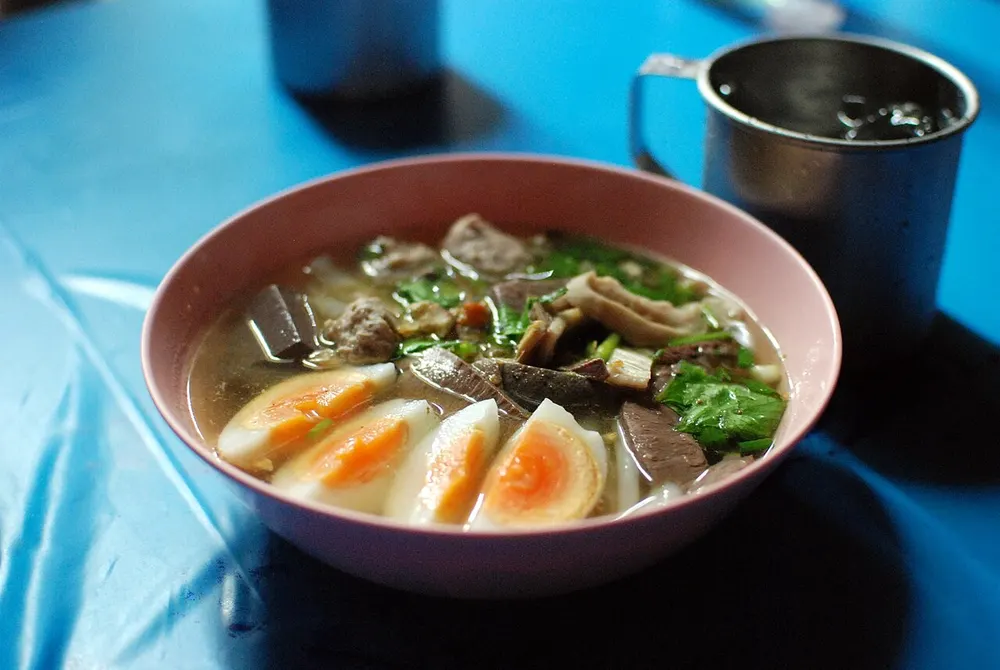
Two bowls. One holds broad, silky rice sheets in a dark, faintly sweet soy broth. The other holds everything the Teochew braising pot can offer — pork belly, intestines, ear, tofu, braised eggs, salted vegetable — sliced and dressed with the same braising liquid. Pick what you like; the pot is the same.
Source
Recette de Chinese-Singaporean hawker stalls · 🏺 Traditionnel · Teochew, Hokkien and Cantonese stall cooking in Singapore's hawker centres and coffee shops
Singapore · the Teochew braising pot — An ownerless hawker dish, so no cook is credited. The cited article confirms kway chap as a Teochew noodle soup of flat broad rice sheets in broth served with braised pork cuts including offal, belly, intestines and ear, braised duck, beancurd, preserved vegetables and braised eggs, popular in Singapore's Teochew community and moved from roadside stalls to hawker centres in the 1960s. The spice mix, the two-liquid method, timings and quantities are this book's own.
En savoir plus sur Wikipédia ↗
Voir comment on la prépare · 3 vidéos
Make the braising liquid: bring the water to a boil with both soys, rock sugar, garlic, star anise, cinnamon, cloves and galangal. Simmer 15 minutes.
Add the pork belly, intestines and ear. Braise, partly covered, at a gentle simmer 90 minutes, until the belly is tender and the intestines soft.
💡 Gentle. A hard boil toughens the intestine and shreds the belly. The surface should just tremble.
Add the fried tofu, tau pok, eggs and salted greens for the last 25 minutes so they soak up colour and flavour.
Lift everything out. Slice the belly, intestines and ear; halve the eggs and tofu. Ladle 300 ml of the braising liquid into a small pan and thin it with 700 ml of water for the noodle broth; season to taste.
Blanch the rice sheets 30 seconds in boiling water and drain. Put them in bowls and pour the hot thinned broth over.
Arrange the braised meats, tofu, eggs and greens on a plate, spoon a little of the thick braising liquid over, and serve alongside with coriander and the chilli-vinegar dip.
Korean
Source: Traditionnel
Korean
Source: Cuisine maison
Korean
Source: Cuisine maison
Korean
Source: Traditionnel
Vous l'avez préparé ? Partagez une photo dans la Vitrine.
Partagez votre création →