Intermédiaire
Moroccan
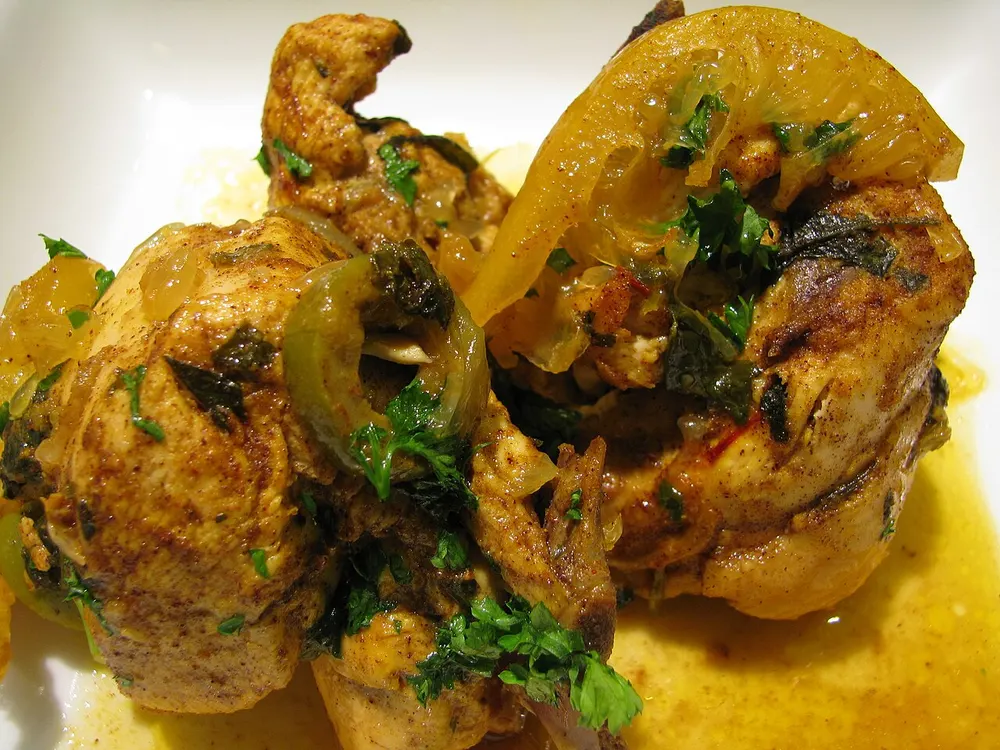
Chicken Tagine with Olives and Lemon
Source: Traditionnel
90 min4420 kcal
HalalSans glutenSans produits laitiers
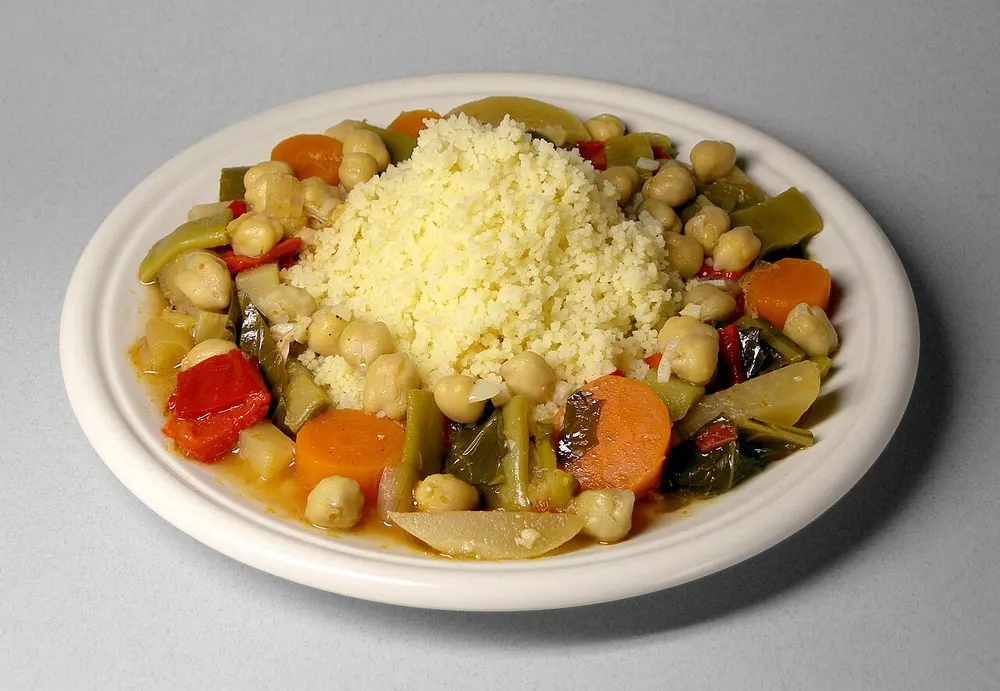
Le couscous du vendredi : semoule vapeur trois fois, jusqu'à ce que chaque grain reste séparé.
Source
Recette de Moroccan home kitchens · 🏺 Traditionnel · Moroccan household cooking
Cuisine familiale marocaine — A traditional North African dish of small steamed granules of rolled semolina, usually served with a stew spooned on top. Couscous is Berber in origin and is the Friday dish across Morocco, eaten communally from a single platter after prayers. It has no single author; the seven-vegetable version is one of the best-known formulations, the number being symbolic rather than fixed. The three-steaming method below is the traditional technique the dish is built on.
Watch it being made · 3 videos
Start the broth: put the onions, carrots, turnips, grated tomato, herb bundle, ginger, turmeric, pepper, saffron, olive oil and salt in the base of a couscoussier with the 2 L of water. Bring to a boil.
💡 No couscoussier? A stockpot with a metal steamer or colander that sits snugly on top does the same job. Seal the join with a strip of damp cloth or foil — escaping steam is steam not cooking your grain.
First steaming: tip the dry couscous into a wide bowl, sprinkle over 150 ml water and the vegetable oil, and rub it through with your fingertips for 2 minutes.
💡 Rub, do not stir — you are coating every grain so they cannot glue to each other. This is the whole reason steamed couscous is fluffy and boiled couscous is a lump.
Tip the couscous into the steamer basket, set it over the boiling broth, and steam uncovered 15 minutes from when steam first rises through the grain.
💡 Uncovered, always. A lid drips condensation back onto the grain and undoes everything.
Tip the couscous back into the bowl and break it up with a wooden spoon — it will be steaming hot and clumped.
Second steaming: sprinkle over 200 ml cold water and 1 tsp salt, and rub the grain through your fingers again until every lump is gone.
💡 Cold water on hot grain is what makes the semolina swell in stages instead of all at once. Wait until it is cool enough to handle — rushing this burns your fingers and leaves lumps.
Return it to the steamer and steam another 15 minutes.
Meanwhile, add the cabbage, pumpkin and courgettes to the broth below — they need the least cooking.
💡 Staggering matters. Everything in at once means dissolved courgettes floating around rock-hard turnip.
Tip the couscous out one last time, break it up, and sprinkle over 150 ml water and the remaining salt. Rub it through again.
Third steaming: 15 minutes more. Taste a grain — it should be tender all the way through with no chalky centre.
💡 Three steamings sounds like superstition. It is not: each one hydrates the grain a little further, and a single long steam gives you couscous that is soft outside and raw in the middle.
Add the chickpeas to the broth and check the vegetables — everything should be tender but still holding its shape.
Fish out the herb bundle and taste the broth for salt. It should taste like a light, fragrant, golden soup.
Tip the couscous onto a big platter and fluff it into a wide mound with your hands or a fork.
💡 Every grain should stand separate and glisten. If it is sticking, you either used instant couscous or skipped an oil-rubbing.
Arrange the vegetables over the top and scatter the chickpeas around.
Ladle broth generously over everything, and put the rest in a jug at the table for people to add more.
Moroccan
Source: Traditionnel
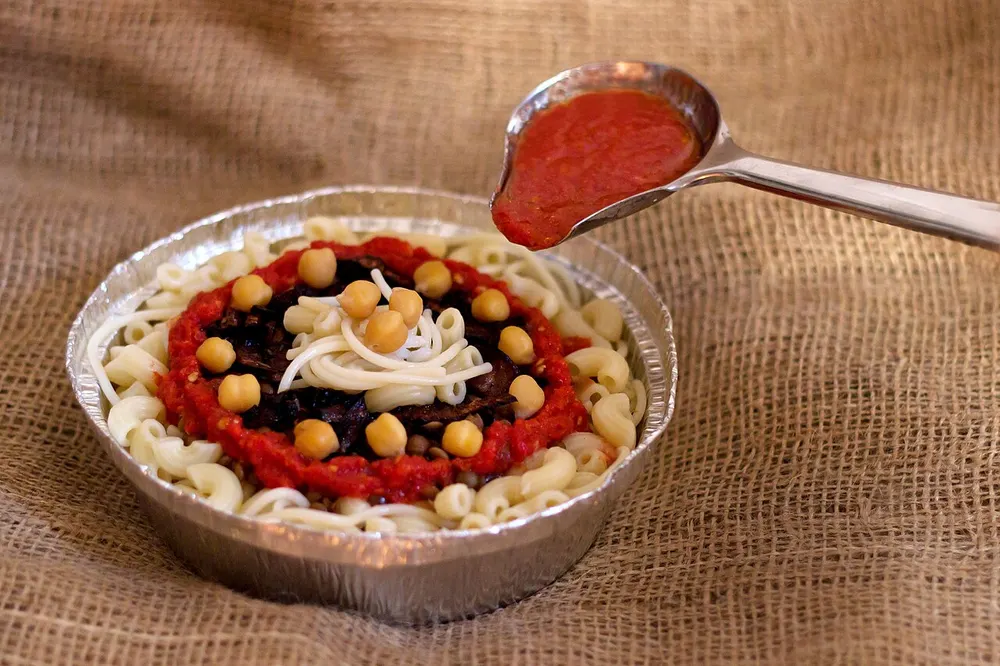
Egyptian
Source: Cuisine maison
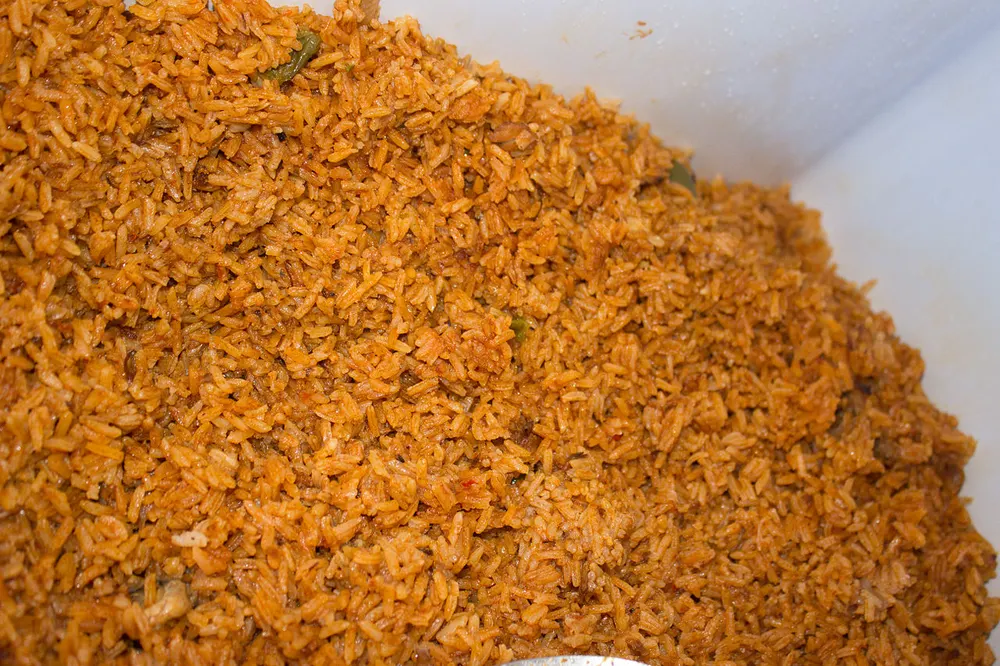
West African / Nigerian
Source: Traditionnel
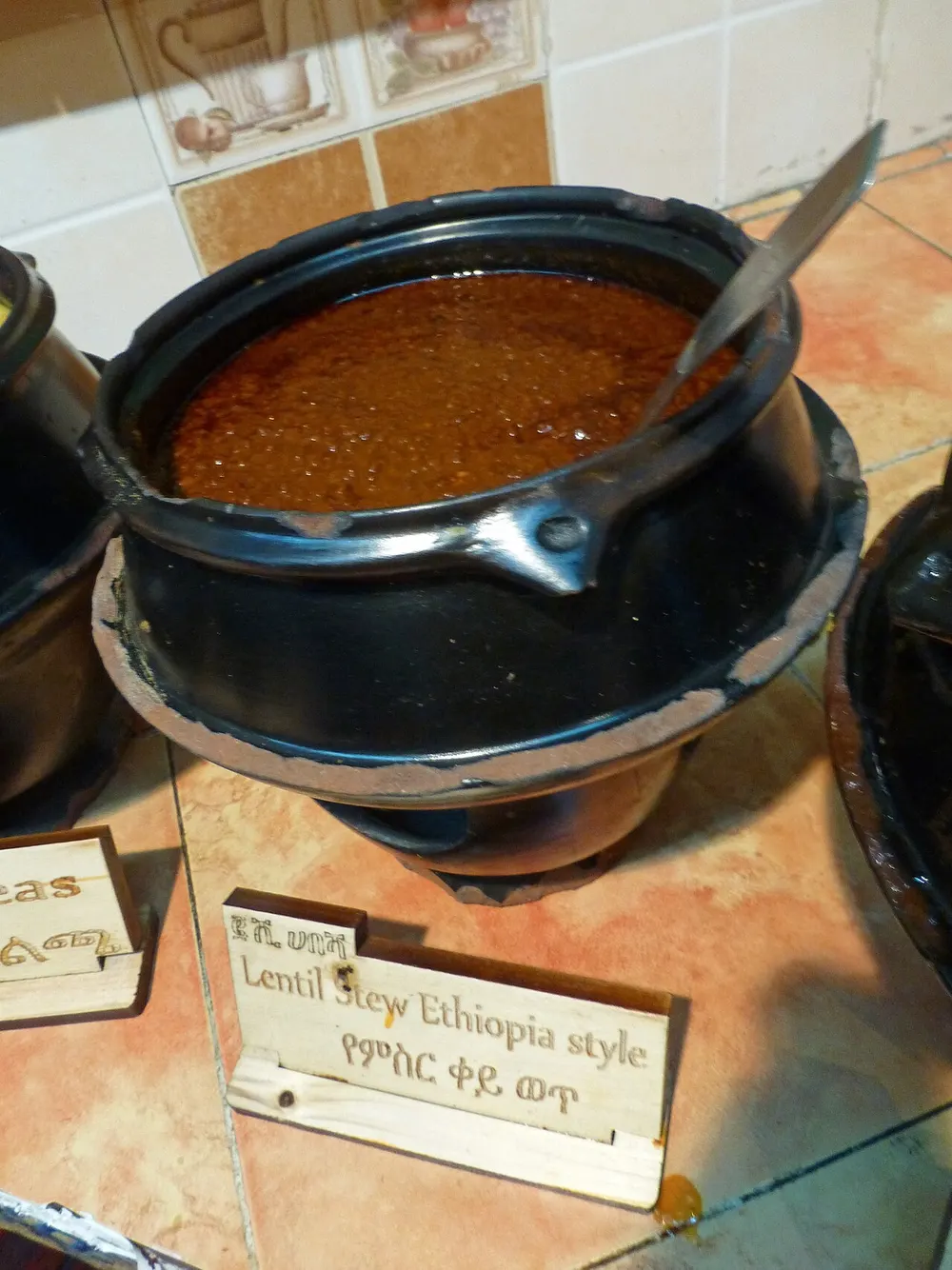
Ethiopian
Source: Cuisine maison
Vous l'avez préparé ? Partagez une photo dans la Vitrine.
Partagez votre création →