入门
Korean
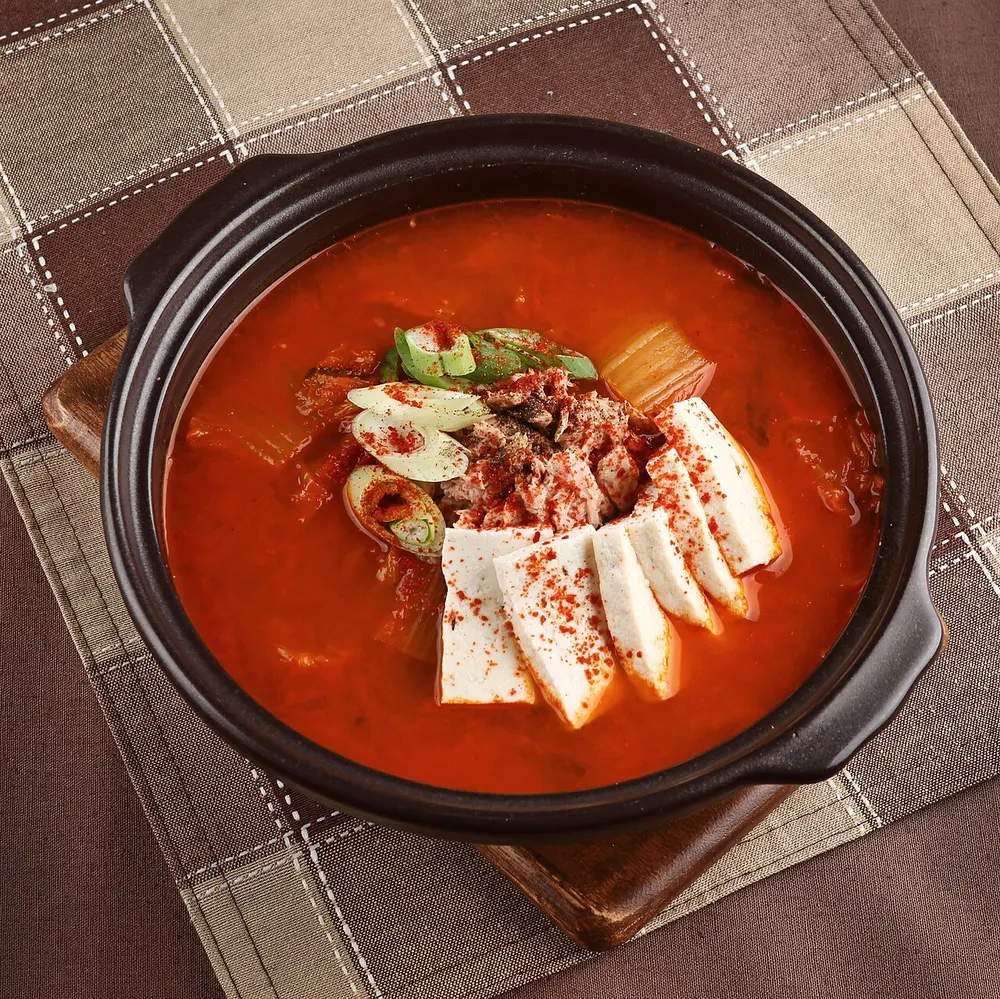
Kimchi Jjigae (Kimchi Stew)
来源: 传统
30 分钟3420 大卡
无乳制品🌶️🌶️
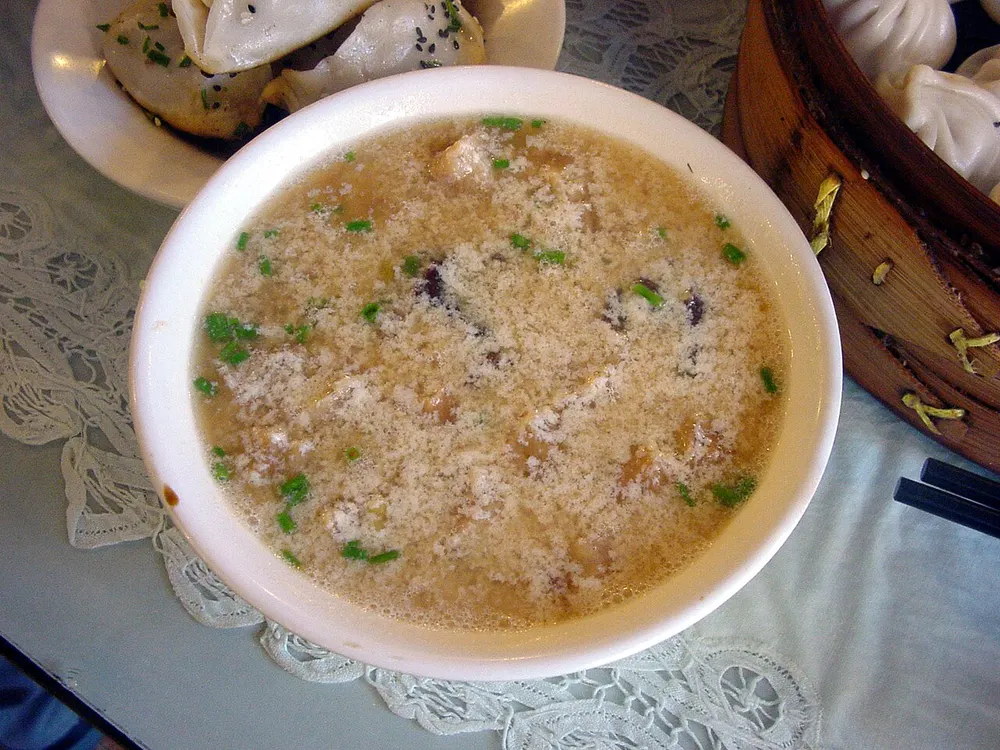
一碗看得見的早餐化學:滾燙的無糖豆漿沖進醋裡,在碗中凝成軟軟的絮花,再加蝦皮、榨菜和撕碎的油條。
来源
食谱提供 Taiwanese breakfast shops · 🏺 传统 · 早餐店 — 天還沒亮就開門、幾乎每條街都有的鐵板與豆漿舖
台灣早餐店的基本款 — An ownerless breakfast dish; no creator is credited. The cited page is the Chinese-language Wikipedia article 鹹豆漿 (fetched, HTTP 200) — there is no dedicated English article, which is stated plainly here. It records the method as pouring heated unsweetened soy milk into a bowl already containing vinegar and soy sauce, so that the acid reaction partially coagulates the soy protein into a texture like silken tofu, and lists the standard toppings as zha cai, dried shrimp, youtiao and chopped scallion, noting that Taiwanese breakfast shops are particularly known for it. The English Wikipedia soy milk article separately confirms that in Taiwanese cuisine soy milk is a popular breakfast item often served with youtiao, and lists the same savoury additions. Quantities and temperatures are this book's own.
Watch it being made · 2 videos
Into each of two deep bowls put 1 tsp vinegar, 1 tsp soy sauce, a spoonful of zha cai, a teaspoon of dried shrimp and half the sesame oil. Do not add the soy milk yet.
Heat the soy milk in a pan until it is steaming hard and just about to boil — around 90°C, with the surface trembling but not yet rolling.
💡 Stir it while it heats. Soy milk catches on the base of the pan faster than dairy and the scorched taste goes right through the bowl.
Pour the hot soy milk into each bowl from about 20 cm up, fast and all in one go. Then stop. Do not stir.
💡 The height and the speed are what mix the vinegar through evenly. Stirring afterwards breaks the curds into grit — the whole texture depends on leaving it alone.
Wait 30 seconds. You will see the milk separate into soft white flocs suspended in a faintly cloudy liquid — that is the dish working, not the dish failing.
Tear the youtiao into short lengths, drop them on top with the scallion, coriander and chilli oil, and eat it with a spoon straight away.
做过这道菜吗?在秀场分享一张照片吧。
晒出我的作品 →