入门
Korean
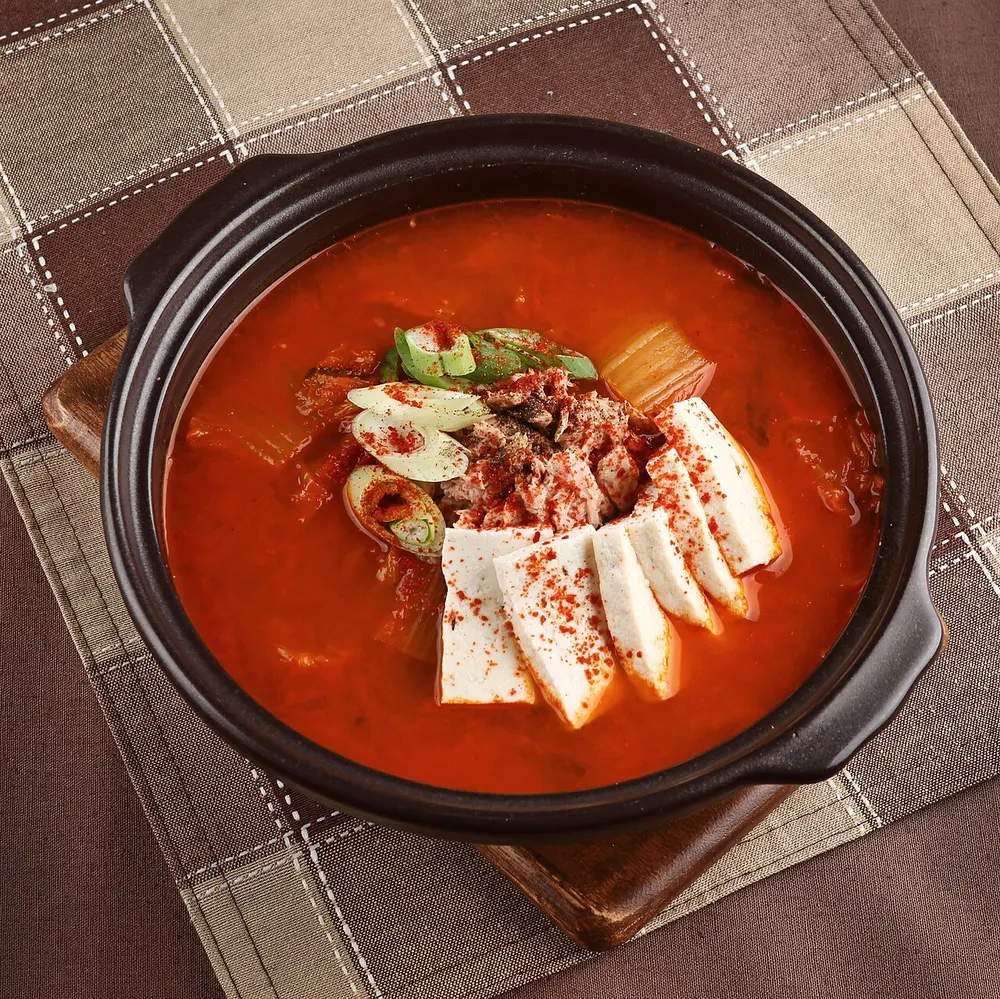
Kimchi Jjigae (Kimchi Stew)
来源: 传统
30 分钟3420 大卡
无乳制品🌶️🌶️
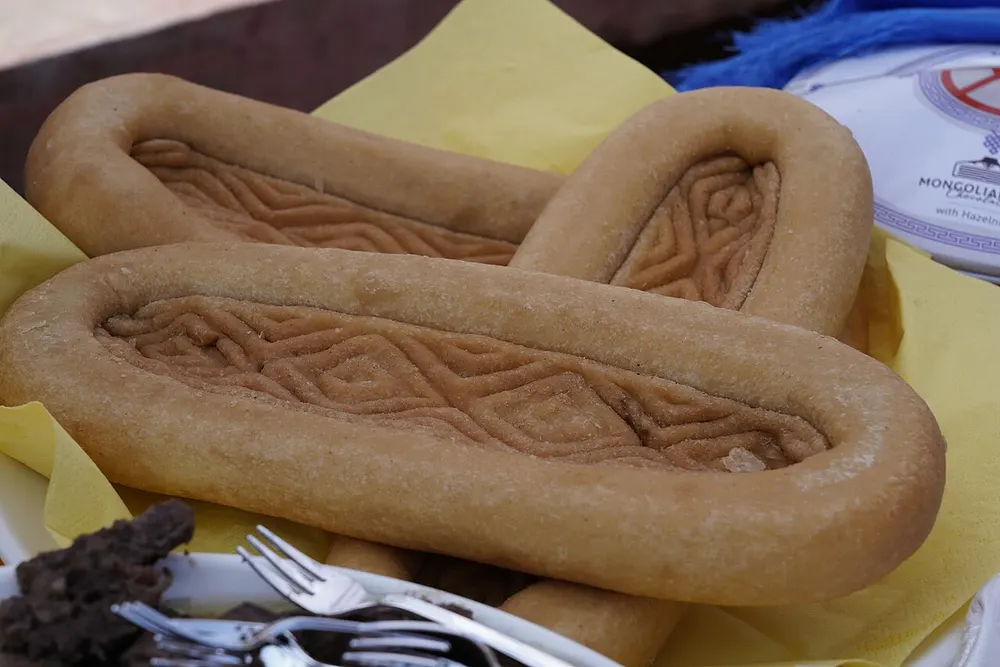
Large stamped biscuits fried and stacked in odd-numbered layers with sweets and curd on top — built as a tower for Tsagaan Sar and not taken apart until the guests leave.
来源
食谱提供 Mongolian ger kitchens · 🏺 传统 · Cooking in a round felt tent with one stove in the middle — mutton, flour, and the white foods made from milk, with almost nothing that has to be bought.
Mongolian · Tsagaan Sar tower — An ownerless traditional dish, so no cook is credited. The cited article confirms the layered biscuit assembly and its role as a New Year dish. Quantities, the odd-number rule and the frying temperature are this book's own.
Watch it being made · 2 videos
Mix everything except the oil and decorations into a firm, smooth dough. Knead 10 minutes and rest 30 minutes.
Roll it 1 cm thick and cut ovals about 20 cm long — you want 9 or 11 of them, never an even number.
💡 Odd numbers only. An even-numbered stack is for a funeral in Mongolian custom, and the number of layers also signals the age of the household head.
Press a pattern into each with a carved mould or the tines of a fork, cutting through the surface but not the base.
Heat the oil to 160°C — low — and fry each one 4 minutes a side until pale gold and dry.
💡 Low and slow. These are thick and have to dry all the way through — they have to hold the weight of the stack for two weeks.
Cool them completely on racks. They should be hard, not soft.
Stack them on a platter, turning each layer 90 degrees, and pile aaruul, sweets and sugar cubes on the top.
做过这道菜吗?在秀场分享一张照片吧。
晒出我的作品 →