入门
Korean
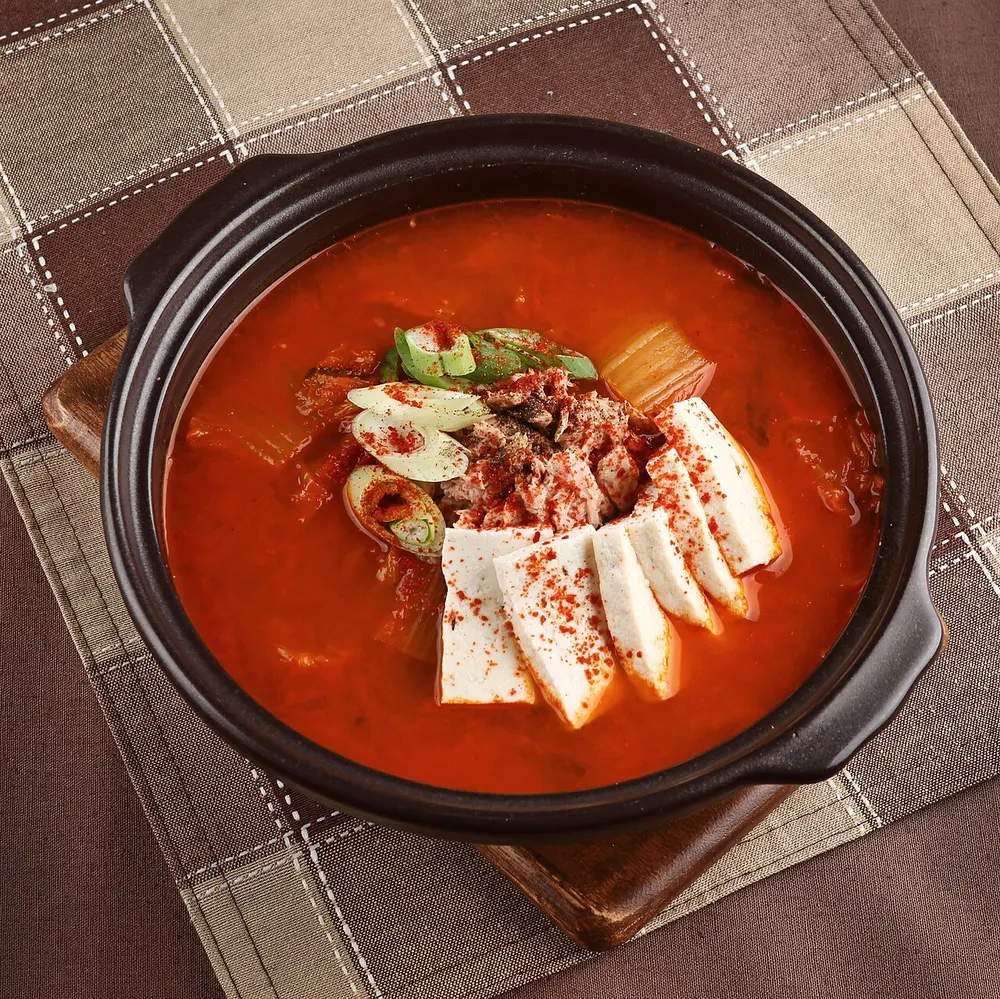
Kimchi Jjigae (Kimchi Stew)
来源: 传统
30 分钟3420 大卡
无乳制品🌶️🌶️
His argument is that a home teppan is the wrong tool: a frying pan with a lid steams the cabbage while the batter browns. 100 g of grated mountain yam does the lifting, and there is no dashi to make — microwaved katsuobushi powder goes straight into the batter.
来源
食谱提供 リュウジ · 📱 网红 · Ryuji — cooking researcher (料理研究家) and YouTuber behind 料理研究家リュウジのバズレシピ, Japan's biggest cooking channel at ~5.6M subscribers. Known for fast, exactly-measured home recipes.
厨师与创作者的姓名仅用于标注出处。More Recipes Please 独立运营,与他们没有任何合作、赞助或代言关系。
Ryuji (バズレシピ) — Published by リュウジ on his own YouTube channel under a title that translates as 'stop cooking okonomiyaki on a teppan'. The description carries the full ingredient list and his method as text, and that is the source of every quantity here. His argument is a practical one: a home hotplate has no lid, so the surface scorches long before 250 g of raw cabbage softens. In a covered frying pan the trapped steam cooks the middle while the base browns — hence the unusually long 10 minutes under a lid. The other two markers of his version are 100 g of grated mountain yam for lightness and microwaved katsuobushi powder stirred straight into the batter instead of a brewed dashi.
厨师: リュウジ
Watch it being made
Peel and grate the mountain yam until you have 100 g of loose, sticky purée.
💡 Raw yam makes some people's hands itch. Hold it with the skin still on at one end, or wear a glove — and if it does itch, rinsing with vinegar water settles it.
In a large bowl, combine the grated yam, water (75 cc), cake flour (75 g), katsuobushi powder (4 g), the 2 eggs, 5 shakes of Aji-no-moto and salt (小さじ1/3). Mix thoroughly until smooth.
Now add the chopped cabbage (250 g) and fold it through — briefly, just until every shred is coated.
💡 Cabbage goes in last and gets mixed least. Once salt and cabbage meet they start pulling water out of each other, and a batter left to sit turns watery and flat. Mix the batter fully first, the cabbage barely at all.
Lay the pork belly slices (200 g) flat across the base of a cold frying pan, covering it evenly. If slices are left over, chop them and stir them into the batter.
Set the pan over medium heat and let the pork cook until it whitens and starts releasing fat.
💡 The rendered pork fat is the only fat in the pan — that is why he starts from cold and why no oil is on the list.
Pour the batter over the pork and spread it into an even round about 2–3 cm thick. Do not press it down.
Cook just under 3 minutes over medium heat, until the edge sets and looks dry and the underside is browned.
💡 Resist pressing it with the spatula. Pressing squeezes out the air and steam that the yam is working to hold in, and you end up with a dense disc instead of a light one.
Flip it in one committed motion, pork-side up.
💡 Slide it onto a plate, put the pan upside-down over the plate and invert the two together if a straight flip feels risky. A hesitant half-flip is how okonomiyaki ends up in pieces.
Put a lid on and cook 10 minutes, turning it over a few times during that time.
The lid is what replaces the teppan: it traps steam so the 250 g of cabbage actually cooks through while the outsides brown.
💡 This is the whole thesis of the video. On an open home teppan the surface burns long before that much raw cabbage softens; under a lid, steam does the inside and the pan does the outside.
Check it is done: a skewer pushed into the middle should come out clean and hot, and the cabbage should be soft, not squeaky.
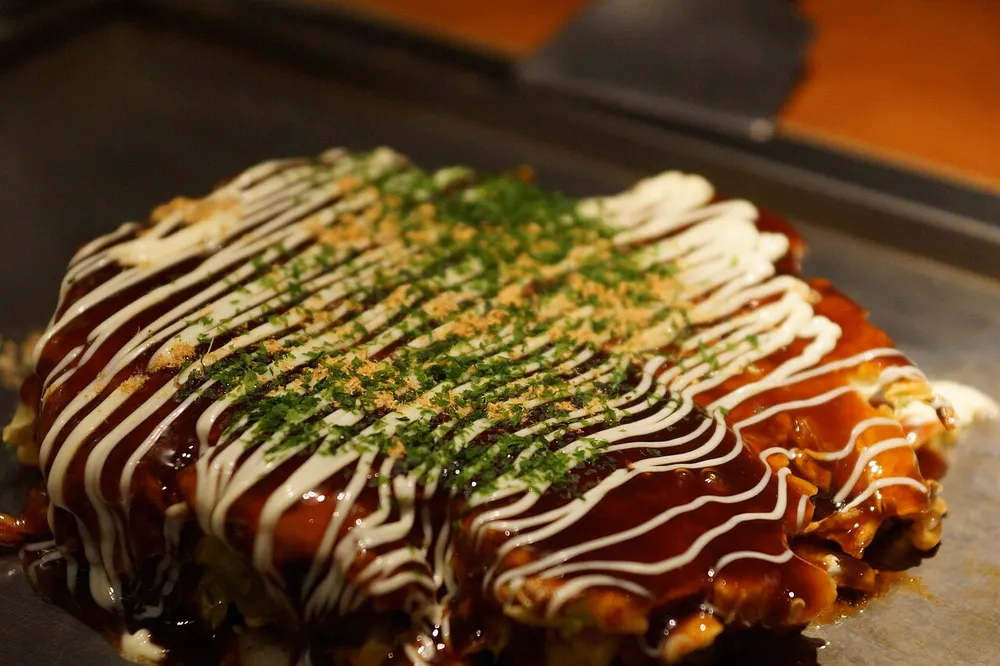
Slide it onto a plate and brush over the okonomiyaki sauce, then zig-zag the mayonnaise across it.
Finish with a shower of katsuobushi and aonori, and serve while the flakes are still curling from the heat.
做过这道菜吗?在秀场分享一张照片吧。
晒出我的作品 →