入门
Korean
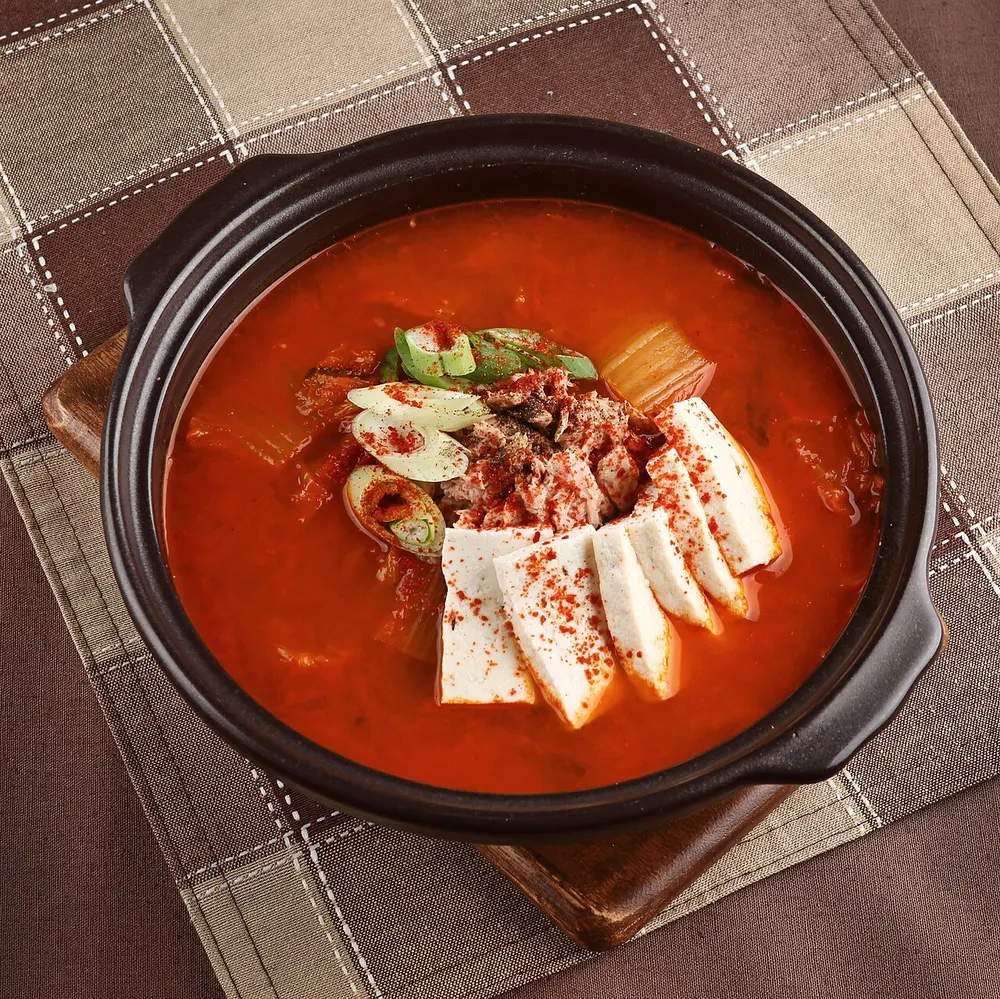
Kimchi Jjigae (Kimchi Stew)
来源: 传统
30 分钟3420 大卡
无乳制品🌶️🌶️
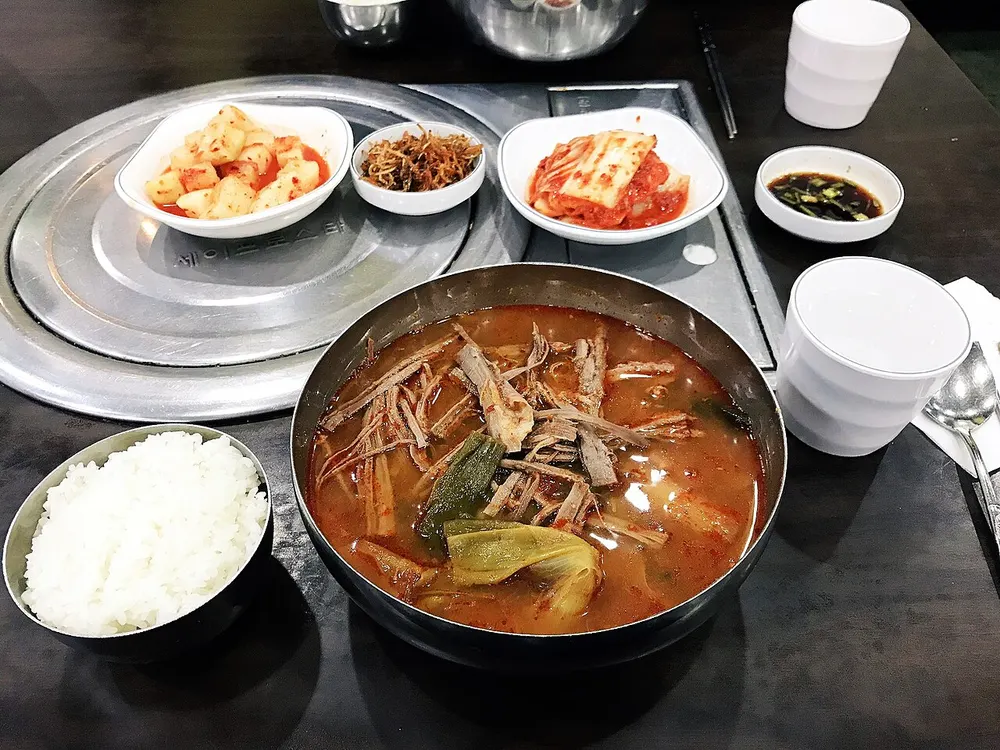
Yukgaejang without the three-hour brisket boil: thin bulgogi beef and 228 g of green onion are fried in sesame oil, chili powder is bloomed into red oil, and water goes straight in — soup in twenty minutes.
来源
食谱提供 백종원 · 👨🍳 主厨 · Paik Jong-won — chef & restaurateur, 백종원의 요리비책
厨师与创作者的姓名仅用于标注出处。More Recipes Please 独立运营,与他们没有任何合作、赞助或代言关系。
Paik Jong-won (요리비책) — Published by Paik Jong-won on his own YouTube channel as '육개장 만드는 데 20분이면 가능', with the full gram/ml table and his numbered method in the description. Yukgaejang traditionally means hours of boiling brisket and hand-shredding it; his version throws that out — thin bulgogi-cut beef and 228 g of green onion are fried in a deliberately large 6 tbsp of sesame oil, the chili powder is bloomed into red oil before any liquid, and plain water becomes the broth. He also notes in his own tip that Miwon or beef Dasida can be added to taste.
厨师: 백종원
Watch it being made
Soak the glass noodles in lukewarm water for about 30 minutes, until they turn from brittle and grey to floppy and translucent.
💡 Lukewarm, not hot. Hot water softens the outside while the core stays hard, and those noodles then turn to mush in the pot. Start this before anything else — it is the only slow part of a '20-minute' soup.
Halve two stalks of green onion lengthways and cut them into 5 cm lengths. Slice the remaining third of a stalk into thin 0.3 cm rounds and set those aside — they are the garnish, not for the pot.
Cut the beef into bite-size pieces. Remove the shiitake stems and slice the caps 0.4 cm thick; shred the oyster mushrooms finely with your fingers. Beat the eggs in a bowl.
Put the sesame oil and cooking oil in a pot, add the long-cut green onion, and stir-fry over high heat.
💡 Six tablespoons of sesame oil looks alarming. It is not a mistake — frying the scallion in it is what replaces the long-boiled beef broth this soup normally needs. The oil carries the aroma that would otherwise take hours.
Fry 2–3 minutes, until the green onion has wilted about halfway — softened and glossy but still holding its shape, and the kitchen smells strongly of scallion.
💡 Halfway is the target he names. Fry it to collapse and you lose the texture; stop too early and the oil never picks up the scallion flavour the whole soup rests on.
Add the beef and keep frying over high heat until no red remains and the surface has turned uniformly grey-brown — about 3–4 minutes.
Add the coarse gochugaru and keep it moving for 30–60 seconds, until the fat in the pot turns deep red and glossy and you can smell toasted chili.
💡 You are making 고추기름 — chili oil. Chili powder only gives up its colour and aroma to hot fat, never to water, which is why this happens before the liquid goes in. But it burns in well under a minute: keep it moving and go straight to the next step.
Pour in the water, and as it heats scrape the bottom of the pot with a spatula to lift everything stuck there.
💡 This scrape is his own written tip. Meat welded to the base will scorch and turn the whole pot bitter — and those browned bits are pure flavour once they dissolve into the broth.
Add the shiitake, the oyster mushrooms, the minced garlic, the minced ginger and the guk-ganjang, and bring to a boil over high heat.
Once the broth is boiling, add the mung bean sprouts and let it return to a hard, rolling boil — about 2–3 minutes, until the sprouts lose their raw squeak but still snap.
Taste the broth now, and only now add fine salt until it tastes right. If you want it rounder, this is where he says a little Miwon or beef Dasida can go in.
💡 The 60 ml of guk-ganjang has already brought a lot of salt, and brands vary. This is exactly why he lists the salt as 'to taste' rather than measuring it in at the start.
Add the soaked glass noodles and let the pot come back to a boil — 2–3 minutes, until the noodles are clear and slippery.
Pour the beaten egg in a slow circle over the surface of the boiling soup — and then do not stir.
💡 'Do not stir' is his explicit instruction. Left alone for 30–60 seconds the egg sets into wide, silky ribbons; stir it and it shatters into cloudy specks that make the broth look muddy.
When the egg has set, ladle the yukgaejang into bowls, top with black pepper and the reserved thin-sliced green onion, and serve at once with rice.
做过这道菜吗?在秀场分享一张照片吧。
晒出我的作品 →