入门
Korean
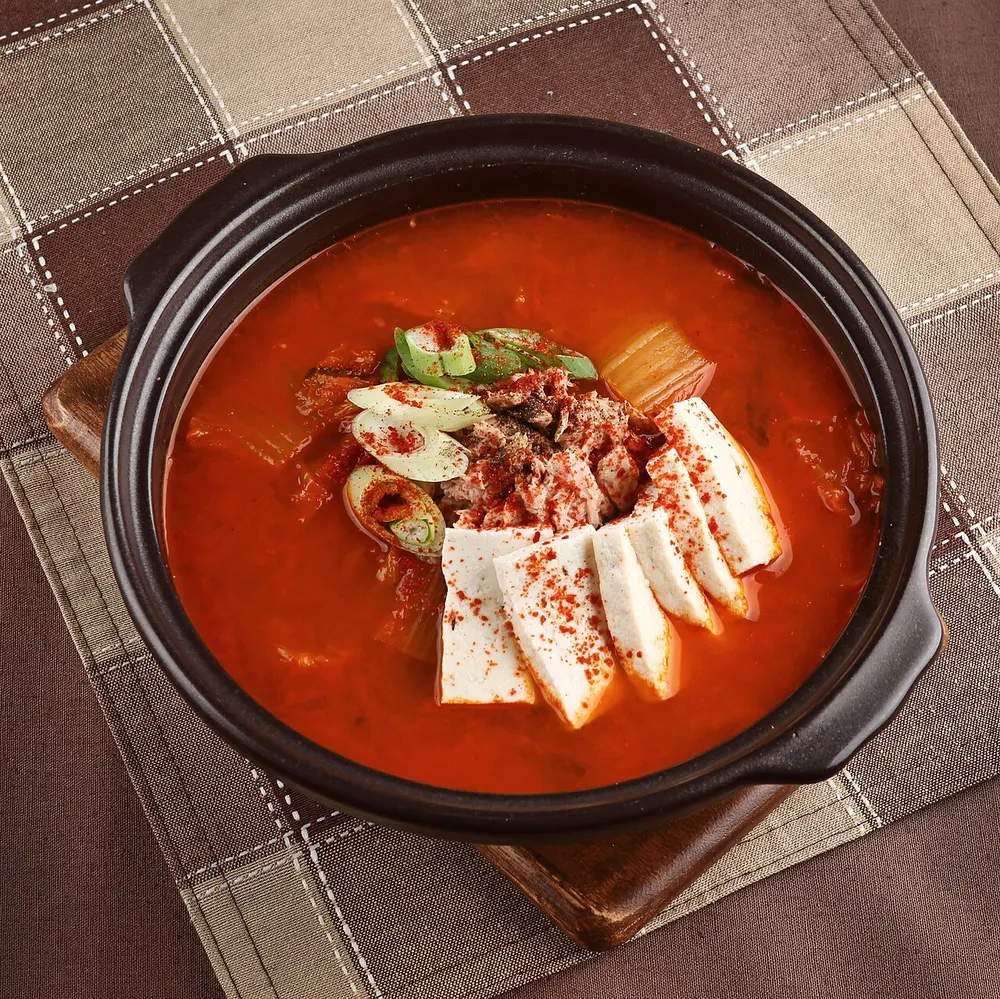
Kimchi Jjigae (Kimchi Stew)
来源: 传统
30 分钟3420 大卡
无乳制品🌶️🌶️
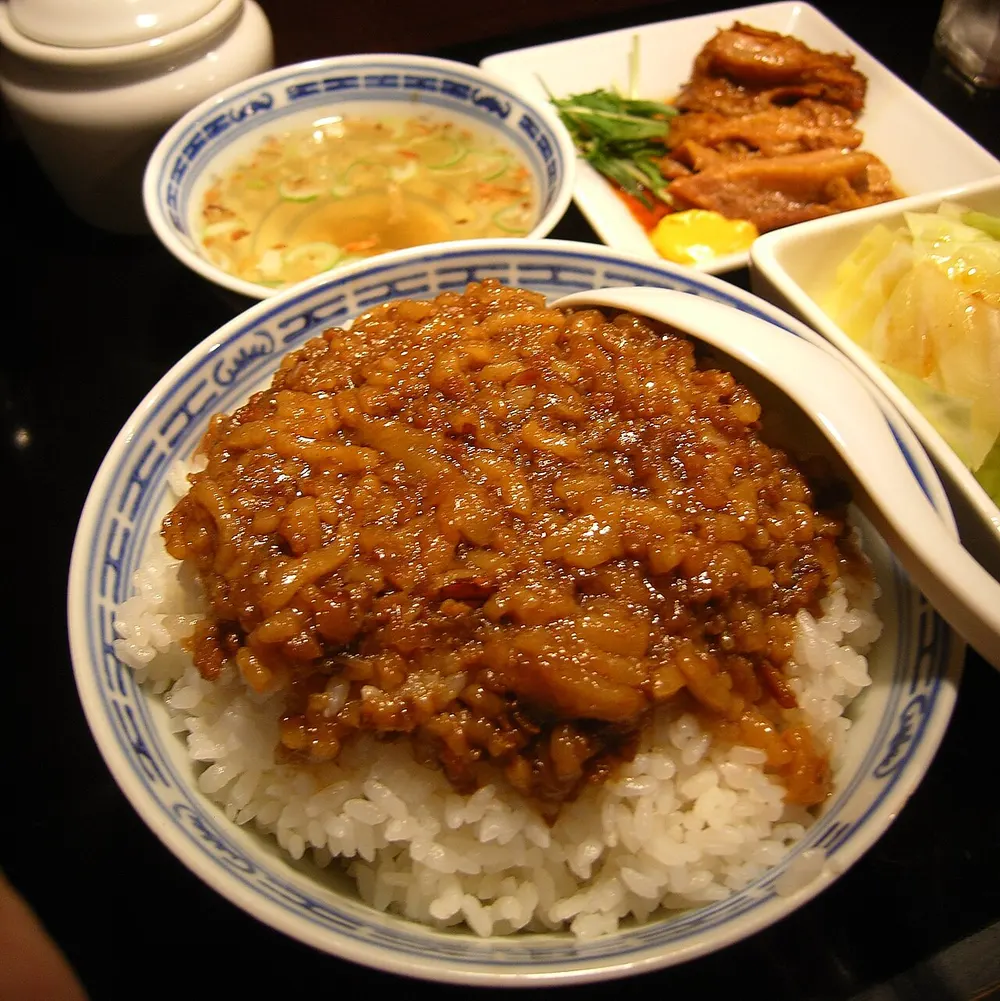
台灣人天天吃的一碗飯:手切五花肉用醬油、冰糖與油蔥酥慢滷到油亮黏稠,再澆一小匙在熱飯上。
来源
食谱提供 Taiwanese home kitchens · 🏺 传统 · 台灣家庭料理 — 閩南底子,上面疊了日治時期與戰後外省移民兩層
台灣日常家常菜 — An ownerless traditional dish with no documented creator, so no cook is credited. This URL returns 200 and resolves to the canonical article titled "Ló͘-bah-pn̄g". It confirms the dish is common throughout Taiwan and southern Fujian, that it is pork belly stir-fried with sliced shallot then simmered in soy sauce and served over steamed rice, and that northern Taiwan favours a fattier version while southern Taiwan uses leaner pork and calls it bah-sò-pn̄g. Quantities and timings are this book's own home proportions.
Watch it being made · 3 videos
Freeze the pork belly for 30 minutes so it firms up, then slice it thin and chop it into rough 5 mm dice — fat and lean together, never separated.
💡 Hand-chopping is the difference between this dish and a bolognese. You want distinct little cubes that still hold their shape after 80 minutes in the pot.
Put the pork in a cold, dry heavy pot and turn the heat to medium. Let it render and then brown, stirring now and then, for about 10 minutes, until the fat is clear and the edges have caught colour.
💡 No oil at the start. The belly gives up plenty, and that rendered pork fat is what fries the shallots in the next step.
Add the garlic and fried shallots and stir for 30 seconds — just until the shallots smell toasty and darken a shade. Pour in the rice wine and let it hiss away.
💡 Fried shallots burn in seconds and turn bitter. Have the wine already measured out and standing next to the stove.
Stir in both soy sauces, the rock sugar, five-spice, white pepper and star anise, then pour in the water. Bring it to a boil, drop to the lowest simmer, and leave it uncovered for 75 to 90 minutes.
If you want braised eggs, boil and peel them and slip them in for the last 30 minutes, turning them once so they colour evenly.
It is done when the liquid has reduced by two-thirds, coats a spoon thickly, and a dragged spoon leaves a track across the bottom of the pot for a second before closing. Taste and add a splash of soy if it needs salt.
💡 Cool it and the sauce sets to a soft jelly — that is the collagen from the skin, and it is exactly what you want. It melts again the moment it hits hot rice.
Serve a modest spoonful over hot rice — a dark heap covering about a third of the surface, not a flood — with half a braised egg and the pickles beside it.
做过这道菜吗?在秀场分享一张照片吧。
晒出我的作品 →