入门
Korean
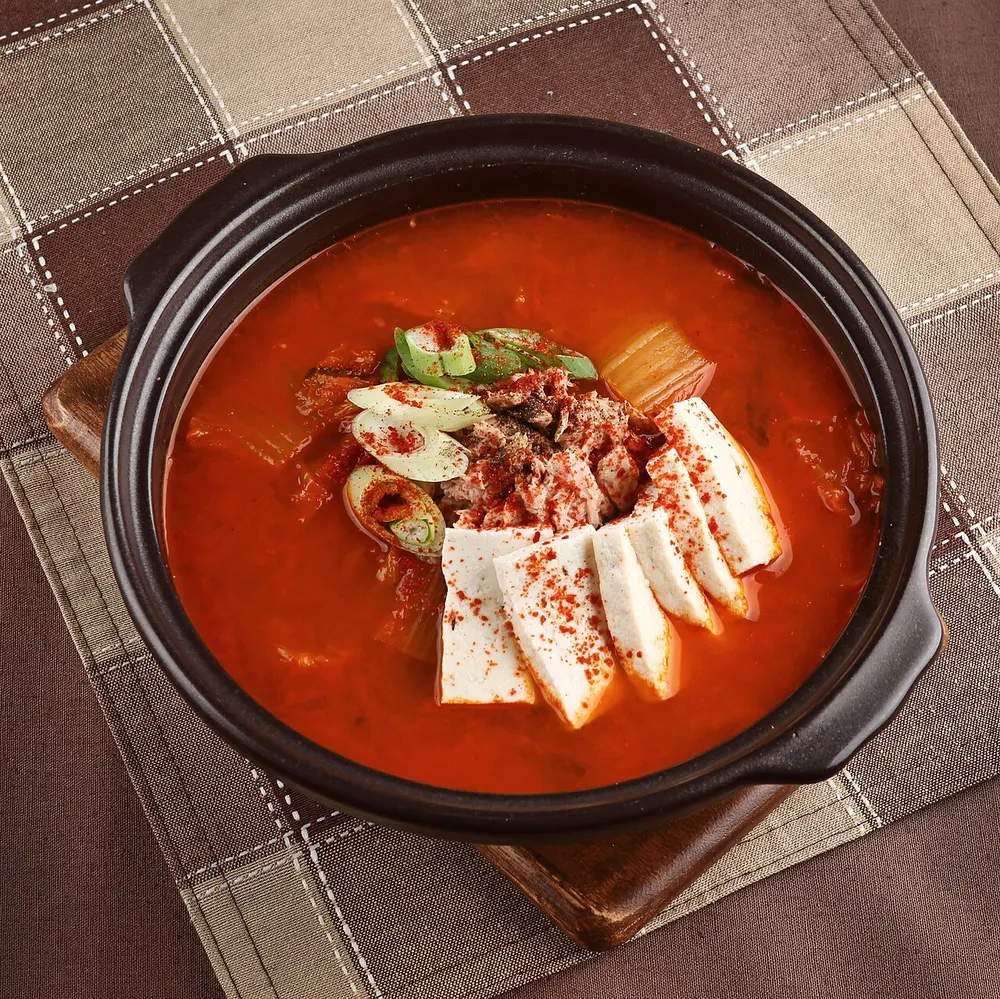
Kimchi Jjigae (Kimchi Stew)
来源: 传统
30 分钟3420 大卡
无乳制品🌶️🌶️
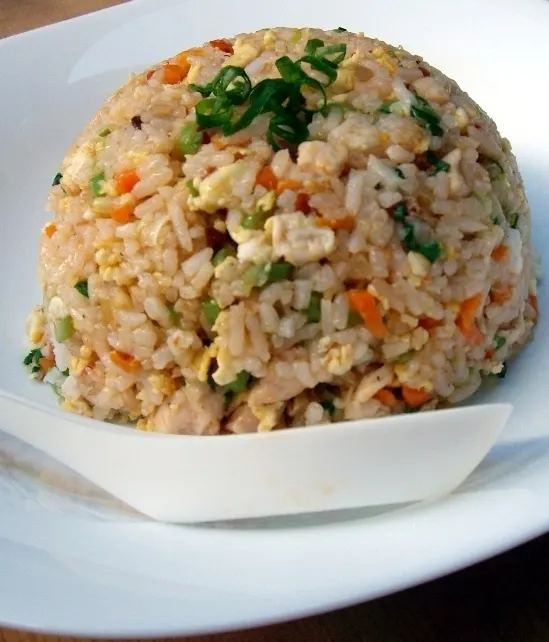
The fried rice a Japanese-cuisine chef actually makes for his own kids: pork browned in a bone-dry pan for its own fat, rice tipped onto egg that is still half-set, chikuwa fish cake for chew, and soy poured down the hot rim at the end.
来源
食谱提供 笠原将弘 · 👨🍳 主厨 · Masahiro Kasahara — Japanese-cuisine chef, owner of the Tokyo restaurant Sanpi Ryoron (賛否両論)
厨师与创作者的姓名仅用于标注出处。More Recipes Please 独立运营,与他们没有任何合作、赞助或代言关系。
Masahiro Kasahara (笠原将弘の料理のほそ道) — Published by Masahiro Kasahara on his own YouTube channel as 'テクニック満載!パパッと簡単に作れる【笠原家の焼き飯】', where he says this is the yakimeshi he used to make for his own children at home and that it tastes like a neighbourhood Chinese counter. His full 材料 list for 2 servings and numbered method are published as text in the video description; the quantities here come straight from it. Distinctive to his version: the pork belly is browned in a completely dry pan to render its own fat, the warm rice goes in on top of egg that is still half-set, chikuwa fish cake stands in for anything fancier, and the soy and mirin are poured down the bare hot rim of the pan at the very end.
厨师: 笠原将弘
Watch it being made · 3 videos
Finely chop the naganegi. Chop the chikuwa and the pork belly small. Crack the eggs into a bowl and beat them lightly.
💡 Everything goes small and roughly the same size. Fried rice is eaten by the spoonful — anything bigger than a grain-and-a-bit fights the rice instead of joining it.
Heat a frying pan with NO oil in it at all. Put the pork in, season it with a little salt and pepper, and cook over medium heat.
💡 A dry pan is the whole reason this step exists. Pork belly is about half fat — add oil and you are just diluting the good stuff. Let the meat make its own, and that rendered fat carries the flavour into everything after it.
Cook 3–4 minutes until the pork is done through and the edges have gone golden, then lift it out and set it aside. Leave the fat in the pan.
Add the 2 tbsp of cooking oil to that same pan — fat and all — and warm it over medium heat.
💡 2 tablespoons on top of the pork fat looks like a lot. It is meant to. The egg needs enough hot oil to puff rather than stick, and the rice needs enough to coat every grain.
Pour in the beaten egg. It should billow up around the edges almost at once.
Do not wait for the egg to set. While it is still half-cooked and wet in the middle, tip in all 400 g of the warm rice on top of it.
💡 This is the technique of the recipe. Half-set egg is still liquid enough to run into and around every grain as you break the rice up, so each grain gets its own thin golden jacket. Let the egg cook first and it turns into scrambled egg WITH rice — a different, worse dish.
Stir-fry hard for 2–3 minutes, pressing and pushing the rice apart, until no clumps are left and the grains are separate and glossy.
Return the pork to the pan and add the chikuwa and the chopped naganegi. Toss everything together.
💡 The pork comes back only now, already cooked. Any earlier and those crisp golden edges you worked for would soften in the steam coming off the rice.
Season: the 1/2 tsp salt, a little pepper, and the 2 pinches of Hi-Me. Scatter them over the whole surface rather than in one spot, and toss through.
Finally, pour the 1 tsp soy sauce and 1 tsp mirin down the side of the pan onto the bare hot metal — not over the rice — and let them sizzle for a couple of seconds before tossing everything together quickly.
💡 Down the rim, never onto the rice. Soy hitting bare hot metal flashes into a smoky, toasted aroma; poured over the rice it just soaks in, makes patches soggy and tastes flatly salty. This is the same 鍋肌 move every good Chinese-style counter in Japan uses.
Turn it out onto plates straight away, mounding it up, and eat while it is steaming.
做过这道菜吗?在秀场分享一张照片吧。
晒出我的作品 →