入门
Korean
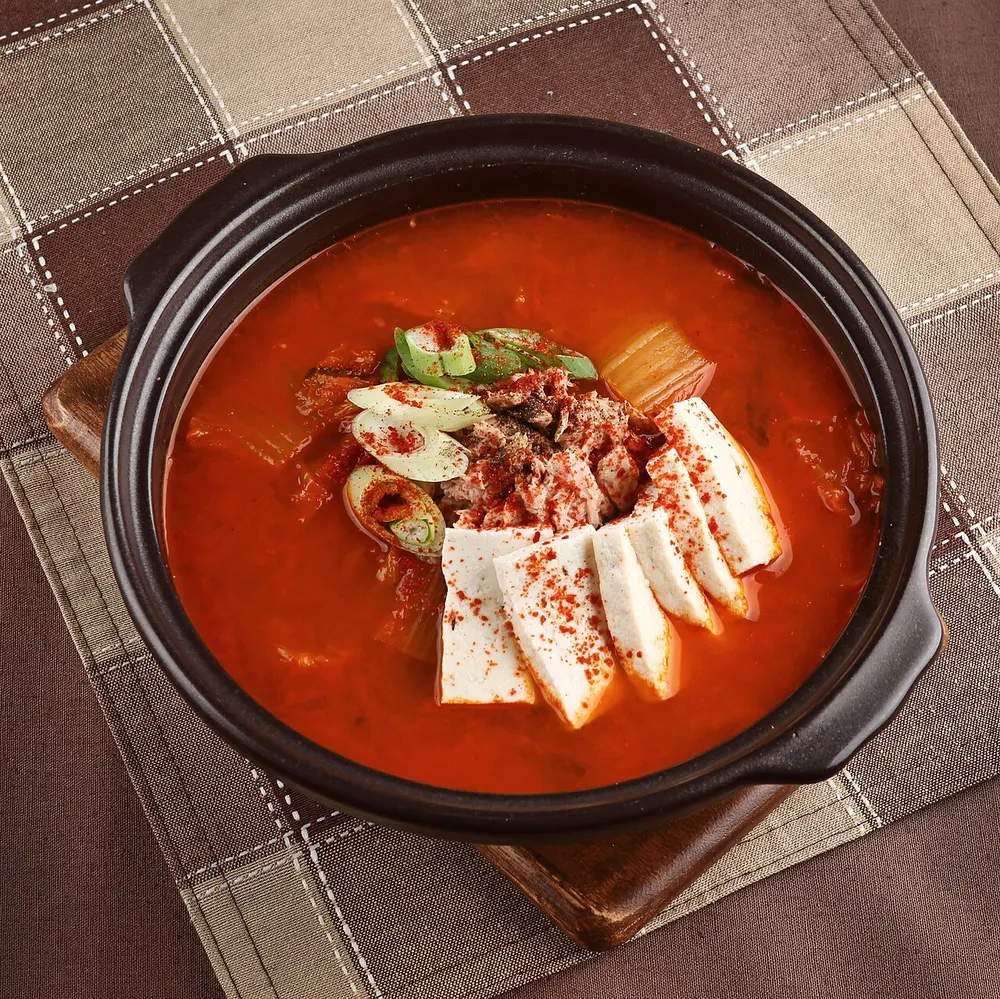
Kimchi Jjigae (Kimchi Stew)
来源: 传统
30 分钟3420 大卡
无乳制品🌶️🌶️
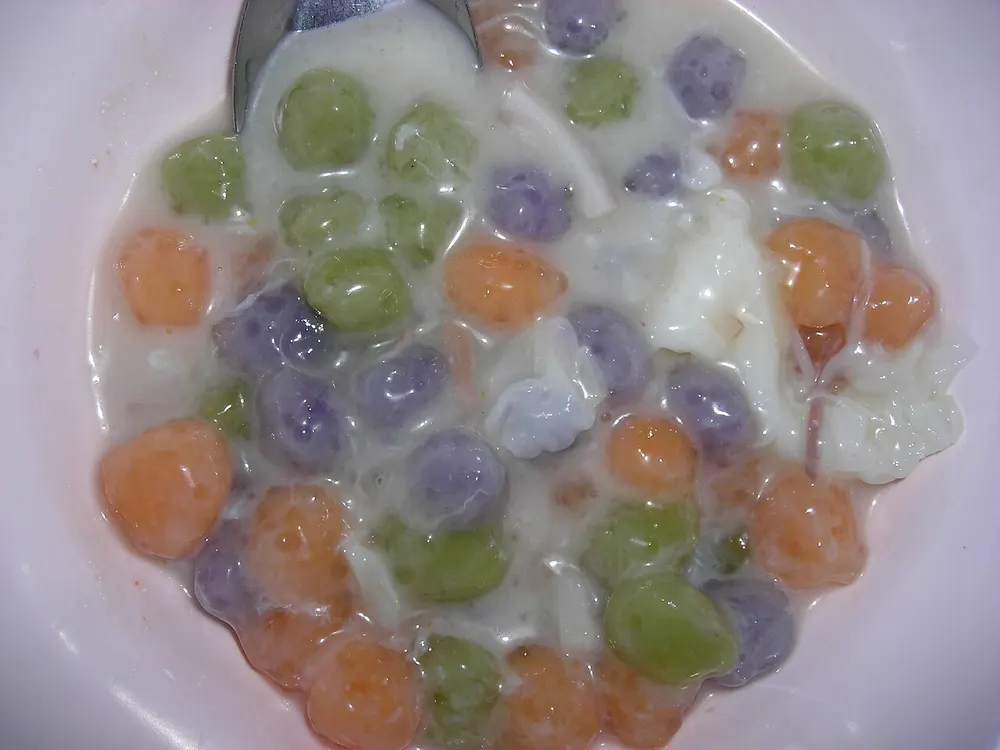
'Floating lotus' — tiny glutinous-rice dumplings tinted with pumpkin, taro and pandan, poached and then warmed in sweet, salted coconut milk. Some cooks crack a poached egg into the pot at the end. The Thai answer to tangyuan, eaten warm from a bowl at the night market, and one of the easiest Thai desserts to make at home.
来源
食谱提供 Central Thai home kitchens · 🏺 传统 · Household cooking of the Chao Phraya plain — the Bangkok-centred style most of the world means by 'Thai food'
Thailand · the floating lotus — An ownerless traditional dessert, so no cook is credited. The cited article confirms bua loi ('floating lotus') as a Thai dessert of rice-flour balls cooked in coconut milk and sugar, sometimes with sweet egg, inspired by Chinese tangyuan and eaten at the Dongzhi festival by Chinese-Thai families, with versions using pumpkin in the balls. The three colourings, timings and quantities are this book's own.
看看是怎么做的 · 3 个视频
Divide the flour into three bowls of 100 g. Knead the pumpkin into one, the taro into another, and the pandan juice into the third, adding warm water a spoon at a time until each is a smooth, soft dough that does not stick.
Roll each dough into a rope and cut into pea-sized pieces, then roll each into a ball. Keep them dusted with flour on a tray.
💡 Small. Bua loi are the size of a chickpea, not a marble — they are eaten by the spoonful, several at once, and big ones go gummy in the middle.
Boil the balls in plenty of water 3–4 minutes until they float. Lift into cold water.
Warm the coconut milk with both sugars, salt and pandan over low heat until the sugar dissolves — do not boil, or it splits.
Drain the dumplings into the coconut milk and warm 3 minutes. For bua loi khai wan, crack the eggs in one at a time and poach 3 minutes until the whites set. Serve warm.
做过这道菜吗?在秀场分享一张照片吧。
晒出我的作品 →