Ảnh sắp có
Người mới
French
Classic French Omelette
Nguồn: Đầu bếp
10 phút1300 kcal
ChayKhông glutenÍt tinh bột+1
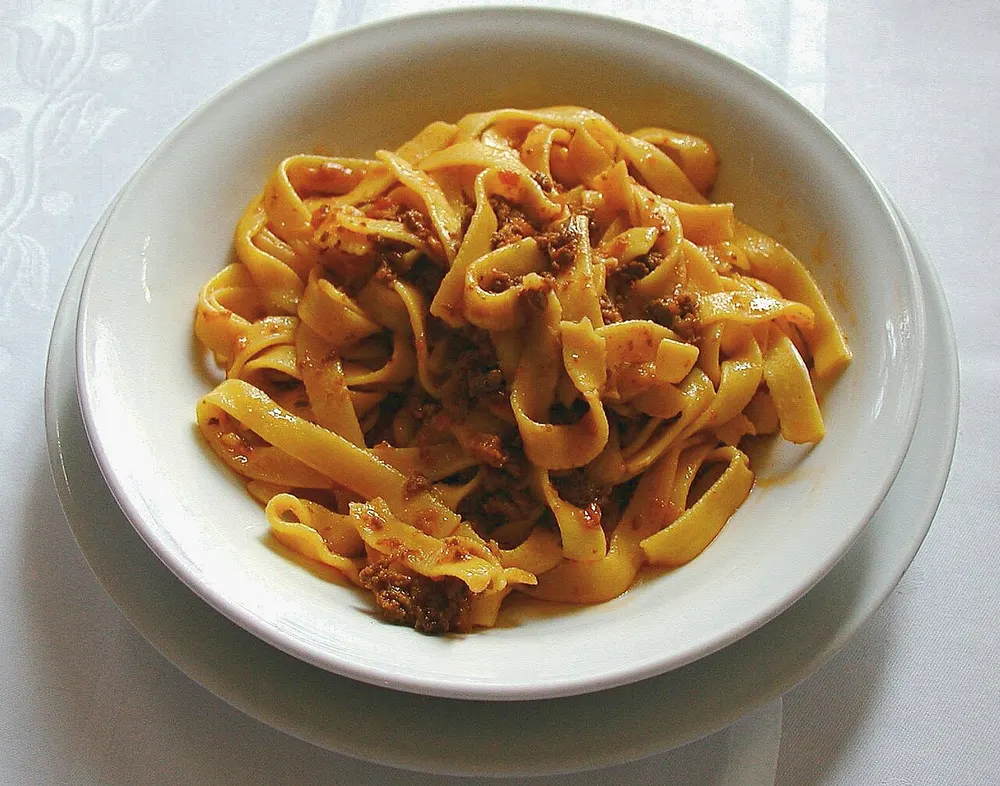
A deliberately short shopping list — onion, carrot, rosemary, mince, tomato purée — turned into a soft, sweet ragù by 35 slow minutes, then tossed with tagliatelle you rolled yourself from two eggs and a bowl of flour.
Nguồn
Công thức của Gennaro Contaldo · 👨🍳 Đầu bếp · Italian chef, restaurateur and cookbook author; the cook Jamie Oliver calls his Italian mentor
Tên của các đầu bếp và nhà sáng tạo chỉ xuất hiện để ghi nguồn. More Recipes Please hoạt động độc lập, không liên kết, không được họ chứng thực hay tài trợ.
Gennaro Contaldo · jamieoliver.com — Published on jamieoliver.com under Gennaro Contaldo's byline as his quick, budget-friendly beef mince ragù, made with a deliberately short shopping list and served with hand-rolled tagliatelle. Quantities here are his; the teaching prose, heat levels and cues are ours.
Đầu bếp: Gennaro Contaldo
Watch it being made
Peel and dice the onion and carrot as small as you can, and strip the rosemary leaves from their stems and chop them fine.
💡 Small dice matters here: with only five ingredients in the pot, the vegetables have to melt into the sauce rather than sit in it as chunks.
Heat 3 tablespoons of olive oil in a wide pan over medium heat, add the onion, carrot and rosemary, and cook about 3 minutes, until the onion turns glassy and the rosemary smells like a pine forest.
💡 Don't brown them. This step is for sweetness, and burnt rosemary turns bitter in a way 35 minutes of simmering will not fix.
Add the minced beef and stir it hard, breaking every lump apart against the pan, until no pink is left and the meat is evenly browned.
💡 Break the mince up now, while it is still raw and soft. Once it sets into lumps you will be chasing them with a spoon for half an hour.
Stir the tablespoon of tomato purée into a small cup of water until it dissolves, then tip it into the pan.
💡 Loosening the purée first is the whole trick — dropped in neat it clings to the meat in salty red clots instead of colouring the whole pan.
Let it cook 5 minutes, stirring now and then, until the raw tinny smell of the purée has gone and the pan smells sweet.
Add the extra half cup of water, season with sea salt and black pepper, drop the heat to low, and leave it to cook gently for at least 35 minutes.
💡 Low means the surface barely moves — a lazy blip every second or two. A ragù held at a real boil goes stringy and grey instead of soft.
Stir it every so often, and whenever the surface looks dry rather than glossy, add another splash of water. The ragù is ready when the meat is soft and tender and the sauce coats it.
💡 The water is not there to make gravy — it is there to keep the pan wet long enough for the beef to go from chewy to tender. Add it in splashes, not floods.
While it simmers, make the pasta. Sieve the 200 g of flour into a bowl or straight onto a clean worktop, make a well in the middle, and break in the 2 eggs.
💡 Two eggs to 200 g of flour is the classic ratio, and it is why the dough looks far too dry at first. Keep working — it comes together.
Mix the flour into the eggs with a fork or your fingers until it forms a soft dough, then knead it for a full 5 minutes, until it turns smooth and springs back when you press it.
💡 Beginner's warning: 5 minutes is longer than it feels. Under-kneaded dough tears when you roll it thin because the gluten never lined up.
Shape the dough into a ball, cover it with a clean damp cloth and rest it in the fridge for at least 30 minutes.
💡 This rest is not optional. It lets the dough relax so it stops fighting the rolling pin and springing back at you.
Dust the worktop with flour and roll the dough out until it is wafer thin — thin enough to see the shadow of your hand through it.
Dust the sheet with flour, roll it loosely in on itself from the sides, and cut it crosswise into long strips with a knife. Toss the strips with your hands to shake the excess flour off and open them out.
💡 Flour before rolling it up, always. Skip it and you will unroll a solid, welded log instead of a nest of tagliatelle.
Boil a large pan of well-salted water and cook the fresh tagliatelle for just 2–3 minutes, until they float and taste al dente. Drain, keeping a cupful of the water.
💡 Fresh pasta is not dried pasta: it is done in the time it takes to find the colander. Start tasting at 2 minutes.
Tip the drained tagliatelle into the ragù and stir until every strand is coated, loosening with a splash of the reserved pasta water if it looks tight.
Spoon into warm bowls and finish each with an extra drizzle of olive oil.
French
Nguồn: Đầu bếp
French
Nguồn: Truyền thống
French
Nguồn: Đầu bếp
Italian
Nguồn: Món nhà làm
Đã làm món này? Chia sẻ ảnh ở mục Khoe món.
Chia sẻ món bạn làm →