มือใหม่
Korean
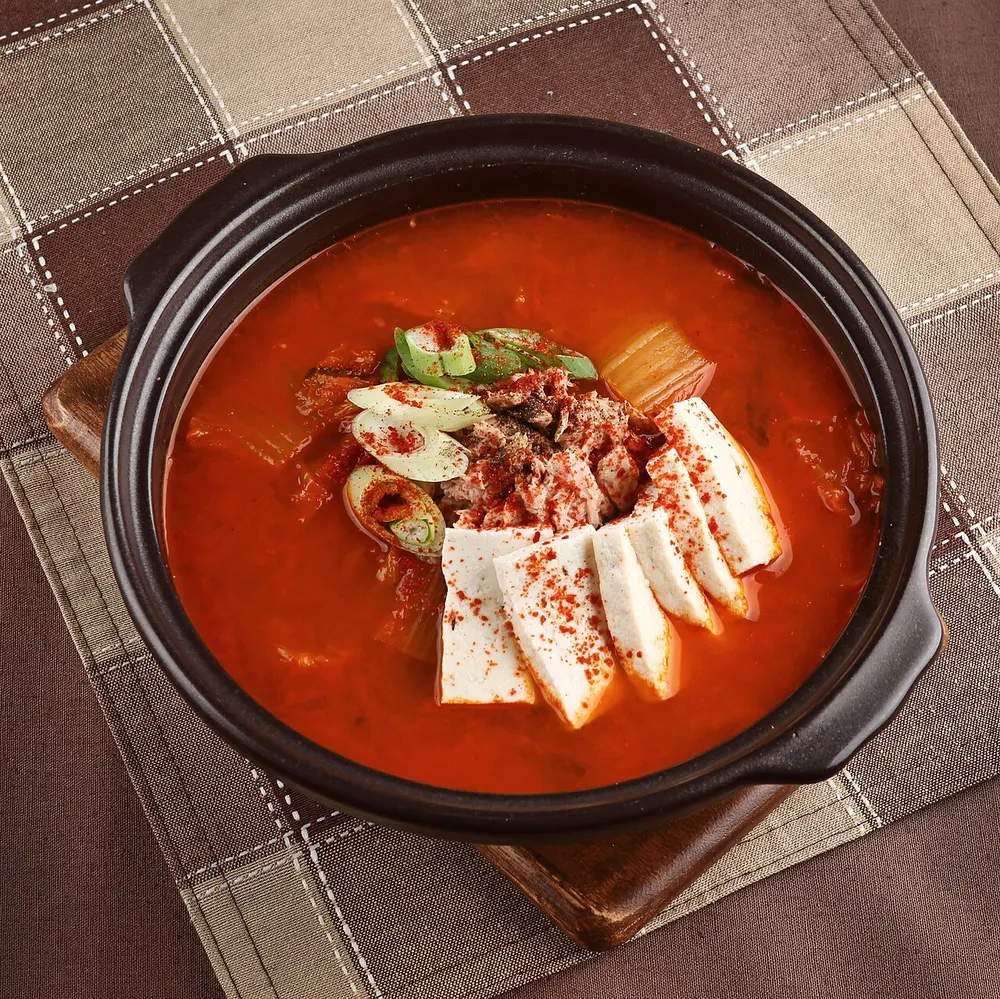
Kimchi Jjigae (Kimchi Stew)
แหล่งที่มา: ดั้งเดิม
30 นาที3420 แคล
ปลอดนม🌶️🌶️
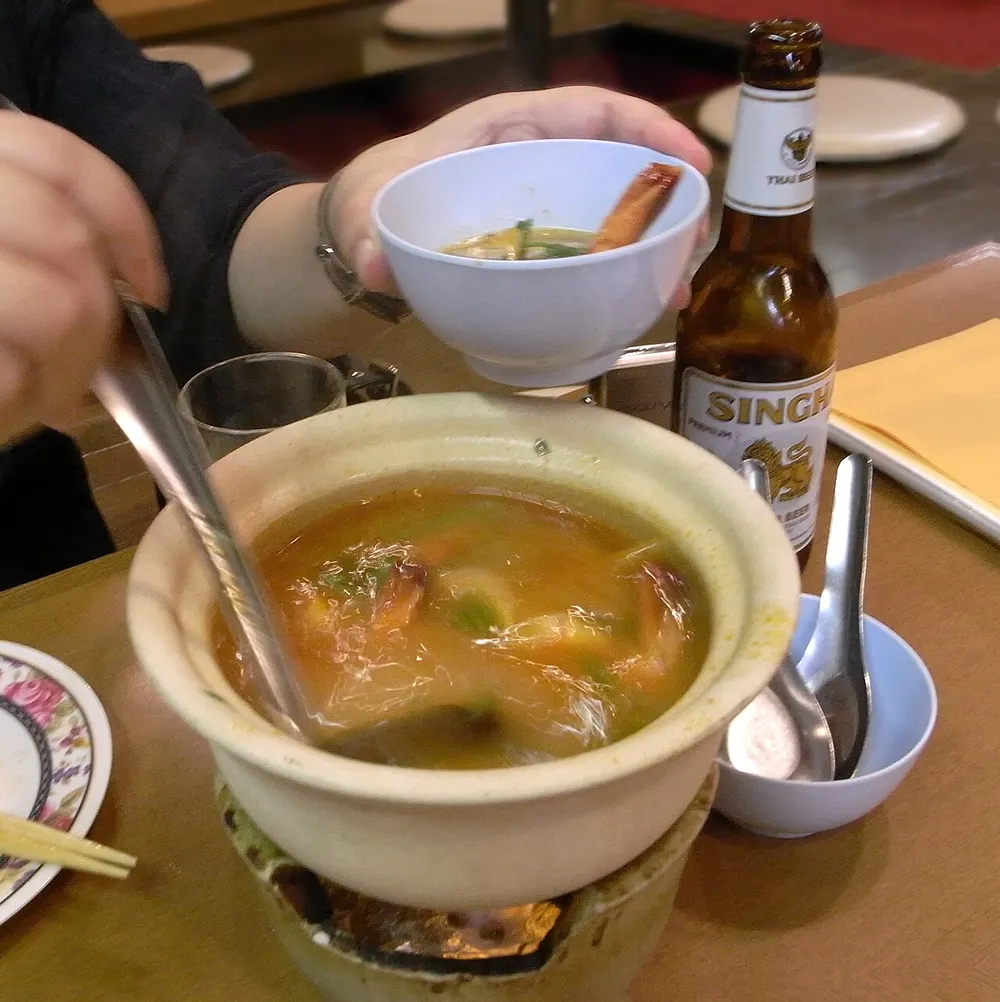
Thailand's loudest soup: prawn stock stacked with lemongrass, galangal and kaffir lime, then hit with fish sauce, lime and chilli at the very last second so nothing goes dull.
แหล่งที่มา
สูตรโดย Central Thai home kitchens · 🏺 ดั้งเดิม · Household cooking of the Chao Phraya plain — the Bangkok-centred style most of the world means by 'Thai food'
Central Thai · traditional dish — An ownerless traditional dish, so no cook is credited. The cited article places tom yum in central Thailand and confirms the defining set — lemongrass, kaffir lime leaves, galangal, lime juice, fish sauce and chillies — as well as the split between the clear nam sai and the milky nam khon, which it dates to the 1980s and attributes to evaporated milk or non-dairy creamer. It also confirms that 'goong' means prawn and that the prawn version is the one best known outside Thailand. Quantities and method here are this book's own.
ดูวิธีทำเป็นวิดีโอ · 3 วิดีโอ
Pull the heads off the prawns and peel the bodies, keeping every head and shell. Chill the peeled prawns and put the heads and shells in a pot with a spoonful of oil.
💡 Run a cocktail stick under the dark line on the prawn's back and lift it out. It is grit, and it is gritty in the soup too.
Fry the heads and shells over medium-high heat, pressing down hard on the heads with the back of a spoon, until the pan turns orange and smells sweet — about 3 minutes. Pour in the water and simmer for 15 minutes, then strain and throw the shells away.
💡 That orange is the whole point. If your pan never changes colour, the heat was too low or the heads were not pressed.
Return the strained stock to the pot with the bruised lemongrass, galangal and torn lime leaves. Simmer for 5 minutes — long enough to take the perfume, short enough that it stays fresh.
💡 These three are flavouring, not eating. Warn people at the table or fish them out now.
Add the mushrooms and the crushed chillies and give them 2 minutes, then slide in the prawns. They are done the moment they curl and turn opaque — about 90 seconds. Turn the heat off.
💡 Prawns keep cooking in hot broth after the heat is off. Pull them at slightly underdone and they will be perfect by the time the bowl reaches the table.
Off the heat, stir in the nam prik pao, fish sauce, palm sugar and finally the lime juice. Taste, and adjust in this order: salty first, then sour, then heat.
💡 Never boil the soup again after the lime goes in. Thirty seconds of heat turns fresh sourness into something flat and slightly bitter.
Ladle into bowls, tear coriander over the top, and serve with plain jasmine rice alongside rather than in the bowl.
Korean
แหล่งที่มา: ดั้งเดิม
Korean
แหล่งที่มา: ครัวบ้าน
Korean
แหล่งที่มา: ครัวบ้าน
Korean
แหล่งที่มา: ดั้งเดิม
ทำแล้วใช่ไหม? แชร์รูปในหน้าผลงานสิ
แชร์ผลงานของคุณ →