มือใหม่
Korean
Kimchi Jjigae (Kimchi Stew)
แหล่งที่มา: ดั้งเดิม
30 นาที3420 แคล
ปลอดนม🌶️🌶️
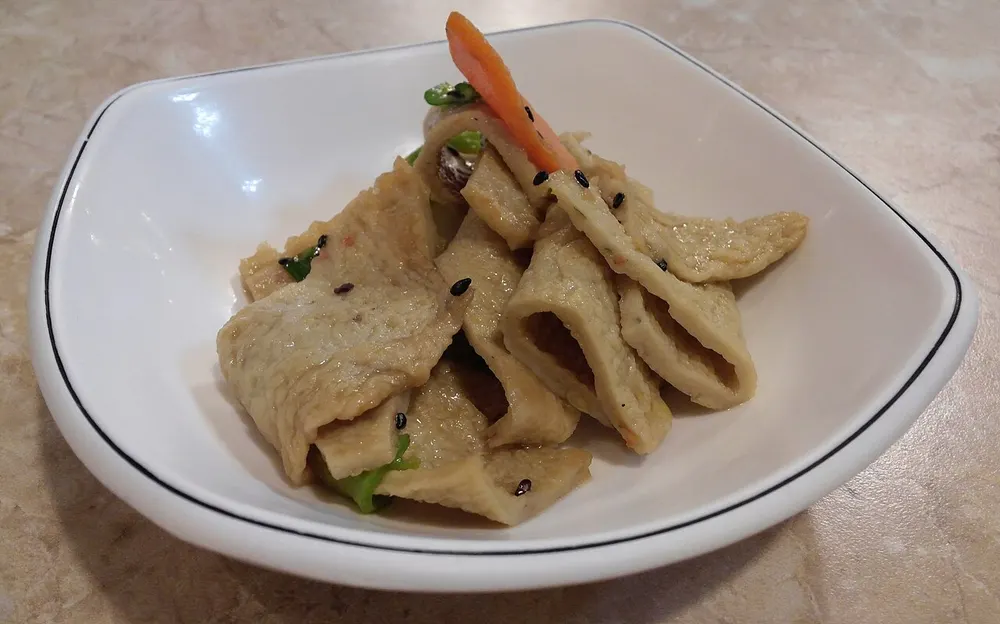
Stir-fried fish cake made for the fridge: chili oil bloomed from gochugaru first, then a quarter cup of water reduced down with the eomuk until just a spoonful of sauce is left. That leftover spoonful is why it is still soft tomorrow.
แหล่งที่มา
สูตรโดย 1인분레시피 · 📱 อินฟลูเอนเซอร์ · Korean YouTuber who cooks strictly for one: his channel bio describes it as "simple, tasty recipes tailored to one serving, for single-person households", and he publishes each ingredient list with amounts plus a numbered method
ชื่อของเชฟและครีเอเตอร์ปรากฏเพื่อระบุแหล่งที่มาเท่านั้น More Recipes Please ดำเนินงานอย่างอิสระ ไม่ได้มีความเกี่ยวข้อง ไม่ได้รับการรับรองหรือสนับสนุนจากบุคคลเหล่านี้
Recipe published by 1인분레시피 — The creator publishes the full recipe — every amount and six numbered steps — in this video's description. The serving count is his: the title is "촉촉한 1인분 어묵볶음 만들기". He also states the point of the recipe himself, above the ingredients: that this eomuk-bokkeum can be eaten moist even after sitting in the fridge, and that the water is the point (물이 포인트). One honest note: his ingredient list writes the oil as a bare "식용유(2)" with no unit, and his step 2 then writes "식용유(큰술)" — reading that bare 2 as 2 큰술 is our reading of his own shorthand, not a number he spelled out.
ผู้ทำอาหาร: 1인분레시피
ดูวิธีทำเป็นวิดีโอ
Cut the eomuk sheets into bite-size pieces and slice the green onion into thin rounds.
Set a pan over LOW heat and add the oil, the green onion, the 1/6 tbsp of minced garlic and the 1/2 tbsp of gochugaru all together.
💡 The gochugaru goes in at the START, into cold-ish oil on low heat — not later with the sauce. You are making chili oil, and chili powder dropped into an already-hot pan burns black in seconds.
Fry for 1 minute on low, stirring so nothing catches.
You are looking for the oil itself to turn red — the gochugaru gives its colour and aroma up into the fat, and the pan smells sweet and smoky rather than raw.
💡 That red oil is what coats the fish cake later. Bloom the chili properly and the dish tastes of chili; add it at the end and it just tastes of dust.
Once the oil has gone red, add the 2 tbsp of soy sauce and the 1 tbsp of sugar and fry them together.
Stir until the sugar has dissolved completely — no grit left on the bottom of the pan.
Add the eomuk pieces and turn them through the red sauce until every piece is coated.
Pour in the 1/4 cup of water and keep frying.
Reduce it until only about 1 tablespoon of liquid is left in the pan — that is his measure, and it is exact for a reason.
💡 This is the entire point of his recipe. Fish cake dries out and goes leathery in the fridge; that last spoonful of sauce keeps soaking in as it cools and sits, so it is still soft the next day. Reduce it to bone dry and you lose exactly the thing he built the recipe around.
The eomuk should look plump and glossy, sitting in a shallow film of sauce rather than in a puddle or on a dry pan.
Turn the heat off, add the 1 tbsp of sesame oil and the sesame seeds, and mix it through once more.
💡 Off the heat, as always for sesame oil — and here it does a second job, sealing the surface so the pieces hold their moisture in the fridge.
Eat it warm with rice, or cool it fully and box it — this version is built to be eaten cold out of the fridge tomorrow.
Korean
แหล่งที่มา: ดั้งเดิม
Korean
แหล่งที่มา: ครัวบ้าน
Korean
แหล่งที่มา: ครัวบ้าน
Korean
แหล่งที่มา: ดั้งเดิม
ทำแล้วใช่ไหม? แชร์รูปในหน้าผลงานสิ
แชร์ผลงานของคุณ →