มือใหม่
Korean
Kimchi Jjigae (Kimchi Stew)
แหล่งที่มา: ดั้งเดิม
30 นาที3420 แคล
ปลอดนม🌶️🌶️
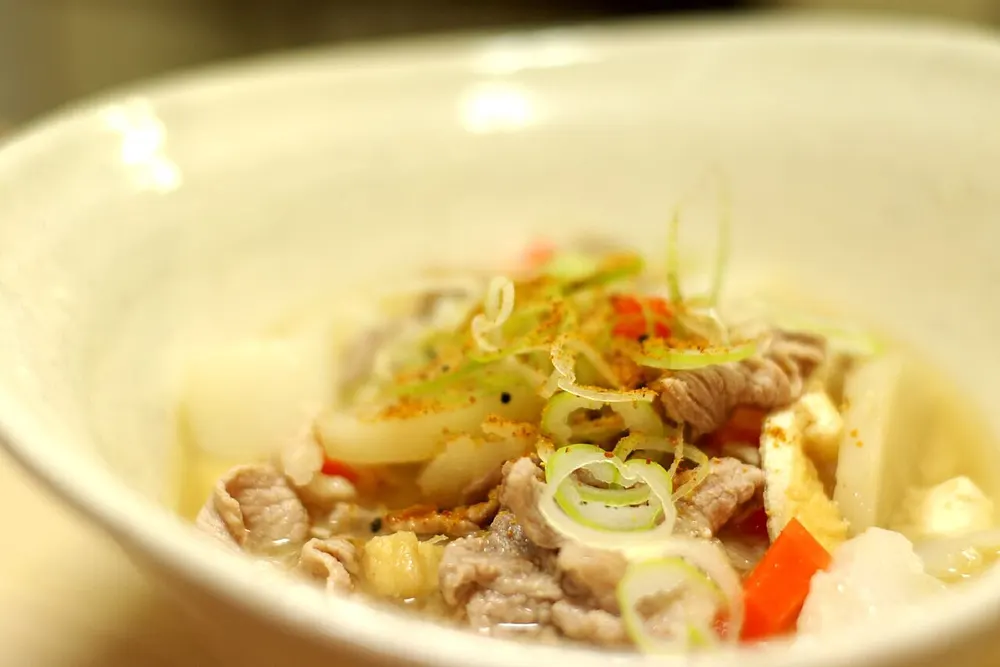
Japan's favourite winter soup, made clean instead of heavy: the pork is crisped in a separate dry pan and its rendered fat blotted off with paper towel before it ever meets the dashi.
แหล่งที่มา
สูตรโดย 栗原はるみ · 👨🍳 เชฟ · Harumi Kurihara — Japan's best-known ryori-kenkyuka (cookery researcher); her company Yutori no Kukan publishes her recipes and personal magazine
ชื่อของเชฟและครีเอเตอร์ปรากฏเพื่อระบุแหล่งที่มาเท่านั้น More Recipes Please ดำเนินงานอย่างอิสระ ไม่ได้มีความเกี่ยวข้อง ไม่ได้รับการรับรองหรือสนับสนุนจากบุคคลเหล่านี้
Harumi Kurihara (official site, Yutori no Kukan) — Published on Harumi Kurihara's official recipe site, run by her own company Yutori no Kukan, under the title 'おいしい豚汁' — literally 'good tonjiru'. The full 材料 list for 4 servings in grams and cups plus her eleven numbered steps are published there as text, and the quantities here are taken from it directly. What separates her tonjiru from the standard method: instead of frying the pork in oil in the soup pot and keeping the fat, she browns it in a separate dry frying pan until crisp and blots the rendered fat away with paper towel before adding the meat to the dashi — the roasted flavour without the grease.
ผู้ทำอาหาร: 栗原はるみ
ดูวิธีทำเป็นวิดีโอ · 2 วิดีโอ
Peel the daikon, quarter it lengthways and slice it 3–4 mm thick into quarter-rounds.
Peel the carrot and slice it the same way, but at 3 mm — slightly thinner than the daikon.
💡 That 1 mm difference is not fussiness. Carrot is denser than daikon and would still be firm when the daikon has gone soft; cutting it thinner makes both finish at the same moment.
Peel the burdock, cut it 4–5 mm thick on the diagonal, and drop the pieces straight into a bowl of water. Leave them to soak, then drain well.
💡 Straight into water, cut by cut. Burdock browns within a minute of meeting air and carries a raw, tannic bitterness that will haunt the whole pot. The water pulls it out and stops the discolouring at the same time.
Put the konnyaku in a pan, cover it with water, bring to the boil and cook 2–3 minutes. Drain it well, then tear it by hand into smallish bite-size pieces.
💡 Two things here, both deliberate. The parboil drives off konnyaku's faint lime smell. The tearing gives ragged, craggy faces that hold the miso broth — a knife leaves it slippery and it stays bland to the last spoon.
Trim the hard base off the maitake and pull the cluster apart into small pieces. Cut the naganegi 1 cm thick on the diagonal. Cut the pork into 7–8 cm lengths — each slice into three.
Pour the dashi into a large pot and bring it to the boil.
Once it is boiling, add the daikon, carrot, burdock and konnyaku, put the lid on and simmer 5–7 minutes.
💡 The four hardest things go in together and get the pot to themselves. Everything soft or quick-cooking is still waiting on the board.
While those simmer, heat a frying pan with NO oil and lay the pork in it. Fry it until it is genuinely crisp, not merely cooked.
💡 A separate pan, for a soup. It looks like extra washing-up and it is the whole reason her tonjiru is called 'good'. Browning in a dry pan builds roasted, meaty flavour that boiling pork in dashi can never produce — boiled pork just goes grey and gives the broth a faint pigginess.
Blot up the fat the pork has released with paper towel, then add the meat — and only the meat — to the pot.
💡 Throwing away pork fat feels like throwing away flavour, and this is where her version parts company with almost every other tonjiru. Most start by frying the pork in oil in the pot and keep every drop, which is why tonjiru so often arrives with a slick on top and sits heavy. She has already taken the flavour into the meat by browning it; the fat is now just grease. Blot it.
Add the maitake and the naganegi, then pour in the mirin.
💡 The mushrooms and scallion go in at the very end and barely cook. Maitake boiled for ten minutes turns to grey rags and gives up its aroma; two minutes and it is still meaty.
Take the pot off a hard boil, then dissolve the miso into it — start with 4 tbsp, ladle the paste against a spoon or strainer until no lumps float, taste, and add the fifth only if it needs it.
💡 Never boil miso hard once it is in. High heat drives off its aroma within seconds and leaves you with something that tastes only salty — the reason a reheated miso soup is never as good as the first bowl.
Ladle into bowls and add a shake of shichimi togarashi if you like.
Korean
แหล่งที่มา: ดั้งเดิม
Korean
แหล่งที่มา: ครัวบ้าน
Korean
แหล่งที่มา: ครัวบ้าน
Korean
แหล่งที่มา: ดั้งเดิม
ทำแล้วใช่ไหม? แชร์รูปในหน้าผลงานสิ
แชร์ผลงานของคุณ →