มือใหม่
Korean
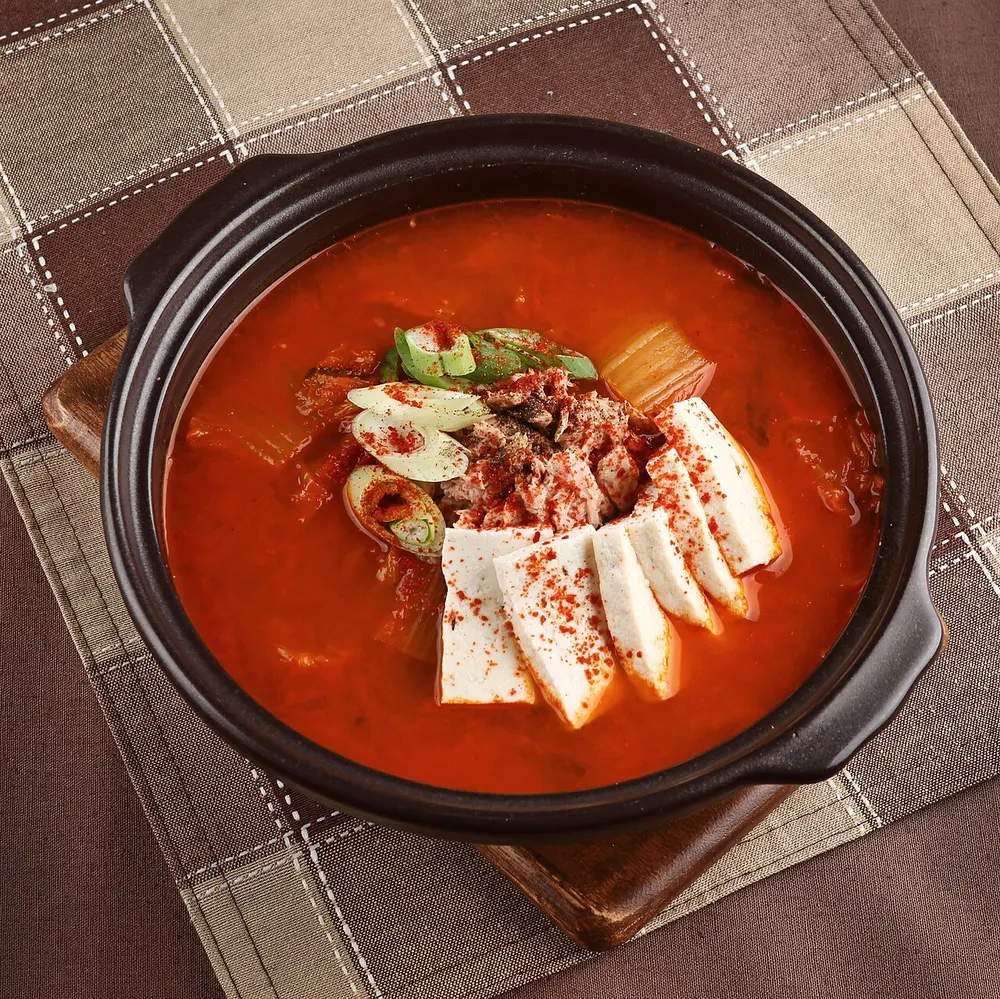
Kimchi Jjigae (Kimchi Stew)
แหล่งที่มา: ดั้งเดิม
30 นาที3420 แคล
ปลอดนม🌶️🌶️
The bowl Korea eats when it is ill and nothing else will go down: leftover rice stirred into anchovy-kelp stock until it thickens, an egg swirled through it, sesame oil on top. Four ingredients, one pot, fifteen minutes.
แหล่งที่มา
สูตรโดย 하루한끼 (one meal a day) · 📱 อินฟลูเอนเซอร์ · Korean cooking YouTuber known for stripped-back, no-nonsense home recipes; publishes the full written recipe in most video descriptions
ชื่อของเชฟและครีเอเตอร์ปรากฏเพื่อระบุแหล่งที่มาเท่านั้น More Recipes Please ดำเนินงานอย่างอิสระ ไม่ได้มีความเกี่ยวข้อง ไม่ได้รับการรับรองหรือสนับสนุนจากบุคคลเหล่านี้
Recipe published by 하루한끼 — The creator publishes the whole recipe — four ingredients and five numbered steps — in this video's description. The serving count is his own: he titles the video "달걀죽 | 아플때 입맛 없을때 한그릇 순삭" — 한그릇, a single bowl. He gives no count for the egg and no amount for the green onion, salt or stock ingredients, and those gaps are left as gaps here rather than filled in with numbers he never wrote.
ผู้ทำอาหาร: 하루한끼 (one meal a day)
ดูวิธีทำเป็นวิดีโอ · 3 วิดีโอ
Put 3 paper cups of water (about 540 ml) into a pot with the anchovies and the kelp, and set it over high heat.
💡 If your anchovies are big, pinch out the black guts behind the head first. They are what makes a home-made stock taste bitter rather than clean.
Once it comes to a boil, let it bubble for 5 minutes, then take the pot off the heat.
💡 Five minutes is his number and it is deliberate. Kelp boiled longer than that turns the stock slippery and faintly bitter — this is one place where more time makes it worse.
Fish out the anchovies and the kelp and throw them away. What is left in the pot is your stock.
Slice the green onion into thin rounds and set it by the stove — the last minute of this dish moves fast.
Put the pot back on medium heat, tip in the half bowl of rice and start stirring.
💡 Break the clumps against the side of the pot as you go. Grains left stuck together stay stubbornly whole and you end up with soup that has rice in it, not juk.
Keep stirring at a medium simmer until the stock reduces a little and the whole thing thickens — the grains swell, go soft at the edges and start to blur into the liquid.
💡 You want it thick enough to leave a brief trail when you drag the spoon across the bottom. It will thicken again as it cools in the bowl, so stop a touch looser than you want to eat it.
When it has gone properly thick, crack the egg straight into the pot.
Stir it through immediately — do not let it sit and set. It should break into fine threads that disappear into the porridge.
💡 This is the one moment the dish can go wrong. Wait even a few seconds and you get a fried egg sitting in porridge instead of an egg that has become the porridge.
Once the egg has cooked through and the porridge has turned pale gold all over, scatter in the green onion.
Stir for 1 minute more over medium heat, then kill the heat.
Off the heat, add a touch of salt and a spoon of sesame oil, and stir them through.
💡 Salt last, always. The stock has been reducing this whole time and has been concentrating its own saltiness with it — salt it early and you will overshoot.
Tip it into a bowl and eat it hot, with a spoon, slowly. It is meant for a day when you are not well.
Korean
แหล่งที่มา: ดั้งเดิม

Korean
แหล่งที่มา: ครัวบ้าน
Korean
แหล่งที่มา: ครัวบ้าน
Korean
แหล่งที่มา: ดั้งเดิม
ทำแล้วใช่ไหม? แชร์รูปในหน้าผลงานสิ
แชร์ผลงานของคุณ →