Sederhana
Moroccan
Chicken Tagine with Olives and Lemon
Sumber: Tradisional
90 min4420 kcal
HalalBebas glutenBebas tenusu
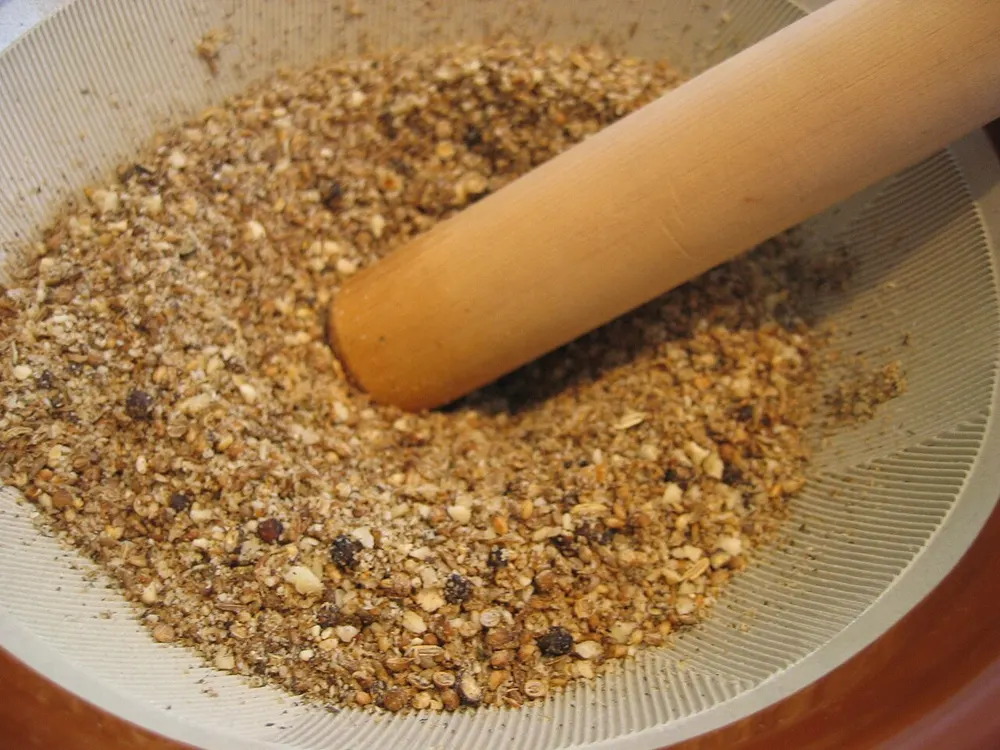
Hazelnuts, sesame, coriander and cumin toasted separately and pounded to a coarse, dry rubble — never a paste. Bread goes into oil first, then into the duqqa, and the whole thing works because it is crumbly enough to cling. Sold in paper cones in the spice markets of Cairo.
Sumber
Resipi oleh Egyptian street kitchens · 🏺 Tradisional · The cart-and-counter side of Egyptian food — fried, griddled and stacked, sold from dawn to late night on Cairo and Alexandria streets.
Cairo · sold in paper cones — An ownerless traditional condiment, so no cook is credited. The cited article confirms duqqa as an Egyptian and Middle Eastern condiment consisting of a mixture of herbs, nuts — usually hazelnut — and spices, typically used as a dip with bread or fresh vegetables for an hors d'œuvre, sold pre-made in paper cones in the spice markets of Cairo, with the simplest version being crushed mint, salt and pepper and the packaged market variety composed of parched wheat flour mixed with cumin and caraway. The separate-toasting rule, the stop-before-oily rule and the quantities are this book's own.
Tonton cara membuatnya · 3 video
Toast the hazelnuts in a dry pan 6 minutes until the skins loosen, then rub them off in a cloth. Cool.
Toast the sesame 3 minutes, the coriander 2 minutes, the cumin and caraway 90 seconds — each on its own, in that order. Cool everything completely.
💡 Toast each one separately. They are different sizes and burn at different speeds — thrown in together, the cumin is bitter before the hazelnuts have coloured.
Pound the hazelnuts in a mortar to a coarse rubble, then the seeds, then mix in the mint, chilli and salt. Stop while it is still dry and loose.
💡 Stop before it turns oily. Two pulses too many and the nuts release their oil, the duqqa clumps into a paste and it will slide off the bread instead of sticking.
Serve in a shallow bowl with a saucer of olive oil beside it. Tear the bread, dip in oil, then press into the duqqa.
Moroccan
Sumber: Tradisional
Egyptian
Sumber: Masakan rumah
West African / Nigerian
Sumber: Tradisional
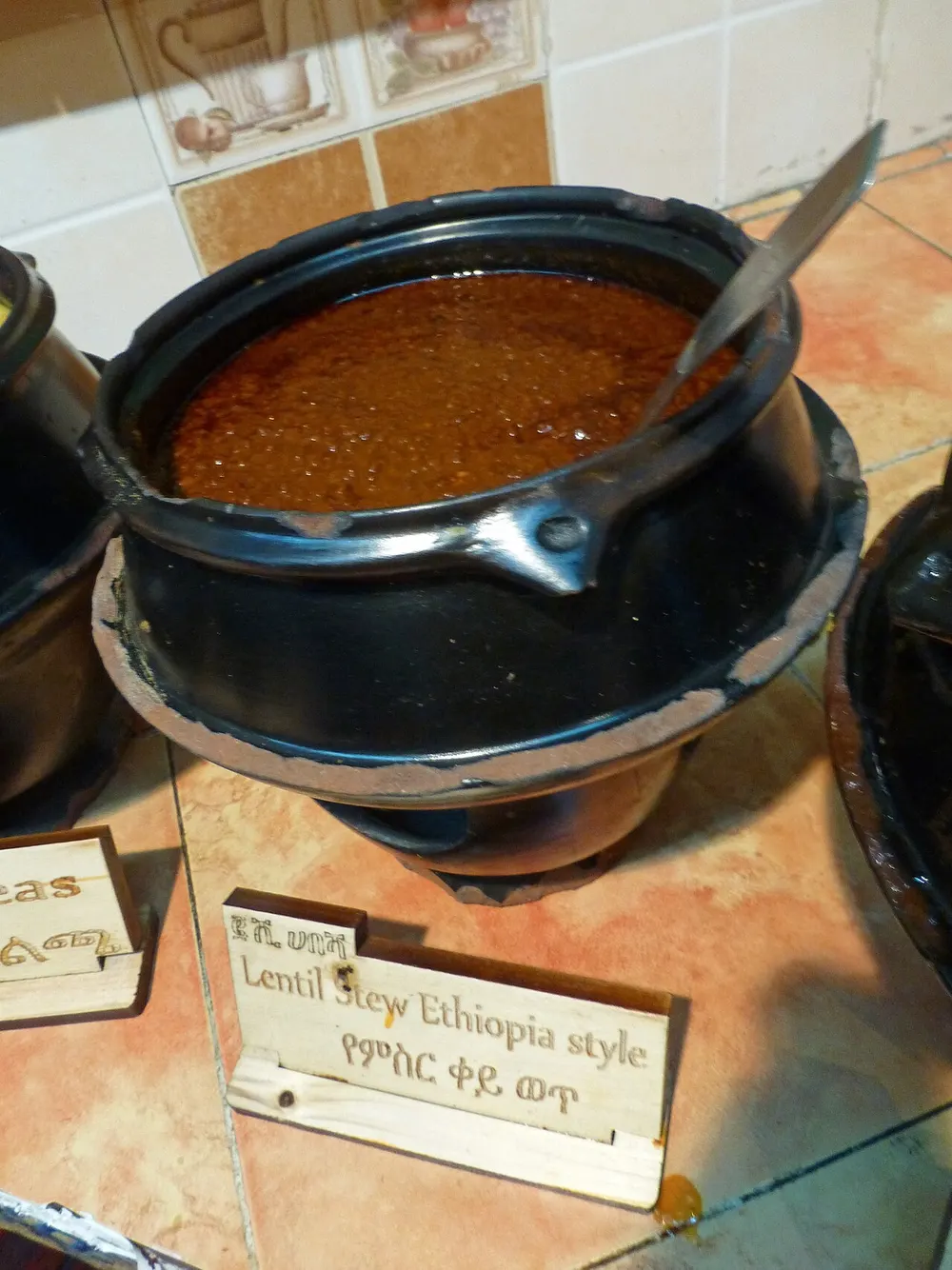
Ethiopian
Sumber: Masakan rumah
Sudah cuba? Kongsi gambar di Pameran.
Kongsi hasil anda →