Gambar akan menyusul
Mudah
American
Fluffy Buttermilk Pancakes
Sumber: Masakan rumah
25 min4350 kcal
Vegetarian
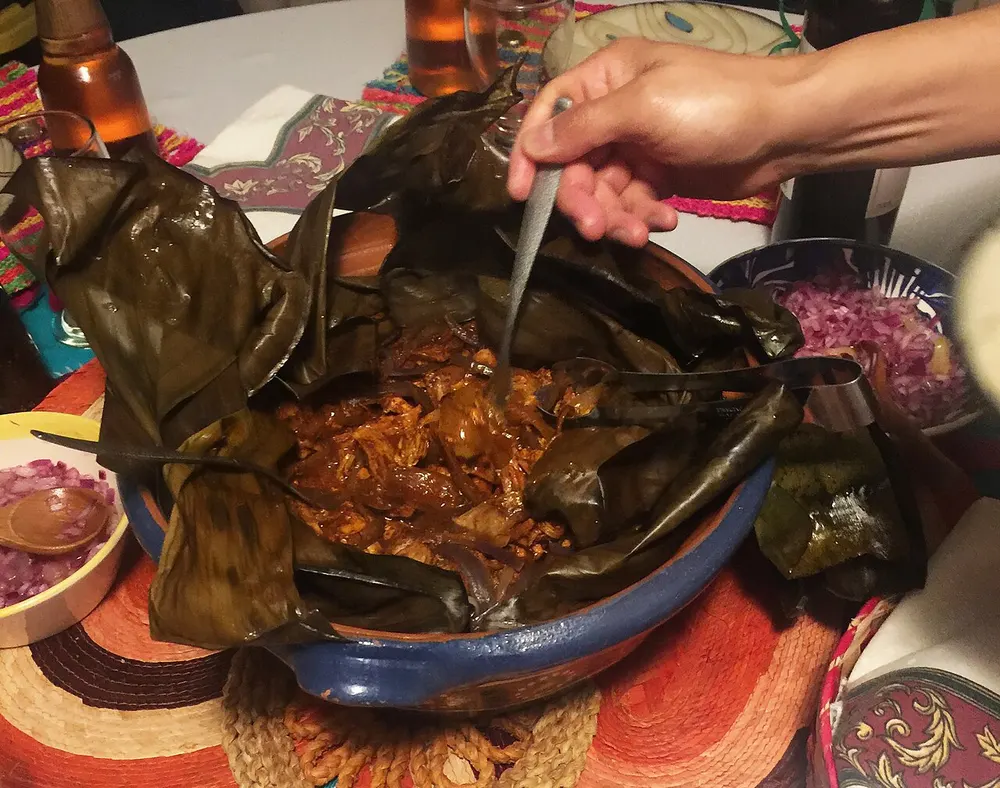
Yucatán's slow-roasted pork: achiote and bitter orange work on the meat overnight, then it steams for hours sealed in banana leaves until it falls apart, burnt-orange and sour. Pickled red onion is compulsory.
Sumber
Resipi oleh Yucatec Maya home kitchens · 🏺 Tradisional
Yucatán Peninsula, Mexico — A traditional Yucatec Maya slow-roasted pork dish from the Yucatán Peninsula. Traditional preparation marinates the meat in strongly acidic citrus juice with annatto seed, which gives its vivid burnt-orange colour, and roasts it wrapped in banana leaf in a píib, an earth oven.
Tonton cara membuatnya · 3 video
Make the pickled onion first: slice the red onion paper-thin, cover with boiling water for 10 seconds, then drain immediately.
💡 That 10-second scald knocks the raw, harsh bite out of the onion without cooking it soft. Leave it longer and you lose the crunch that makes the pickle work.
Toss the drained onion with the lime juice, a big pinch of salt and the whole habanero (pricked once, not chopped). Leave it in the fridge — it needs at least 2 hours and is better after a day.
Toast the cumin, peppercorns and allspice in a dry pan for 30 seconds until fragrant, then grind them fine.
Blend the achiote paste with the bitter orange juice, garlic, oregano, ground spices and salt until completely smooth and the colour of wet brick.
💡 The acid is doing real work, not just flavouring. Bitter orange juice tenderises the pork over the long marinade, which is why the citrus is not optional and why plain sweet orange juice alone falls short.
Put the pork chunks in a bowl, pour the marinade over and turn everything until every surface is stained orange. Cover and refrigerate overnight — 12 hours minimum.
💡 An hour will not do it. This is a big-muscle cut and the marinade needs time to get past the surface — overnight is the difference between pork with orange sauce on it and cochinita pibil.
Soften the banana leaves: pass each one briefly over a gas flame or a hot dry pan for a few seconds a side, until the colour brightens to a glossy deep green and it goes limp.
💡 Untreated leaves are brittle and crack the moment you fold them. The heat breaks down the fibres so they bend instead of splitting — and it wakes up their tea-like aroma, which is half of what banana leaf contributes.
Heat the oven to 150°C. Line a deep casserole with overlapping banana leaves, letting plenty hang over the sides.
Tip in the pork with all its marinade and spread it in an even layer.
Fold the overhanging leaves over the top to seal the parcel completely, add more leaves if there are gaps, then cover the dish tightly with foil and a lid.
💡 Traditionally this cooks buried in a píib, an earth oven. A sealed casserole in a low oven is the honest home substitute — but the seal has to be real, because the meat cooks in its own trapped steam and any escape route dries it out.
Cook at 150°C for 3.5–4 hours, without opening it. Do not check it hourly.
💡 Every time you open it, the trapped steam escapes and the temperature crashes. There is nothing to see anyway — it is sealed in leaves.
Open the parcel. The pork should collapse under light pressure from a fork, and there should be a pool of dark orange juice in the bottom.
💡 If it still resists, it is not done — seal it back up and give it another 45 minutes. Undercooked pork shoulder is tough, not dangerous; this cut only turns tender well past the point of being merely cooked.
Shred the pork with two forks directly in the dish and toss it through the juices until it has drunk them all up.
💡 Never drain that liquid away — it is rendered fat, achiote and bitter orange, and it is the most concentrated flavour in the whole dish.
Serve piled into warm corn tortillas, with a heap of the pink pickled onion on top and its liquid spooned over.
American
Sumber: Masakan rumah
American
Sumber: Masakan rumah
Modern
Sumber: Tradisional
Modern / viral
Sumber: Pempengaruh
Sudah cuba? Kongsi gambar di Pameran.
Kongsi hasil anda →