Foto in arrivo
Principiante
American
Fluffy Buttermilk Pancakes
Fonte: Cucina casalinga
25 min4350 kcal
Vegetariano
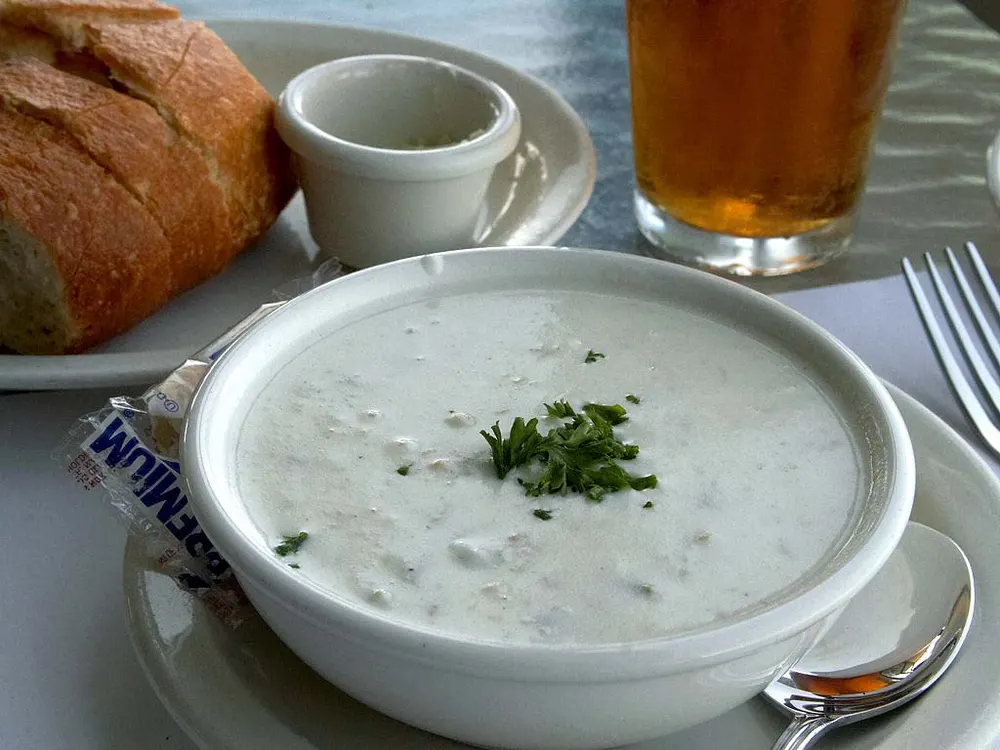
The white, milky chowder of the North Atlantic coast: salt pork rendered down, potatoes simmered in clam juice until they start to fall apart, and cream added only at the very end.
Fonte
Ricetta di New England coastal kitchens · 🏺 Tradizionale
New England coastal home cooking — A chowder of the North Atlantic coast. Alongside clams, the ingredients most associated with it are diced potatoes, salt pork and onions, and it is typically served with saltine or oyster crackers.
Watch it being made · 3 videos
Drain the clams over a bowl and keep the liquor. Top it up with clam juice or light fish stock to reach 250 ml total. Set the clams aside — they go in last.
💡 That canned liquor is the most concentrated clam flavour you have. Tipping it down the sink is the single most common way this soup ends up tasting of nothing but cream.
Dice the salt pork small and render it in a dry, heavy pot over medium-low heat for 6–8 minutes, until the fat has run out and the pieces are golden and crisp at the edges.
💡 Low and slow here. On high heat the outside seizes and browns before the fat has a chance to render, and you lose the base of the whole chowder.
Lift the crisp pork out with a slotted spoon onto kitchen paper, leaving the rendered fat in the pot. Keep the pork for the top.
Add the butter to the pork fat, then the onion and celery. Sweat over medium-low heat for 6–8 minutes, until the onion is soft and translucent but has taken no colour at all.
💡 Browning the onion here would tint the chowder beige and give it a roasted, oniony sweetness. A New England chowder is meant to taste clean and marine, and to stay pale.
Scatter the flour over the vegetables and stir constantly for 2 minutes, until the raw, pasty flour smell is gone and the mixture looks like wet sand.
💡 This is the roux that keeps the chowder from separating later. Two minutes is the minimum — undercooked flour will taste chalky no matter how long the pot simmers afterwards.
Pour in the 250 ml of clam liquor a splash at a time, stirring hard after each addition so the flour dissolves smoothly before you add more.
💡 Adding all the liquid at once is how you get lumps. Once flour lumps form in a hot pot they will not whisk out — you would have to sieve the whole thing.
Add the potato cubes, the bay leaf and the thyme. The liquid should just barely cover the potatoes — add a little water if it does not.
Bring to a gentle simmer and cook uncovered for 12–15 minutes, until a knife slides into a potato cube with no resistance.
💡 Do not let it boil hard. A rolling boil knocks the potato cubes apart and turns the chowder into a gluey mash.
Crush a few of the potato cubes against the side of the pot with the back of a spoon and stir them in. The broth will thicken and turn cloudy.
💡 This is the traditional thickener — the potato starch itself. It is why an honest chowder needs no cornflour slurry.
Turn the heat down to low. Pour in the milk and the cream and stir them through.
Warm it through for 4–5 minutes, until steam rises and the surface just trembles. Do not let it boil.
💡 Boiling dairy after it goes in will curdle it into grains, and the acidity of the clam liquor makes that far more likely. Low heat from here to the table.
Add the clams and cook for just 1–2 minutes, only long enough for them to heat through.
💡 Clams need seconds, not minutes. Canned clams are already cooked; simmering them turns them into rubber, which is exactly why they go in at the end and not the start.
Fish out the bay leaf and the thyme stalks. Taste, then season with black pepper and salt — but taste before you reach for the salt.
Ladle into warmed bowls, scatter the reserved crisp pork over the top, and serve with saltines to crumble in.
American
Fonte: Cucina casalinga
American
Fonte: Cucina casalinga
Modern
Fonte: Tradizionale

Modern / viral
Fonte: Influencer
L'hai preparato? Condividi una foto in Vetrina.
Condividi la tua creazione →