Débutant
Korean
Kimchi Jjigae (Kimchi Stew)
Source: Traditionnel
30 min3420 kcal
Sans produits laitiers🌶️🌶️
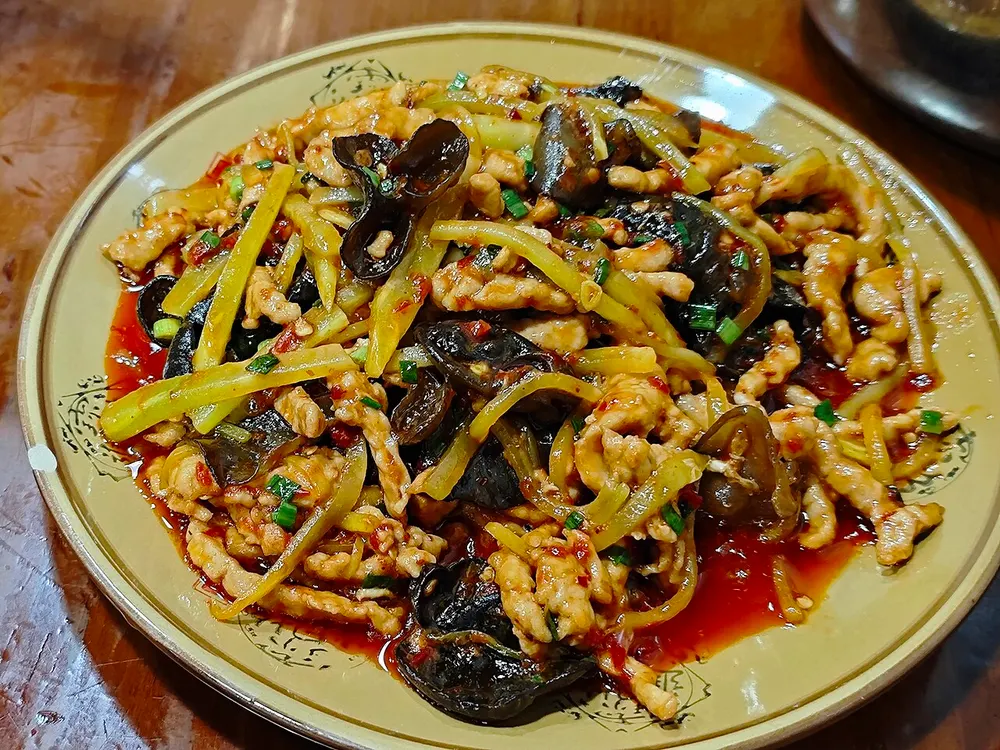
Slivers of pork tangled with wood ear and bamboo in Sichuan's famous 'fish-fragrant' sauce — pickled chili, ginger, garlic, sugar and vinegar, and not one gram of fish.
Source
Recette de Sichuan home kitchens · 🏠 Cuisine maison · A yuxiang-sauce staple of Sichuan home cooking — no single author
Sichuan home-style / 四川家常菜 — Yuxiang means 'fish fragrance', and the sauce contains no seafood at all — it is a seasoning profile built on finely minced pickled chili, scallion white, ginger and garlic in roughly equal parts, cooked out with sugar, vinegar, soy and doubanjiang. Said to have originated in Sichuan, it has since spread across China's regional cuisines; the shredded-pork version sits alongside yuxiang eggplant and yuxiang beef brisket as its best-known outings.
Watch it being made
Soak the wood ear in cold water for 30 minutes until it unfurls and feels springy, then rinse it well and shred it.
💡 Cold water, not hot. Hot water swells the outside fast and leaves a hard core, and it costs the mushroom its snap.
Cut the pork into matchsticks 5 cm long and 5 mm thick, then cut the bamboo shoots to the same size.
💡 Chinese cooks call this 配刀 — matching the knife. Everything the same shape means everything cooks in the same seconds, and it is why the finished plate looks the way it does.
Toss the pork with the 10 ml soy, 10 ml wine and 6 g cornstarch until each strand is slick. Rest 15 minutes.
Mix the sauce: 20 g sugar, 20 ml black vinegar, 10 ml soy, 30 ml water and the remaining 4 g cornstarch. Taste it cold — it should be sweet and sour in equal measure.
💡 Adjust it now, in the bowl. Once it hits the wok you have about 20 seconds, and a sauce that is too sharp cannot be sweetened in time.
Mince the pickled chilies, garlic, ginger and scallion whites and keep them in one small pile together.
Heat the wok over high until it smokes, add 25 ml of the oil, and swirl it around the sides.
Slide in the pork, spread it flat and leave it 20 seconds, then toss quickly for about 1 minute until the strands separate and turn white.
💡 Let it sit before you stir. Poking it the instant it lands drops the wok temperature and the pork poaches in its own juice instead of searing.
Scoop the pork out onto a plate, leaving the oil behind. It will be about 80% done.
💡 This is 划油 — cooking the meat separately and returning it. It is the reason restaurant stir-fries have tender meat and crisp vegetables at the same time, instead of one or the other.
Add the remaining 15 ml oil, drop to medium, and fry the pickled chili, garlic, ginger and scallion for 40 seconds, until the oil runs red and smells sweet-sharp.
💡 Medium heat here. Minced garlic and ginger burn far faster than sliced ones, and burnt aromatics will make the sauce taste dusty.
Turn the heat back to high, add the wood ear and bamboo, and toss for 1 minute until they are hot through and glazed red.
Return the pork, re-stir the sauce and pour it round the rim of the wok.
Toss for 20–30 seconds. The moment the sauce turns clear and clings, take it off — it should coat the pork, never puddle on the plate.
Korean
Source: Traditionnel
Korean
Source: Cuisine maison
Korean
Source: Cuisine maison
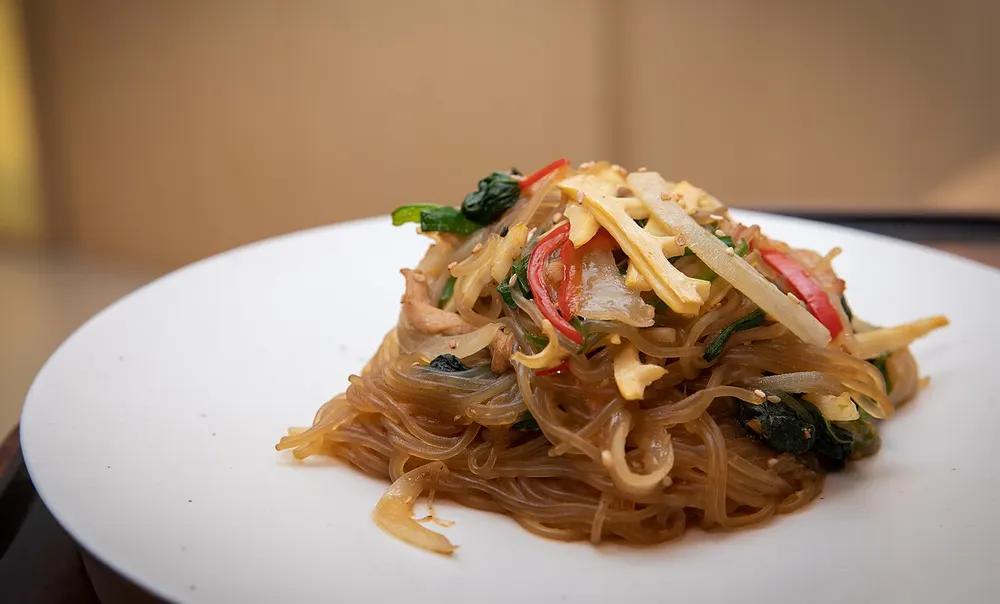
Korean
Source: Traditionnel
Vous l'avez préparé ? Partagez une photo dans la Vitrine.
Partagez votre création →