Débutant
Korean
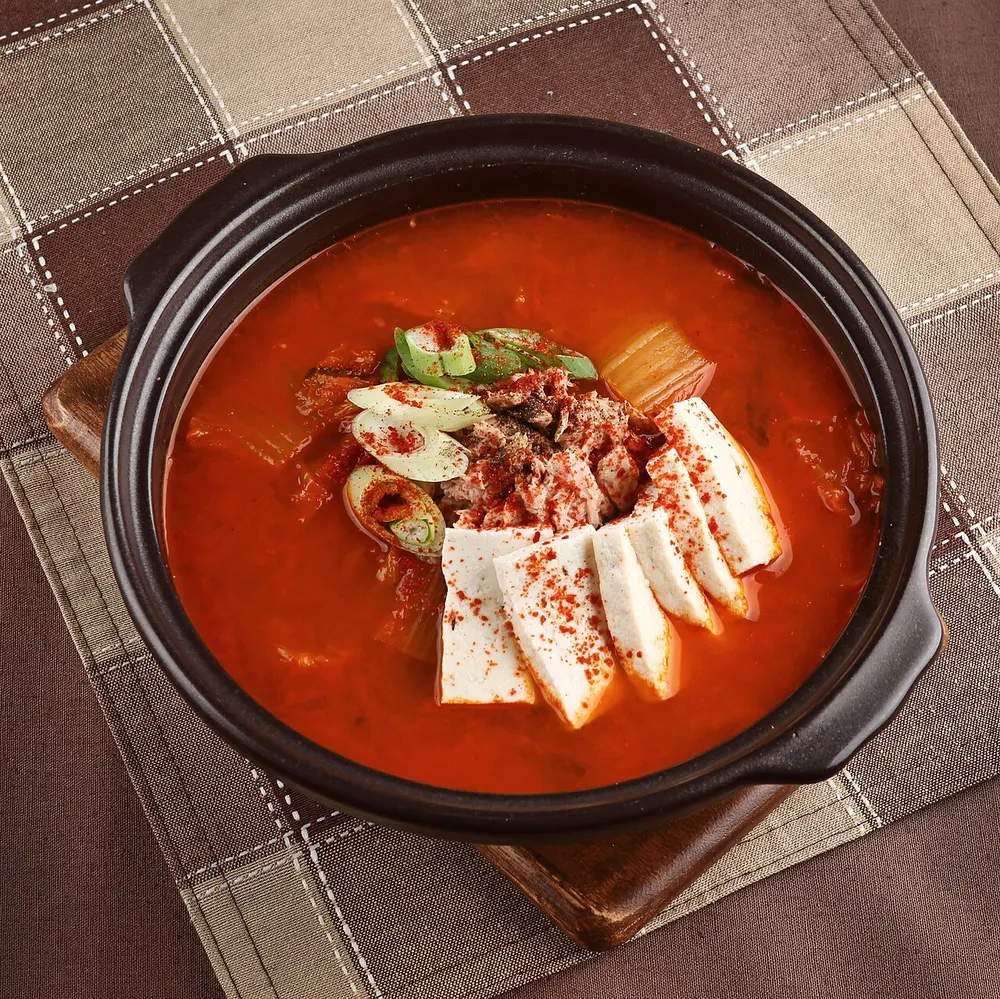
Kimchi Jjigae (Kimchi Stew)
Source: Traditionnel
30 min3420 kcal
Sans produits laitiers🌶️🌶️
Japchae's reputation for being a nightmare comes from frying every vegetable in a separate pan. This version stacks them into one pan in order of hardness, seasoning each with a pinch of salt as it goes — same dish, one pan, half the time.
Source
Recette de 류수영 · ⭐ Célébrité · Ryu Soo-young — actor (b. 1979); appears as '어남선생' on KBS2's Fun-Staurant (신상출시 편스토랑). The nickname puns on his legal name, 어남선.
Les noms des cuisiniers et créateurs figurent uniquement à titre de mention de source. More Recipes Please est indépendant et n'est ni affilié, ni approuvé, ni sponsorisé par eux.
Broadcast recipe by 류수영 (KBS2 Fun-Staurant) / 류수영 방송 레시피 — Ryu Soo-young's '원팬 잡채' from Fun-Staurant, pitched as holiday japchae without the pile of pans. Linked is a blogger's written record of the broadcast, not an official publication; the ingredients and method were confirmed against a second independent write-up (2days.kr/22/09/00/56778/food/) listing identical amounts. Distinctive: dry noodles boiled 6 minutes, everything built in one pan by hardness, and the 'soy 5, sugar 3' sauce added in three stages.
Cuisinier: 류수영
Watch it being made
Cut the napa cabbage leaves lengthwise into long strips, the green onion into 5 cm lengths, and julienne the carrot.
Crush the garlic cloves with the flat of your knife and chop them roughly — you want texture, not paste. Mince the ginger fine.
Slice the pork belly thin and then chop it into a coarse mince.
💡 Mincing the belly means it renders fast and coats every noodle, instead of sitting in fatty slabs you pick around.
Mix the sauce in a bowl: soy sauce, sugar, vinegar and the 100 ml of water. Remember it as 'soy 5, sugar 3'.
Boil the DRY glass noodles, unsoaked, in plenty of boiling water for exactly 6 minutes.
Drain and rinse them immediately under cold running water, then drain well.
💡 The cold rinse is not for temperature — it stops the cooking. Skip it and the noodles keep swelling and turn to mush in the pan.
Set a wide pan over high heat with a turn of canola oil and let it get hot enough to just wisp smoke.
Add the minced pork belly with 2 pinches of salt and the capful of rice wine. Fry until the fat has rendered out and the meat is browned, about 3 minutes.
Add the garlic and ginger and stir for about 30 seconds, until fragrant, in the rendered pork fat.
Add the carrot with a pinch of salt and fry about 1 minute — it is the hardest vegetable, so it goes first.
Add the green onion with a pinch of salt and fry another minute, until it smells sweet.
Add the cabbage with a pinch of salt and stir-fry just until the leaves collapse but the white ribs still snap, about 2 minutes.
💡 Salting each layer as it goes in seasons the vegetable itself. Salting only at the end just seasons the surface.
Add the drained noodles, then pour the sauce in THREE additions, tossing until each one is absorbed before adding the next, about 4–5 minutes in total.
💡 Adding the sauce all at once boils the noodles instead of glazing them — they go pale and slippery rather than glossy brown.
Turn the heat off, add the sesame oil and sesame seeds, and toss once. Serve warm or at room temperature.
Korean
Source: Traditionnel
Korean
Source: Cuisine maison
Korean
Source: Cuisine maison
Korean
Source: Traditionnel
Vous l'avez préparé ? Partagez une photo dans la Vitrine.
Partagez votre création →